STARS ALIGNED
A conversation with music producer and composer Fabien Leclercq, aka LE MOTEL, on his ongoing collaborations with Matthieu Blazy.
Each show has a radically different atmosphere and style. What are your starting points for each one? How do you determine the starting point and the musical arc throughout the show?
Everything starts with conversations with Matthieu Blazy. When he develops a collection, he comes with concepts that I try to translate into music. Sometimes they are stories or characters, but also personal memories or texts. It really depends on each show, he immerses us in his desires and inspirations.
Based on this, I conduct research in the House’s archives and begin to create a palette of sounds. Since I come from film music and field recording, I also record a lot of real sounds to bring that narrative and cinematic dimension to the project.
Bottega marked your beginnings in fashion, alongside Matthieu Blazy and Pierre Debusschere.
That's right. Pierre, with whom I had already collaborated, asked me to work with them, and that's how I met Matthieu. When he became artistic director of Chanel, he called and asked me to follow him on this new adventure. Collaboration is very smooth because we speak the same language.
And for you, does fashion represent a new creative territory, or were you already interested in it as a form of expression?
I was already interested in it, but what truly fascinates me above all is storytelling. Whether through cinema, my electronic music project, fashion, or artistic installations, the idea remains the same: to try to tell somethingtogether using all the media and crafts that exist.
I've always been fascinated by the idea that life has its own soundtrack — like a continuous "musical score" of everyday life. Is that a perception you share, and how does it feed into your relationship with creation?
Yes, absolutely. Music is also deeply tied to Matthieu's personal experiences and what he wants to express. For example, for the first Spring Summer 2026 show at the Grand Palais, we wanted to tell the story of an encounter: a first love story, that first night where anything can happen.
I tried to approach that story a little differently from what you sometimes see in American cinema, with its very "cowboy," masculine energy. While doing my research, I came across the film Forbidden Love, which depicted lesbianromances at a time when that was complicated or frowned upon by society. The idea was to explore how to tell a love story differently, and music is the perfect medium for that.
When Matthieu was appointed at Chanel, was it a given that you would be part of the adventure? And how do you approach a house with such a history and such a strong sonic identity?
It was a given because we understand each other very well. We speak the same language, even if he uses different tools than mine. Together, through music, we manage to create a world that works with his stories and the collection.
Chanel is truly a house with a history of its own. For me, it's been a genuine discovery to dive into the archives. We also collaborate with Michel Gaubert, who gives us his input on the music and has an in-depth knowledge of the house built over many years. I think Matthieu is deeply committed to honouring the heritage of everything that has been done, while continuing to tell the story forward. It really is a matter of immersion: we used old advertisements featuring Catherine Deneuve, for instance, and watched many shows to see how all those different eras can be expressed today.
How did the collaboration with Michel Gondry unfold? In this very particular visual universe, how did you work together, and were you in direct contact with him throughout the creative process?
It was a magnificent project and a wonderful opportunity, because I've been a fan of Michel Gondry's work for years. It was a great privilege to be able to collaborate with him. Since he is a musician himself, he has a true ear for it, he had very clear ideas about certain elements, but at the same time, he gave me enormous freedom and trusted me completely. We explored a great deal together and we were both very happy with the result, because once again, all the elements aligned well. Part of the music actually had to be created before the filming, because during the show there was an actress playing saxophone in the New York subway. It was truly a puzzle that came together over several weeks of extensive discussion. It was a wonderful collaboration with Michel and saxophonist Brice Clausse.
People often say that working at Chanel means becoming its guardian. How does Matthieu protect that past while injecting new energy into his collections?
Yes, it's a beautiful image, the guardians, and it's very true. What is particular about Matthieu is the importance he places on every craft involved in the collection and the show. He is, for example, very invested in the music: we speak every day to carefully build the narrative across all the looks. He continues to adjust things right up until the last moment to make sure everything is perfectly aligned, so that the whole becomes a single unified entity.
When Michel released his memoir last year, I asked him: "Can great music save a bad collection?" I'd like to ask you the same question, what do you think?
That's a great question! Personally, I don't think outstanding music can save a bad collection. Everything is far too interconnected for that. What matters most is enormous communication between all the crafts involved, and that everyone speaks the same language. That's when the magic happens. For it to truly work, all the elements need to be perfectly aligned.
You are a producer, film composer, artist, and now a collaborator with one of the greatest couture houses. How do all these registers coexist, and do they feed into one another?
Yes, absolutely. I think it's incredibly important for me, as an artist, to be able to continue working across all these different projects, because they completely nourish one another. That's also what brings a different perspective, I conceive of music like a short film, where voices, sounds, and urban sound design come together to form an overall structure. It's really the connection between all these elements that matters. That's the common thread that allows me to move between artistic installations, fashion, and cinema.
Going back to your first Chanel show in October, what were your impressions on the day, with the lighting and the scenography, for instance? What surprised you most about that experience?
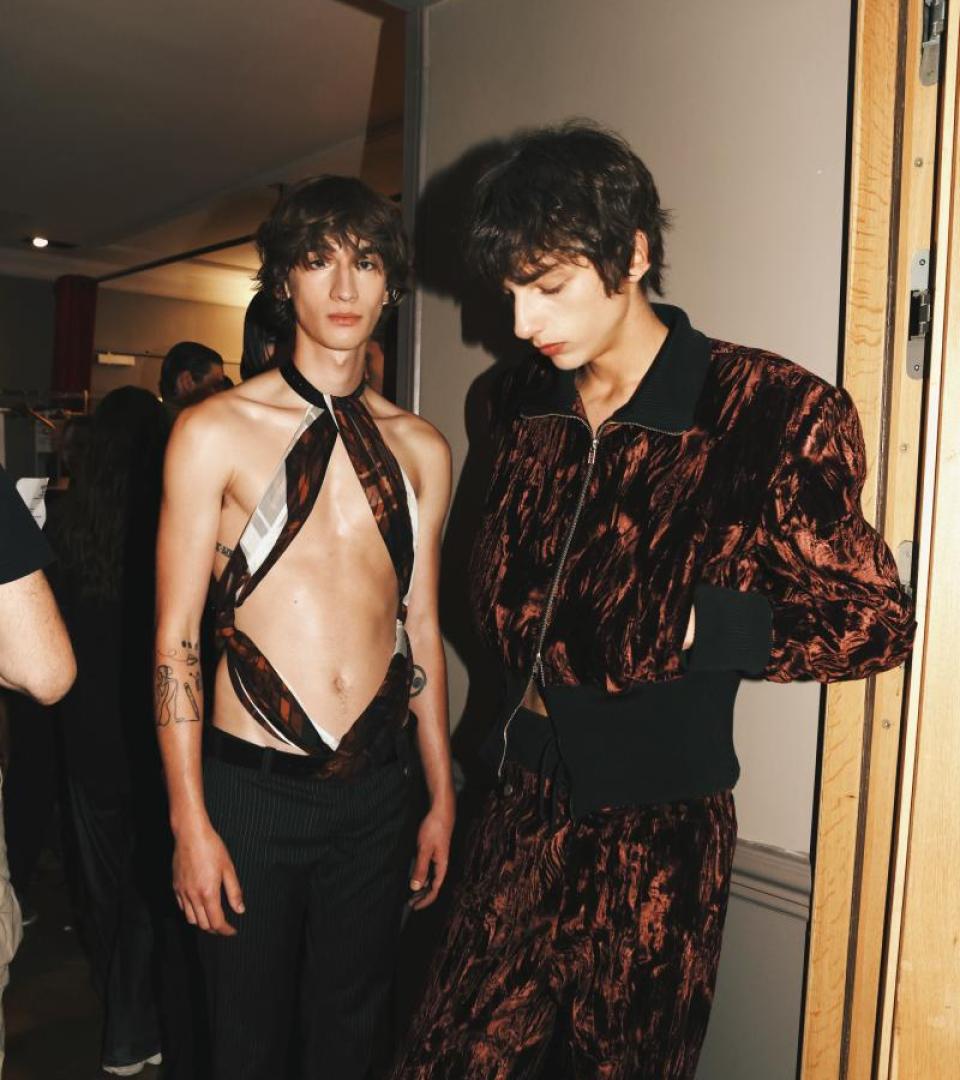
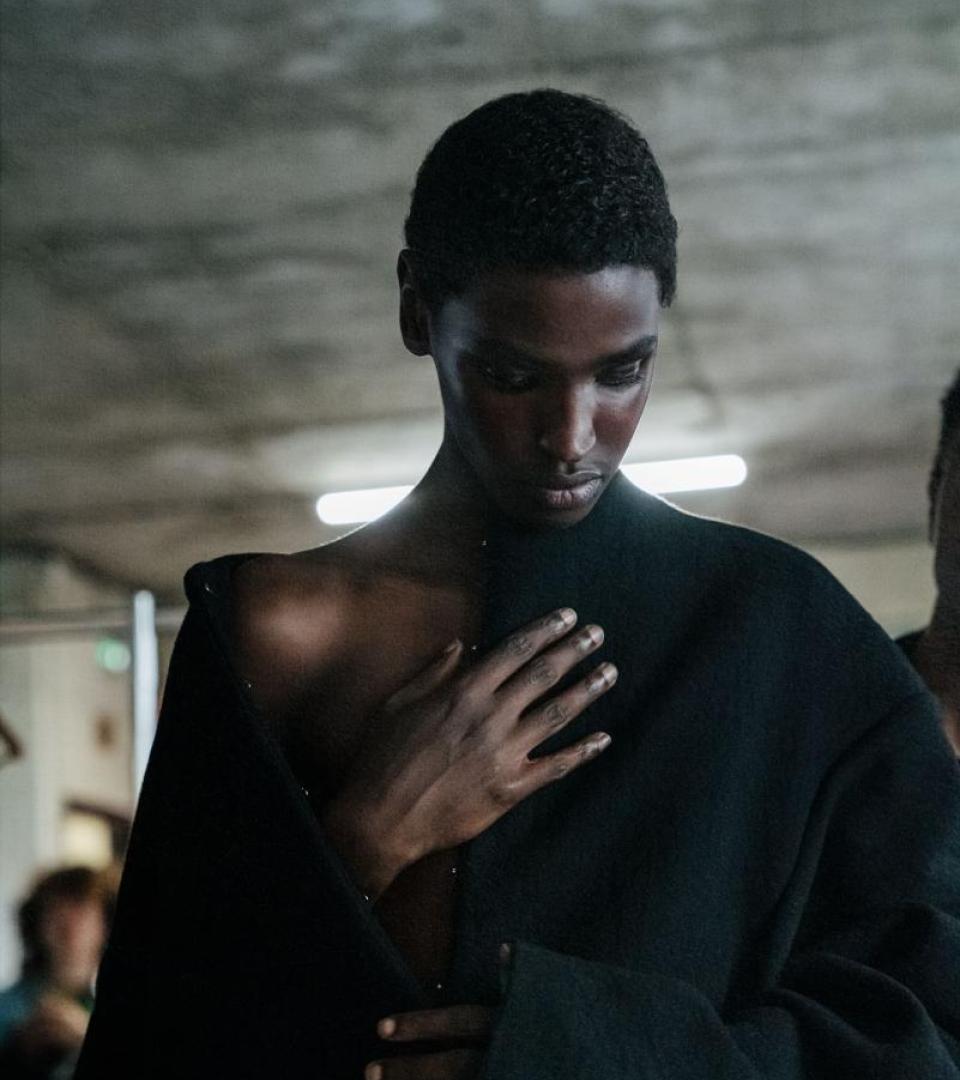
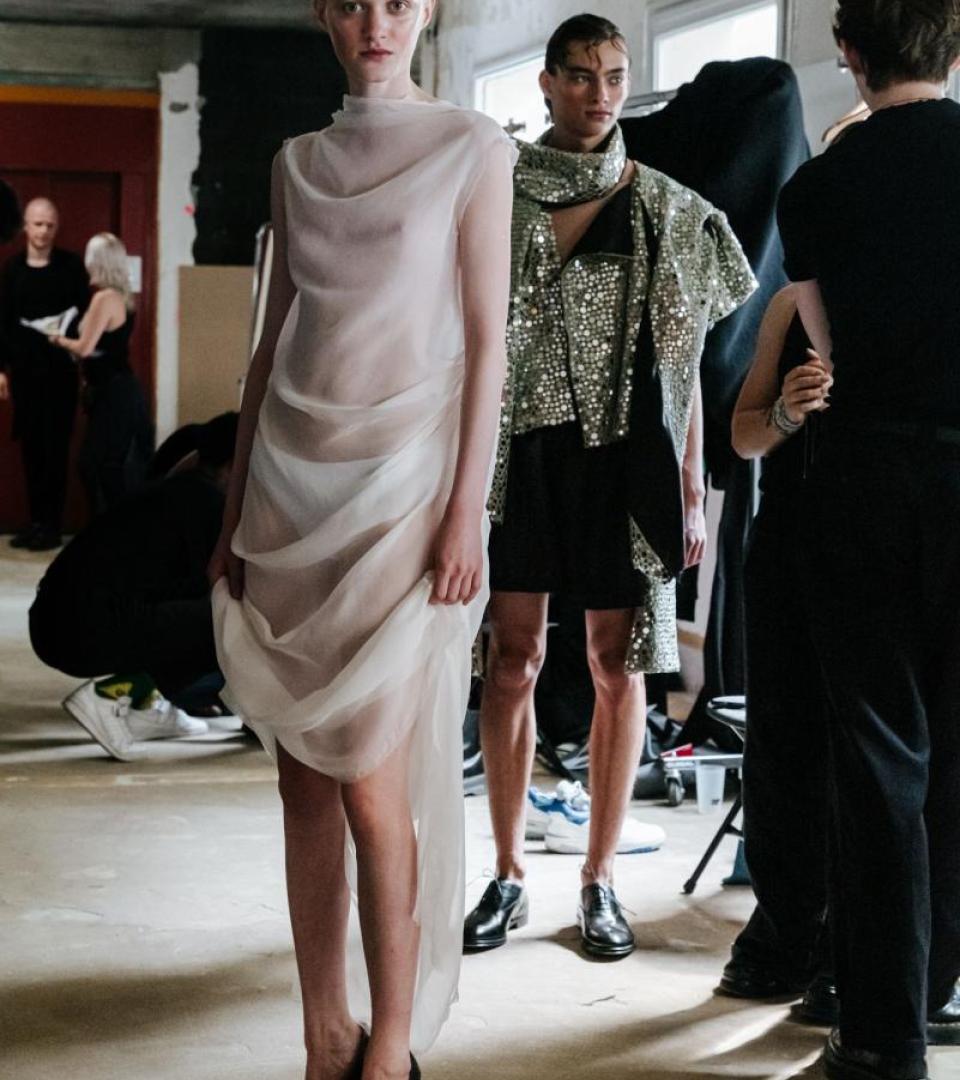
It was very moving to feel that we were literally stepping into the world of Chanel, but also into Matthieu's world. What struck me was seeing everyone: from those creating the set to those making the clothes and the music,giving their absolute best. Without meaning to make a pun, I truly felt as though the stars had aligned. There was a very human dimension, a magnificent finale with smiles everywhere, from the guests to the models. It was magical, a great celebration.
Finally, I'd like to come back to your artistic identity: what exactly does the name "Le Motel" represent for you?
It's a name I use to bring together all my projects and collaborations. I liked this idea of a "platform" where people arrive, spaces for creation form, then each person continues their own path. There is also something universal in that word, and a nocturnal dimension reminiscent of David Lynch's universe, for example. It was something that worked well to gather all these projects and collaborations under one name.