GARDOUCH - Shared Memory
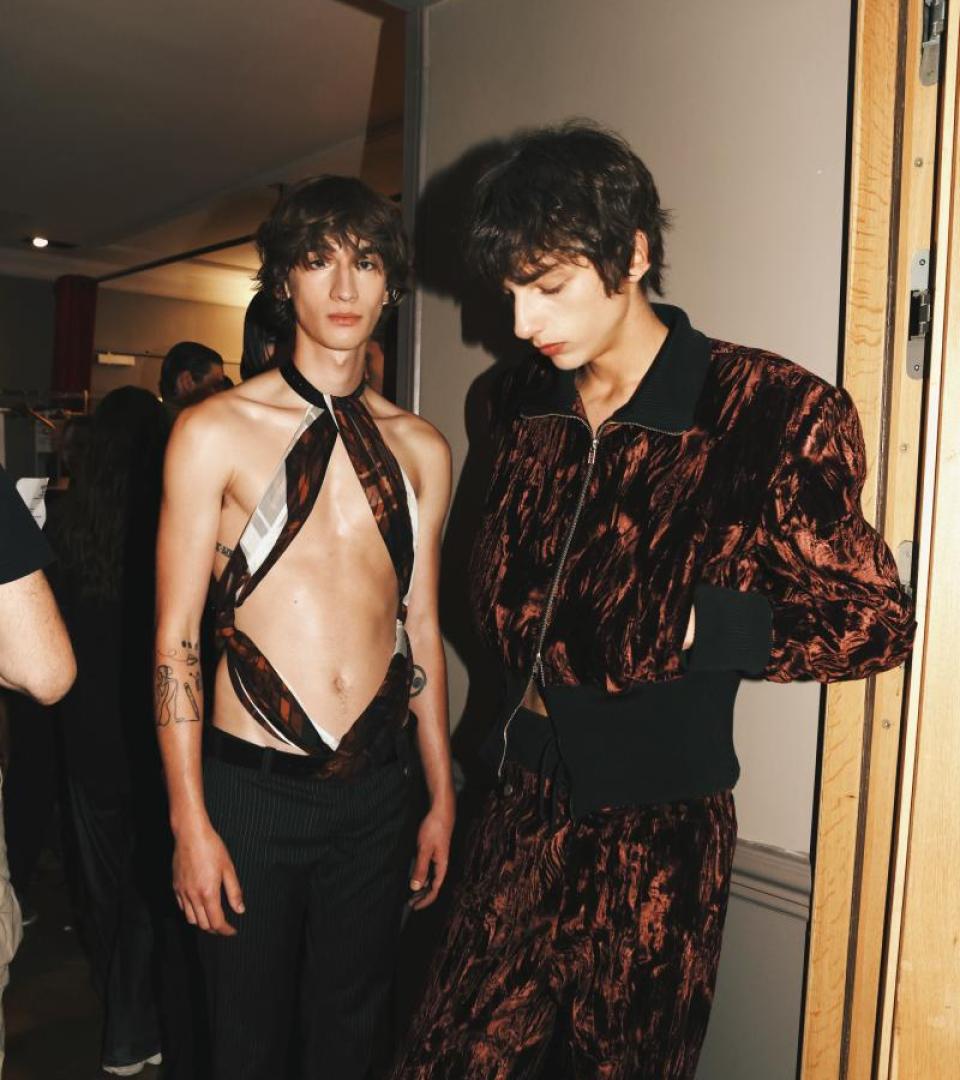
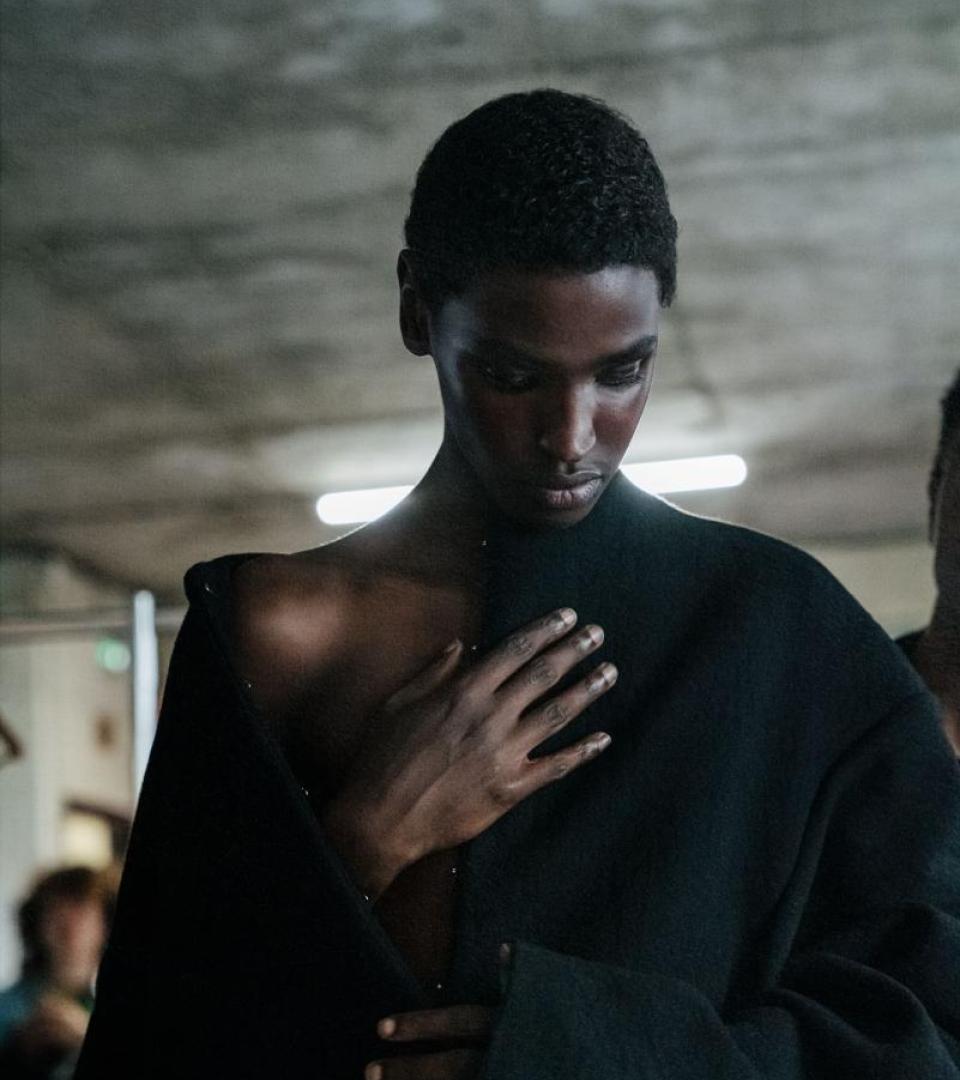
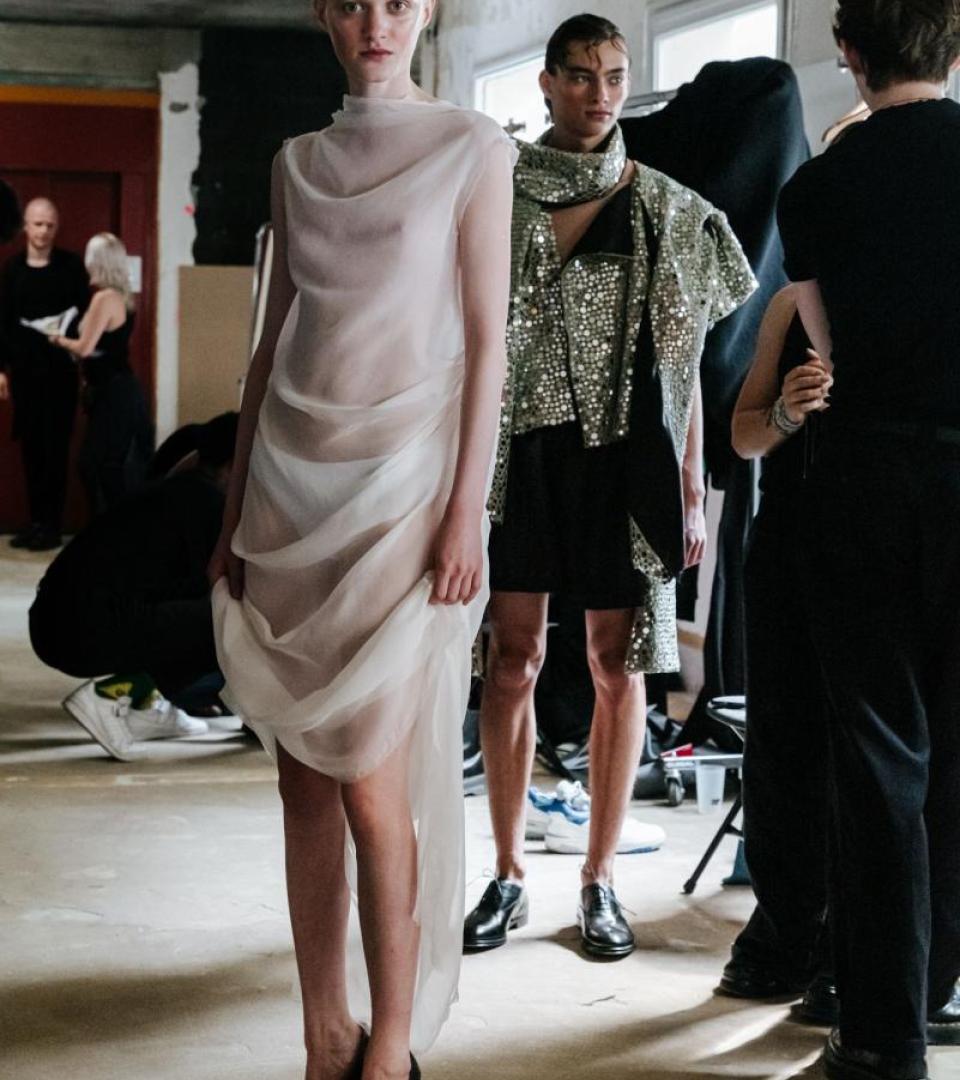
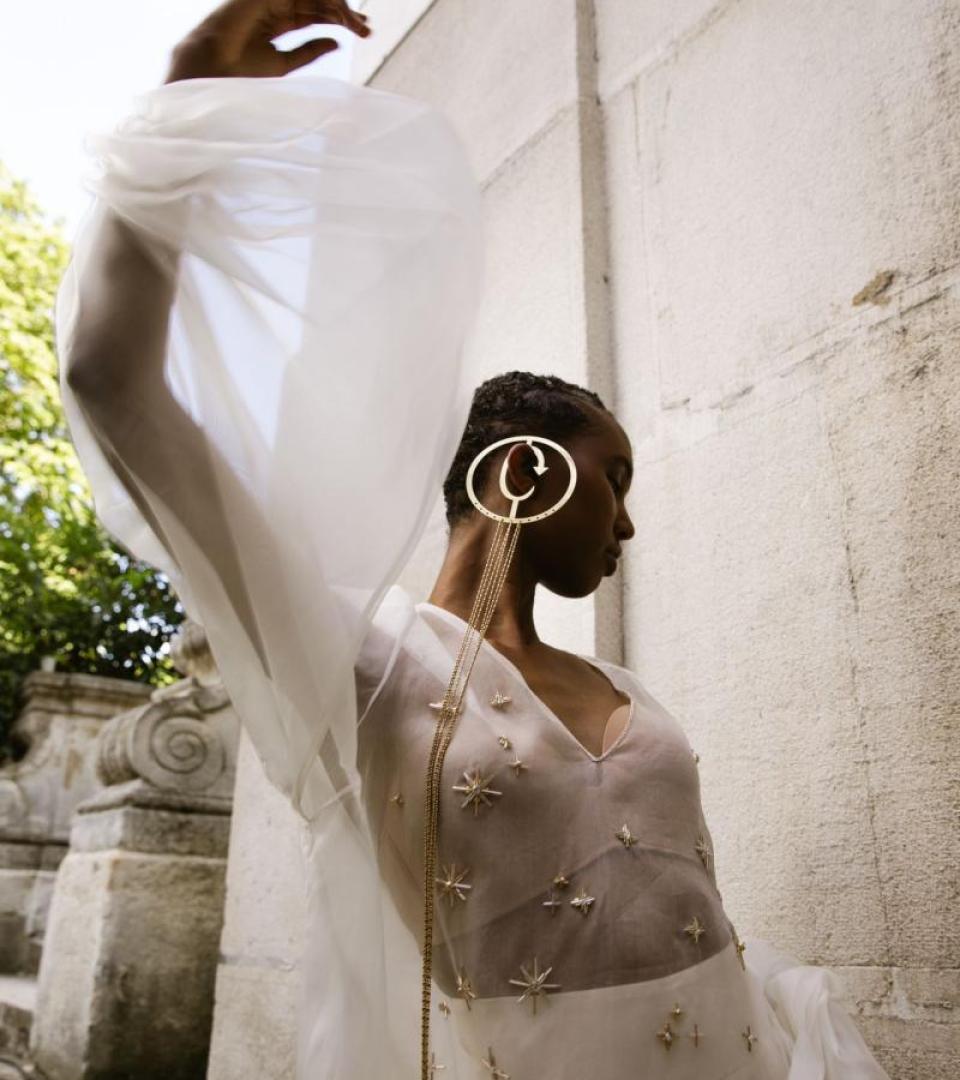
With Les Anneaux de Saturne “Saturn’s Rings,” Remi Guerra proceeds with his narrative rooted in memory and his family’s homeland. “I tried to unfold his story the way I would open his closet,” says the founder of Gardouch, referring to his grandfather. And if “summer is a breath of fresh air,” this season’s collection features ultra-lightweight pieces that extend his deeply personal narrative. Gardouch is part of the SPHERE Showroom, an initiative for emerging brands organised by FHCM with the support of L’Oréal Paris and Le DEFI taking place at the Palais de Tokyo until June 28.
How are you approaching this season?
My visit to the SPHERE showroom in January gave me a better understanding of the commercial challenges involved in launching a collection. I was able to talk with retailers, buyers, and the press, and get a clearer sense of how Gardouch could fit into this context without losing sight of what makes it unique.
So this season, I’m approaching it with this question in mind: how can I integrate artistic work into a commercial context while still getting the message across? Clothing remains a design object. It must be wearable, understandable, and marketable, but it must continue to be conceived with the same narrative and emotional rigour.
I also realised that, creatively speaking, it was impossible for me to tell more than one story a year. Finding the references, weaving them together, and buiding a coherent narrative takes time. This is an approach I now wish to apply to future collections: one collection a year, divided into two seasonal lines, ideally with an annual fashion show bringing together the spring-summer and autumn-winter collections.
How does this differ from the previous collection?
Given this new structure, this season isn’t really a break with the past, but rather the logical continuation of a story that has already begun; it therefore bears the same title, “The Rings of Saturn.” It continues my grandfather’s story, as a kind of tribute to his childhood, but also to his entire life. I have tried to unpack his story just as I would unpack his wardrobe. Inside, you’ll find clothes that evoke the 1950s, others the 1990s, with references both older and more recent, but always centred around the same core theme: my grandad. The garments are unlined, with lighter constructions. But the heart of the story remains the same. It’s less about changing the subject and more about continuing to explore the same memory through another season.
In what way is summer a special time for you? And what does it mean to you to come and present your collection in Paris ?
Summer is a time to catch your breath. When you’re a child, they’re almost the longest two months of your life. It’s very exciting, because the summer holidays mark a real break between two school years. In September, you often feel as though you’ve grown up a bit, that you’re a bit of a new person, ready to meet new friends or start afresh.
As we grow up, we realise that time is passing ever more quickly. Summer retains something very powerful, yet also something more fragile. It almost becomes a measure of time itself, which seems to be speeding up. Presenting this collection in Paris, as part of SPHERE and the FHCM, allows this personal story to take on a broader context. This is important for Gardouch, because the brand is specifically seeking to transform personal memories into collective, visible and shareable forms.
A vacation-related memory ?
When I was little, I used to stay with my grandparents during the holidays. My parents were working, so my brother and I spent a lot of time at their house. They lived a five-minute drive from Gardouch, so it wasn’t a long journey, but it still felt like somewhere else. These days, I miss that memory. Sometimes I wish I could recapture that sense of freedom, spending several days at a family home, with no set plans, simply letting time pass by.
What are you references and your inspirations ?
For this collection, I wanted to explore certain themes already present in my grandfather’s world, particularly the Tour de France and sport. Sport has always played an important part in his life, and it’s still very much a part of who he is today. I’ve incorporated this through knitted fabrics, certain shorts, more flexible silhouettes, and graphic or functional details. I also really enjoy incorporating anachronisms into my work. Bringing together elements that don’t belong to the same time period, but which revolve around a single person. That’s very Gardouch: starting with a real memory, then accepting that it is interwoven with several different time periods.
In what way is nostalgia a particular area of interest for you?
Nostalgia interests me because it never provides clear access to the past. We think we remember a shape, a colour, an item of clothing, but there’s always something missing. It is within this sense of absence that Gardouch works.
I often start with very concrete elements: a photograph, an object kept in a house, an item of clothing worn by a member of my family, a detail my grandfather recounts. After that, I don’t set out to recreate exactly what once was. Rather, I seek to understand what that memory might become today.
That is why nostalgia is important to Gardouch. It allows a personal archive to be transformed into a garment, without freezing it in time like a museum piece.
What’s your favourite place in Paris at the moment?
My bedroom, my bed!
How important is craftsmanship in this particular collection?
Craftsmanship is very important in this collection because I’m trying to personalise my raw materials more and more to find ways of incorporating unique materials into a product. The idea is that Gardouch should be recognisable not only by its shape or silhouette, but also by the very fabric of the garment itself. I’ve spent a great deal of time working on patterns, embroidered fabrics, patches, customised buttons, and, more broadly, all those elements that allow me to put my stamp on the material even before the garment is made.
This applies equally to commercial pieces and lookbook pieces. The more wearable pieces must continue to convey a very specific aesthetic, whilst the lookbook pieces allow me to push the boundaries of construction further, particularly with leather. I like the idea that even a very simple piece can contain a level of detail, craftsmanship or narrative that immediately links it to Gardouch.
How can tradition and innovation be reconciled? Any Examples?
For me, innovation lies first and foremost in the structure. Gardouch grew out of an artistic project, and the challenge now is to understand how to bring it to life within a commercial framework without stripping it of its meaning. We have to accept certain industry constraints: the showroom, the seasons, buyers, brand image, and so on. But we mustn’t let these norms dictate everything. Instead, I try to use them as a working framework. A collection can meet real needs, reflect on a wardrobe, and continue to function as a chapter.
It is also a way of playing with fashion’s ‘white cube.’ Clothing is presented there as a product, but it can retain the quality of an object or a narrative fragment. For Gardouch, innovation perhaps lies here: in bringing an artistic project into harmony with the concrete rules of the industry, without one cancelling out the other.
Where do you seek refuge during a heatwave?
I find it difficult to answer this question because heatwaves are no longer just a holiday backdrop; they are a very real consequence of climate change, to which the textile industry contributes significantly.
For Gardouch, this inevitably raises the question of responsibility. The brand is striving to build itself on a sustainable scale, with responsible production, carefully sourced materials, manufacturing that is predominantly French, and a commitment to producing no more than is necessary. This commitment must not be a mere marketing ploy, but a genuine constraint on the way the brand designs, produces and sells its products. So, when it comes to the heatwave, my refuge is perhaps less a place than a mindset: trying not to contribute any further to what is making it increasingly severe.
Your favourite destination?
My bed – always and forever!
What does it mean to be European in 2026?
In 2026, being European means accepting that our heritage is not straightforward. Europe has a complex and sometimes dark history, marked by conflict, privilege and domination. It also possesses a rare cultural strength and beauty, which still lives on in its languages, its skills and its diverse identities.
For me, this question is linked to my family’s history spanning France and Spain. My great-grandfather’s exile in the face of Franco is part of that memory. It forces me to look at Europe differently, not as an abstract idea, but as a place where personal stories intersect with History. With Gardouch, I try to work from that perspective. Not to idealise the past, nor to condemn it outright, but to understand what it leaves behind. A garment can embody this complexity without needing to resolve it.
What drives you to stand by your convictions within this industry?
The fact that fashion isn’t just an industry of images or consumption. It can also preserve, tell stories and pass things on. Gardouch exists because I believe that a garment can convey more than just a trend. Standing up for this in this industry means trying to maintain a poetic, material and human standard within a very fast-paced system.
This interview has been lightly edited.
L.B