ROLF EKROTH
A graduate of Aalto University in Helsinki, Rolf Ekroth is presenting his collection in Paris for the first time. This marks expanded recognition for the Finnish designer, who is part of the SPHERE Showroom, an initiative for emerging brands organised by FHCM with the support of L’Oréal Paris and Le DEFI taking place at the Palais de Tokyo until June 28.
How are you approaching this season?
The title of the collection reveals the most basic idea: Never Change. I wanted to continue and improve on what we've built so far. There can be pressure, both from the outside and from yourself, to reinvent your brand every season. This time I decided to trust what we've created, stay true to it, and focus on realistically improving it rather than starting over.
What is the break with the previous collection?
Last season, I felt like burning everything down and starting from scratch. This season I'm feeling almost the complete opposite. There is actually less of a break than usual. Visually, we continue to develop many of the ideas and pieces from last season, but hopefully in a more refined and confident way.
Why is summer a special time for you? And what does it mean for you to come and present your collection in Paris?
During the last few years, summer has mostly meant work. When we were showing at Copenhagen Fashion Week, our shows usually took place in early August, so the summer was always spent preparing collections. Maybe showing in Paris in June will allow me to enjoy part of the summer again. Presenting in Paris is both exciting and intimidating. It's a completely new challenge, with many new contacts, expectations, and ways of working. At the same time, it feels like a natural next step for the brand. I'm fortunate to have a great team around me and some very special people helping make it happen.
A memory linked to a holiday?
I miss being younger and going on ski trips with friends during Christmas and winter holidays. I was really into snowboarding as a teenager, and those trips always felt like complete freedom. Looking back, I think they were some of the happiest and most carefree moments of my youth.
What are your references, your inspirations?
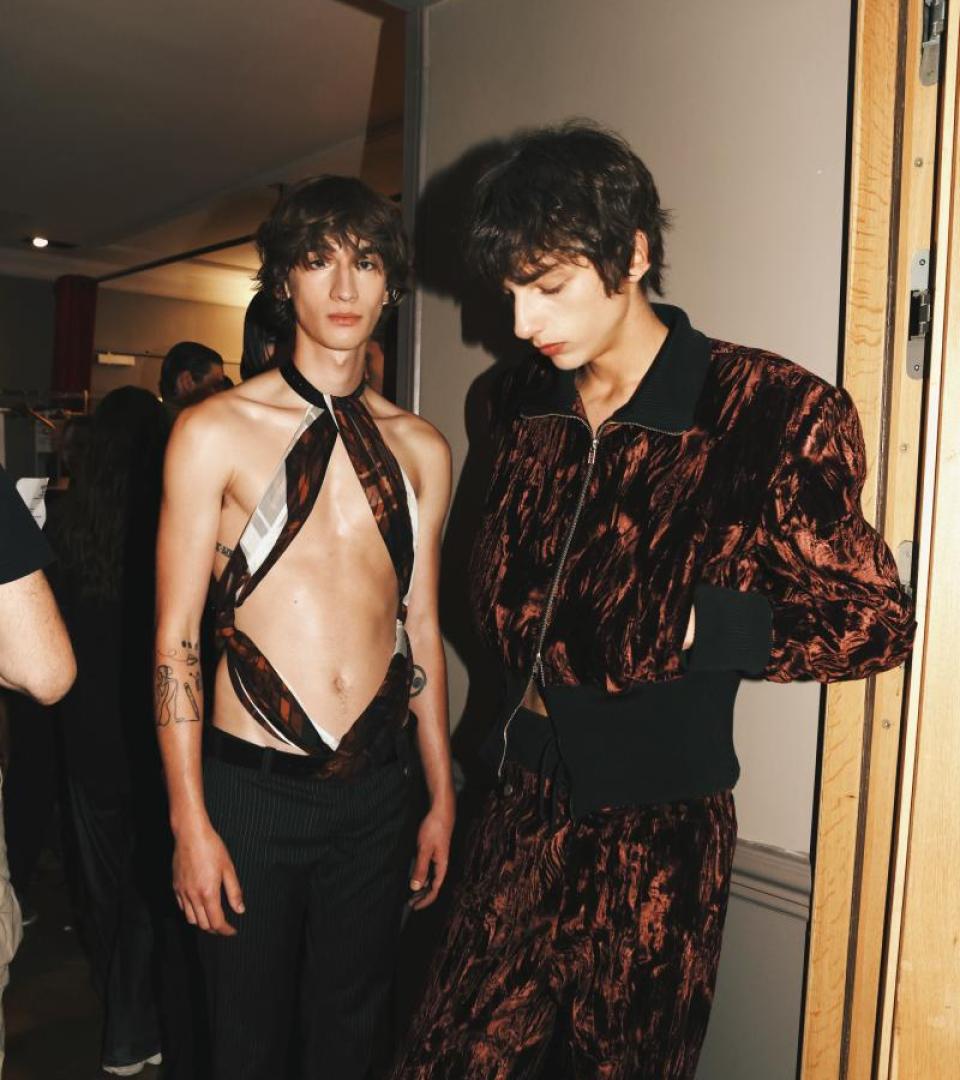
There are usually a lot of sporting references in my work, mixed with Finnish culture and both old and new crafting techniques. I often start with a very simple idea and then build a collection around it, adding layers until it becomes something richer and more complex. For SS27, for example, the starting point was simply the idea of not changing your outfit throughout the day and seeing how far that concept could be developed.
In what ways is Finland a special place for you?
It's my home and it always has been. I think Finland influences my work more than I realise. We have four very distinct seasons, which means clothing has a real function in everyday life. You learn to think about layering, protection, comfort and practicality. As a designer, it's a great place to come from because people genuinely live in their clothes.
What is your favourite place in Paris right now?
Right now I'd have to say Mia Mao. Maybe that's cheating because we're presenting our first Paris show there on June 25th; but at the moment, it's the place I'm thinking about the most..
The importance of know-how in this particular collection?
Craftsmanship is always important for us, but especially in this collection because so much of it is about everyday garments and familiar silhouettes. For me, good craftsmanship is what allows a garment to feel effortless when worn.
How to reconcile tradition and innovation? Any examples?
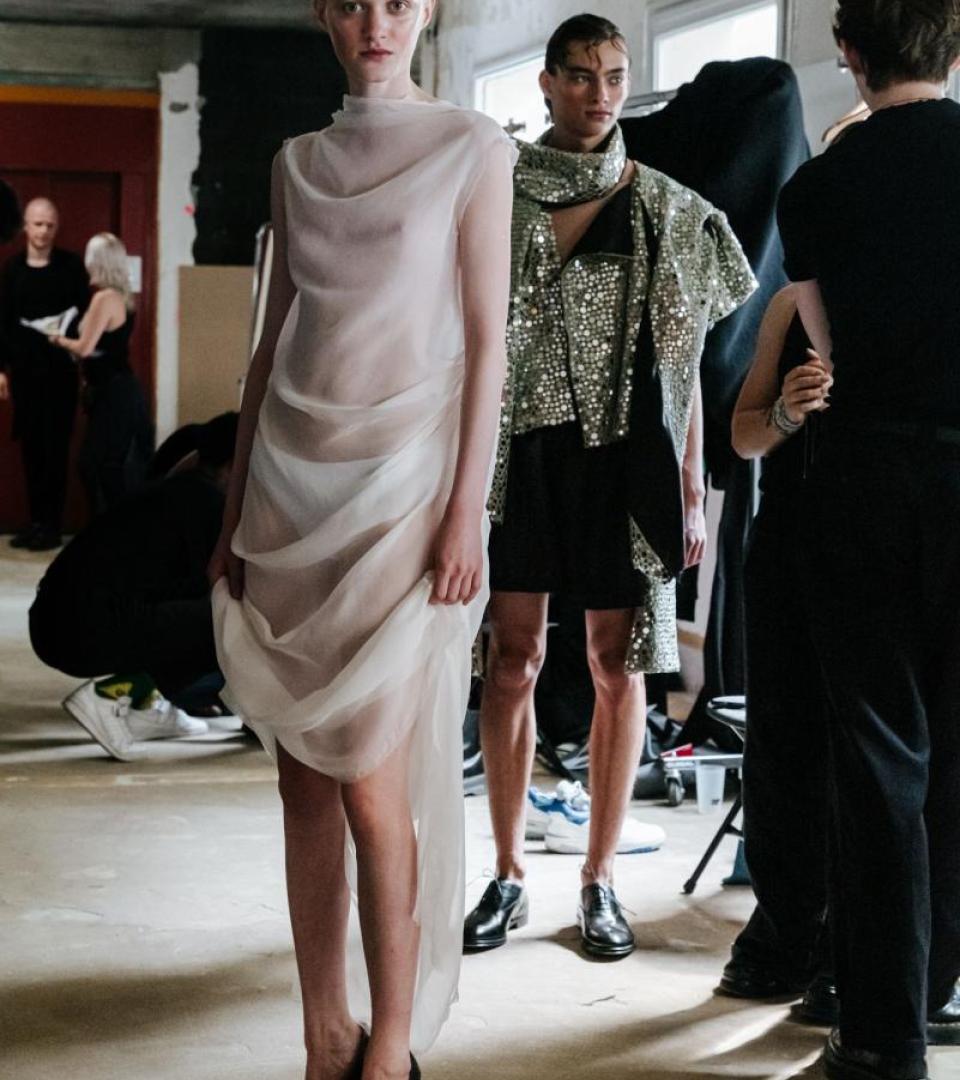
I don't really see tradition and innovation as opposites. A lot of the time innovation comes from looking at familiar things in a new way. In this collection we take something as traditional and universal as pyjamas and rethinking how they can function throughout the day. We combine familiar garments with technical fabrics, sportswear elements and new styling possibilities. The goal is not to reinvent things completely, but to evolve them and give them a new context.
How do you define this "gentle brutality" and the work in particular on natural dyeing?
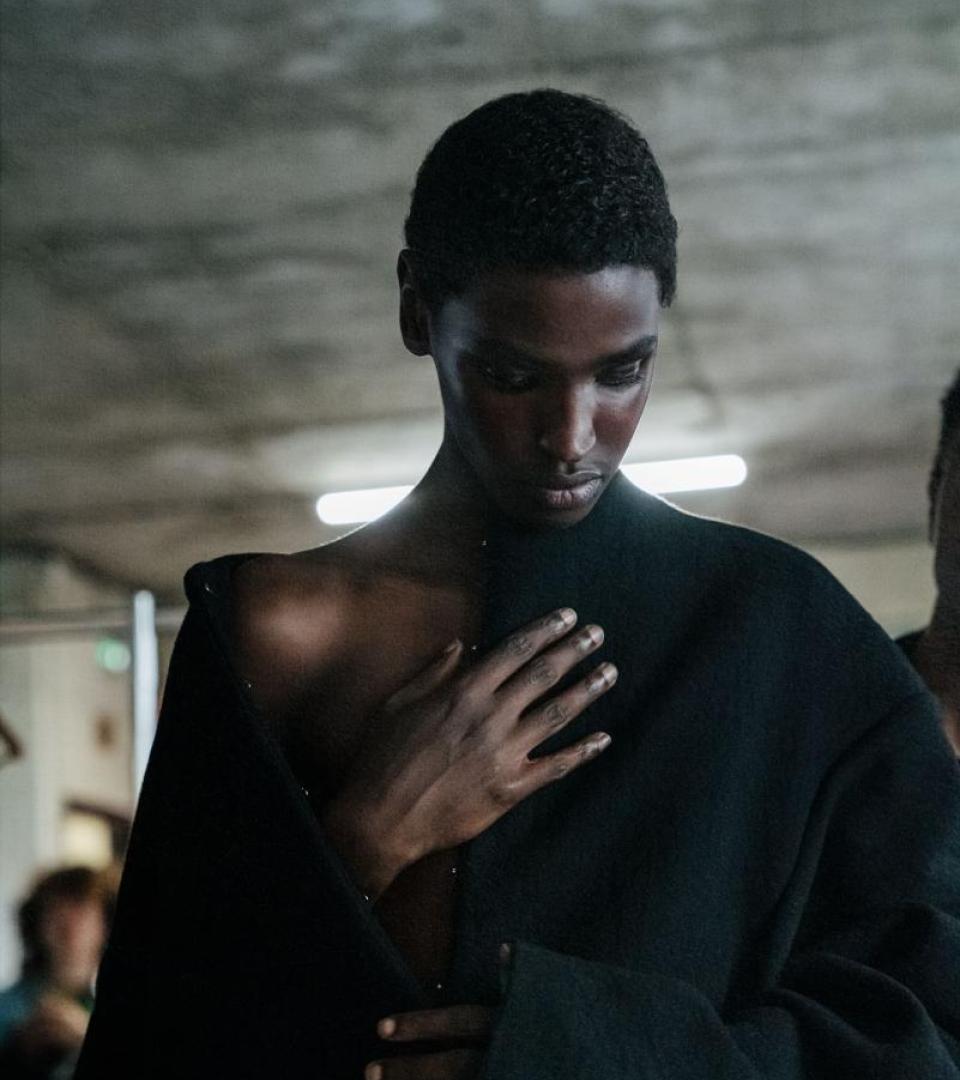
For me, "gentle brutality" is about contrasts. There is a certain roughness in the world I come from, in the climate, in everyday life and in the visual language that inspires me. At the same time there is vulnerability, warmth and sensitivity. I am interested in the space where those things meet.
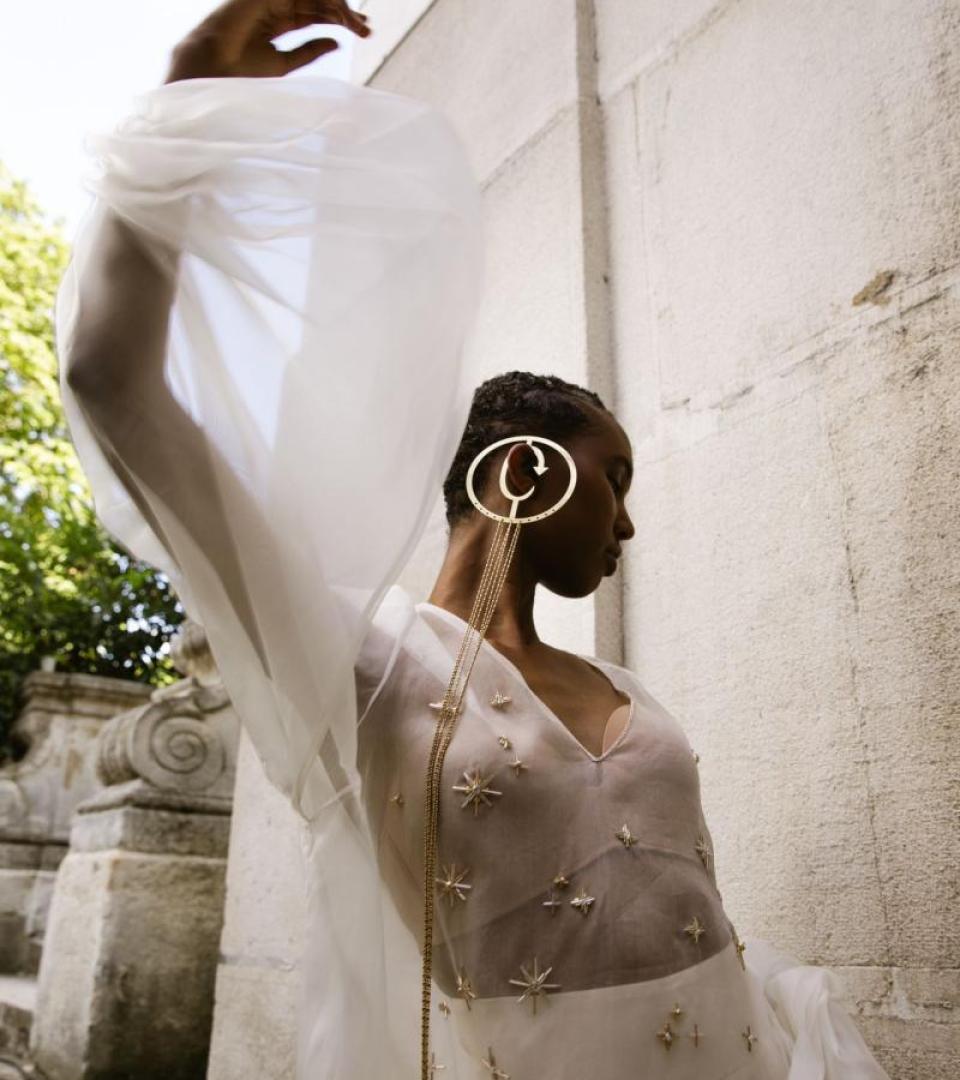
The same idea can be seen in our work with natural dyeing and surface treatments. The results are often imperfect and unpredictable, which gives the garments character and a sense of life. Rather than hiding those irregularities, we embrace them. They become part of the story of the garment.
The place where you find refuge during a heatwave?
We don't get that many heatwaves in Finland, thankfully. Last summer, there was a warmer period that lasted a few weeks, and I found myself spending a lot of time in the forests around Helsinki. I cycle quite a lot during the summer, and one of the best things about Helsinki is that, in 15 minutes, you can go from the city centre to a large forest. That's probably my favourite way to cool off.
Your favorite destination?
Tokyo. I've spent a lot of time there through work and I always find something new to discover. At the same time, I feel like I've only seen a small part of Japan and would love to explore more of the country. South Korea is also very high on my list.
What does it mean to be European in 2026?
I don't think about being European very often, to be honest. I think about being Finnish, and I think about being part of an international creative community. Maybe being European today means being connected to both local identity and a wider cultural exchange at the same time.
What motivates you to defend convictions within this profession?
What keeps me going is that I still genuinely enjoy creating clothes. If I didn't, I would have stopped a long time ago. Running an independent brand is a lot of work, and the rewards are often quite limited, so you need a real reason to keep doing it.
For me, that reason is the creative process and the people I get to work with. Some of my favourite moments have come through collaborations. A recent example is the project with Marimekko and Vibeke Rohland, which was an incredibly rewarding experience creatively. Those kinds of projects remind me why I started doing this in the first place.
This interview has been lightly edited.
L.B