Menswear is constantly evolving; do you foresee a moment when the perfect balance between formal and streetwear will be achieved?
I don’t think there’s any need to reach that balance. It was almost an obsession of the last decade. I believe everyone should develop their own style and experiment freely, but I don’t think every brand needs to offer every possible combination. We should stop wanting to please everyone. Otherwise it becomes an endless puzzle of options. Right now, the real challenge for creatives is knowing how to edit, take a position, and have a clear point of view.
How would you define men’s elegance in the contemporary context?
Elegance doesn’t really change. It has never been entirely about clothes; it’s about personality and attitude. Rather than defining it, I’d rather give an example. To me, Umit Benan embodies contemporary elegance, both in the way he dresses and through his collections.
Men’s fashion habits tend to evolve more slowly than women’s. In your opinion, why is that?
It’s largely sociological. Over the last century, men have had a complicated and often conflicted relationship with clothing. It’s a fascinating story, even if it can sometimes be a little boring. As someone who mainly works in menswear, I enjoy exploring the subtle ways those boundaries can be challenged.
How do you believe fashion creativity can effectively drive business growth?
If fashion doesn’t put creativity, point of view and quality back at the centre, it will continue to decline, as we’re already seeing. In the long run, originality, being believable and quality are what create desire, relevance, and value.
AI will continue to disrupt and impact how we live and work. What excites you and what concerns you?
What concerns me is seeing AI treated purely as a cost cutting tool. What excites me is the possibility of using it to bring a vision to life. Technology can amplify human creativity, but the vision must remain ours. It shouldn’t be given decision making power.
In these challenging times, how do you think fashion can spark and sustain desire?
By making radical decisions. They can be aesthetic, political, or social, but they need to be authentic and clear. Desire comes from conviction, not consensus.
How does today’s polarised world impact your creative process when thinking about a global market?
Rather than trying to speak to everyone, I try to be precise. In a polarised world, overly neutral messages often end up saying nothing at all. I believe a clear and consistent point of view can resonate globally precisely because it comes from authenticity, not compromise.
What are the key cultural or societal influences shaping menswear today?
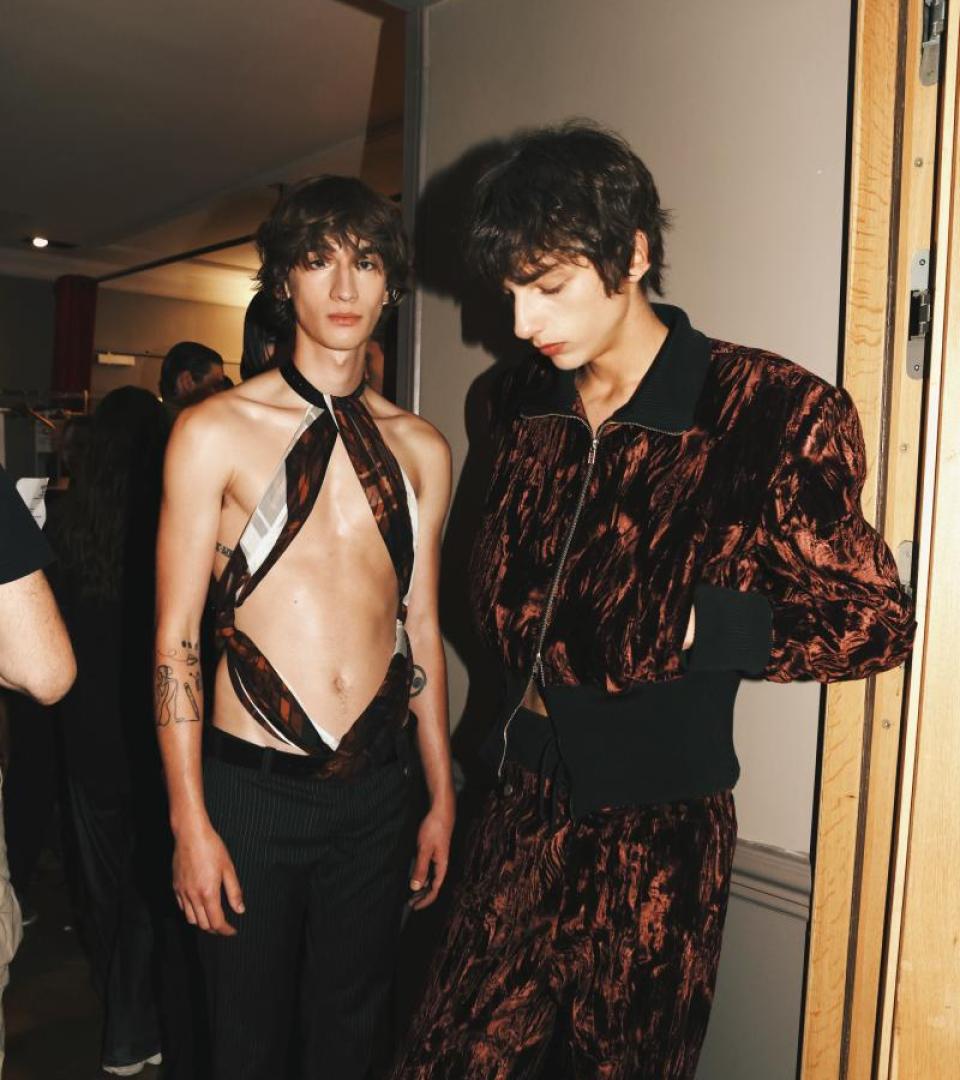
On one side, there’s the influence of a certain “new normal" shaped by the political and historical moment we’re living through. On the other, there’s a softer and more fluid sensibility emerging, with a subtle, almost asexual eroticism that feels particularly relevant to younger generations.
Do trends still matter?
Yes, they do. There are macro trends and micro trends, some obvious and some more subtle.
This interview has been lightly edited.