What was the emotional anchor of the collection?
This time, it's about the first meeting – how we read another person, and how that person wants to be read. So often it's theatre: reality hidden behind masks, behind expectation – a truth that only reveals itself with time. But in something as brutal as the war in Ukraine, those masks get blown off: by the attacks, by the danger, by the sheer weight of responsibility. There's no room left for roles. You see exactly who someone is: who waits, and who acts without a second thought. As I wrote in the manifesto: “When the ground itself is uncertain, you stop mistaking decoration for substance. You learn, with a clarity that almost hurts, what is truly yours.”
The idea that “there is no wrong side” has become fundamental to LITKOVSKA. How does that philosophy manifest itself differently in this collection?
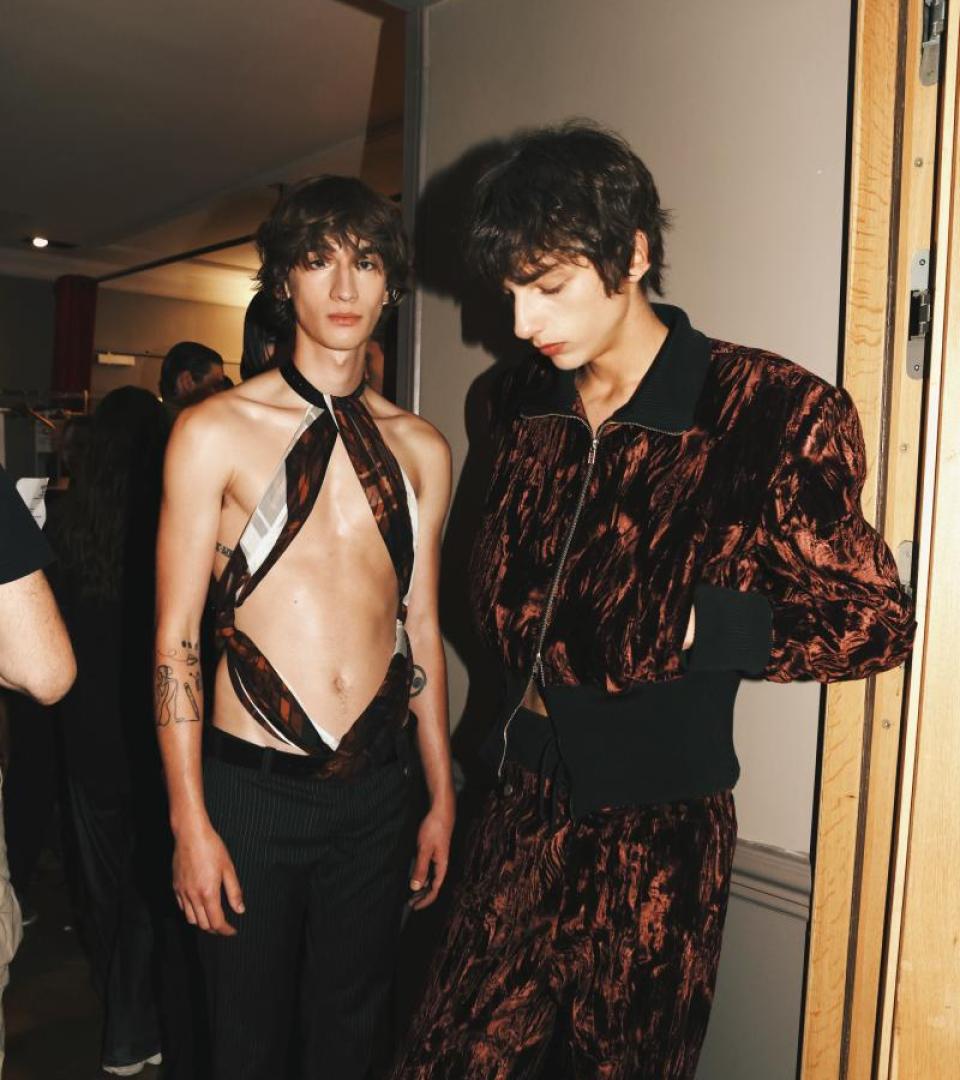
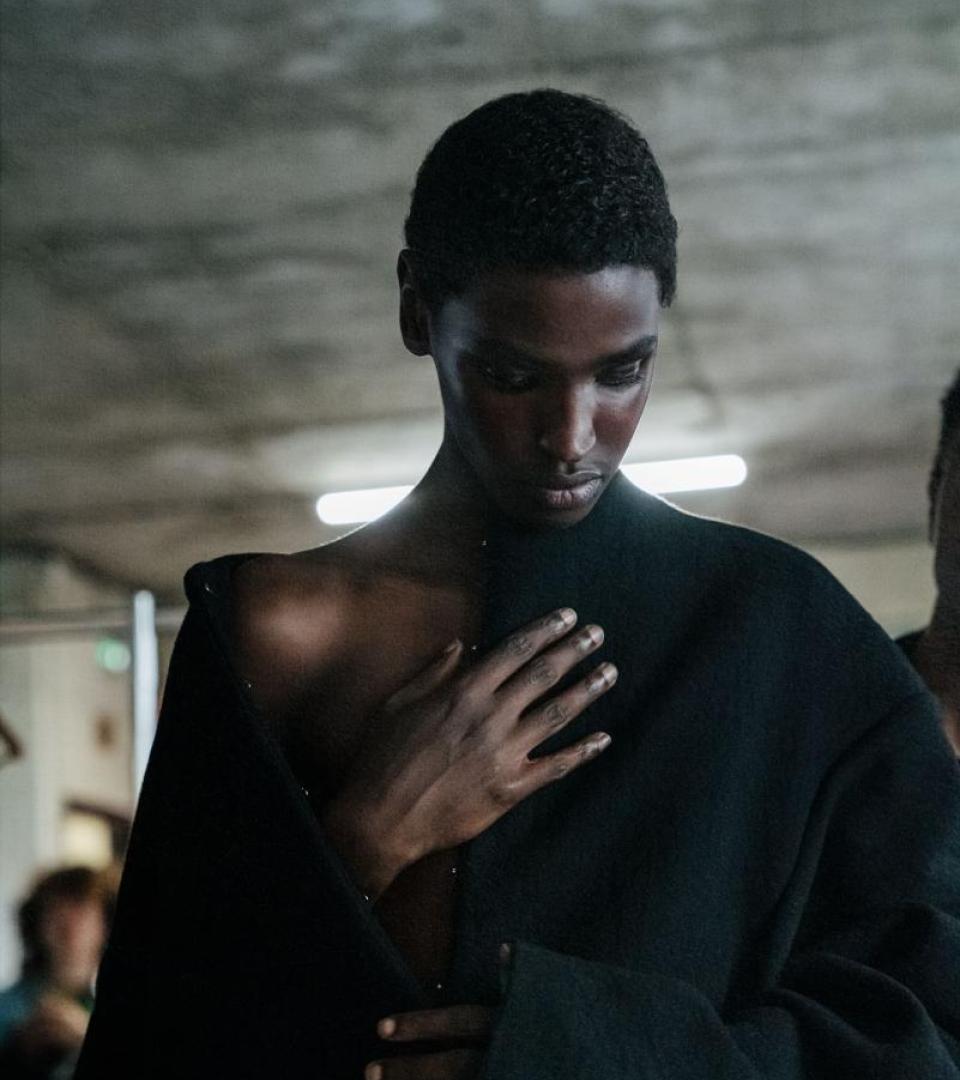
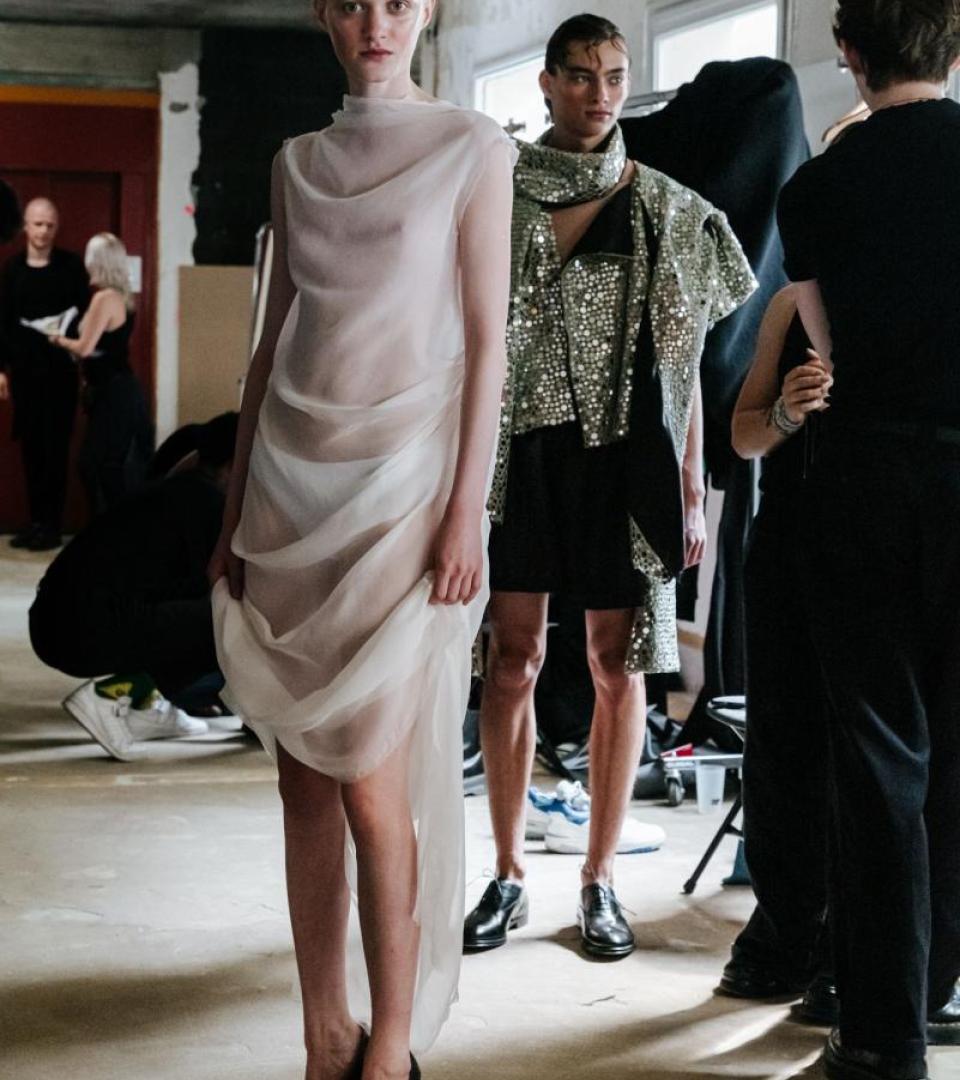
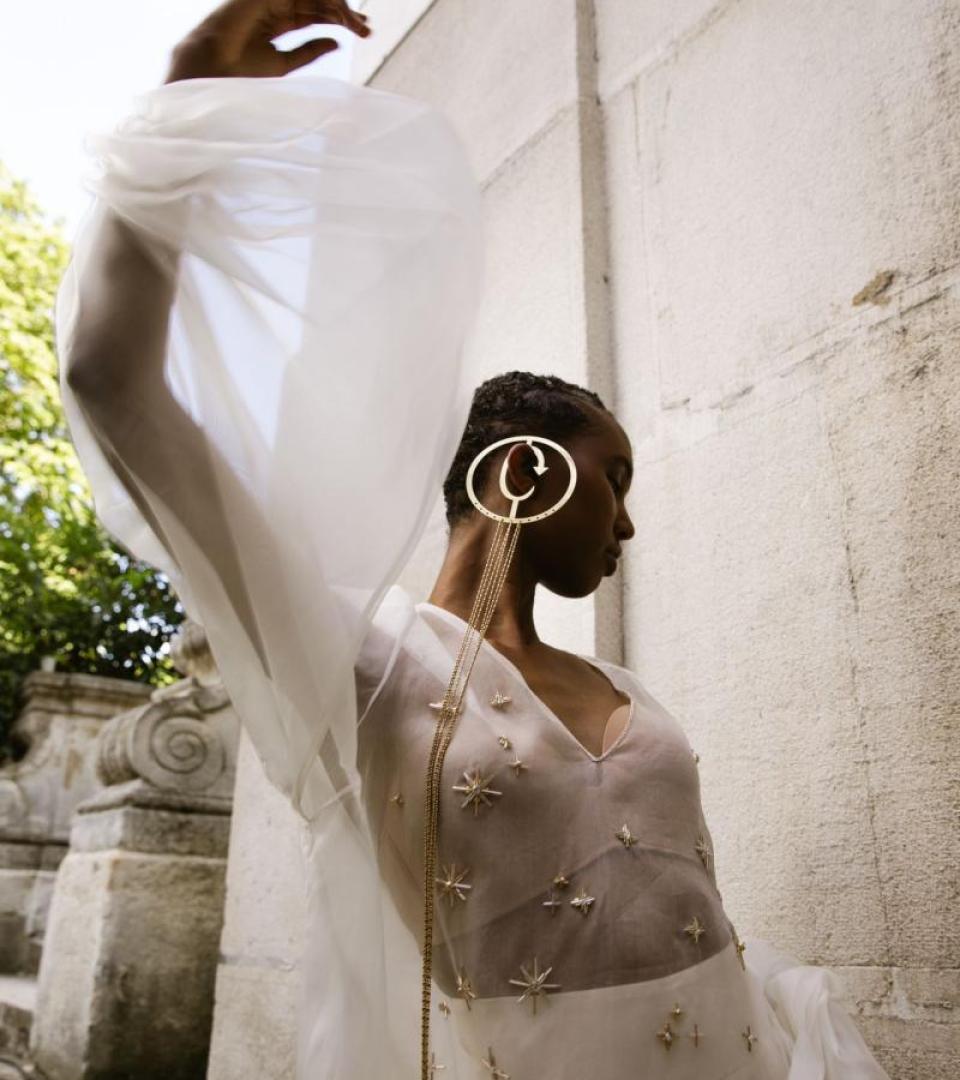
"There is no wrong side" is really about honesty carried all the way through. Every element – whether it's the inner lining or the outer fabric – is made with the same level of care. Nothing is hidden, nothing is a shortcut. The clothes are designed and produced with the highest quality and respect for the woman who will wear them, and she feels that—she wears it with confidence, with love. It also means there's no single right way to wear LITKOVSKA. I want people to play with the clothes. In this collection, for example, a voluminous blouse unfolds into a long dress and a cape turns into a hood. The garment keeps revealing new versions of itself.
Your tailoring often exposes construction rather than concealing it. What did you want to reveal about the making of the clothes this season?
I like to show how a garment is actually built. Openness matters to me, because these are intellectual garments; they carry ideas, they carry messages, and they need to stay open, even if never transparent.
There is a recurring tension in your work between masculine structure and fragility. Has your understanding of that contrast changed as the brand has evolved?
What a way to put it – and yes, I completely agree, it is recurring. That tension between masculine structure and fragility sits at the very core of who we are; it’s our signature, our instinct. But it isn’t static, it’s a dynamic tension with no equilibrium – it’s alive, always moving. I find my own creative space inside that movement, sliding back and forth across an invisible line, never letting the tension settle.
Traditional Ukrainian references often enter your work through technique, silhouette or objects rather than straightforward quotation. How do you decide when heritage should be visible and when it should remain almost hidden within a garment?
Heritage lives in me below the surface: the technique, the craft, the mastery are present in every collection, whether anyone notices or not. But when something traditional fits an idea so precisely that it demands to be shown, I show it plainly. This time, working with a traditional Ukrainian homespun weaving, I decided to turn it inside out, so the inner side faces outward, visible to everyone. I loved that gesture. It felt like us, right now: sometimes we hide our real selves to protect something fragile and delicate inside. But showing that the other side is beautiful too – even if the deeper beauty still lives within. It's really just another expression of my motto: there is no wrong side.
You have now built LITKOVSKA for more than fifteen years. At this point, what part of the brand’s language are you most interested in challenging rather than protecting?
What I want is to sharpen the codes I established at the very beginning but push their expression to the wildest extreme, so they speak to how chaotic and unpredictable the world has become. Something radical. That’s my mood right now, and honestly it’s how I started: this world is wild, and we're all learning to live inside that uncertainty. In daily life, you often don’t know what the next minute holds; you simply adapt. We had specially designed decorations built for the Paris show; [they were] destroyed in Kyiv by a missile strike. It's a sad thing to lose. But set against what Ukrainians are living through right now, it's genuinely insignificant. Holding onto that perspective matters to me — staying open, refusing to let your world shrink. That's when you actually feel life.
This interview has been lightly edited.