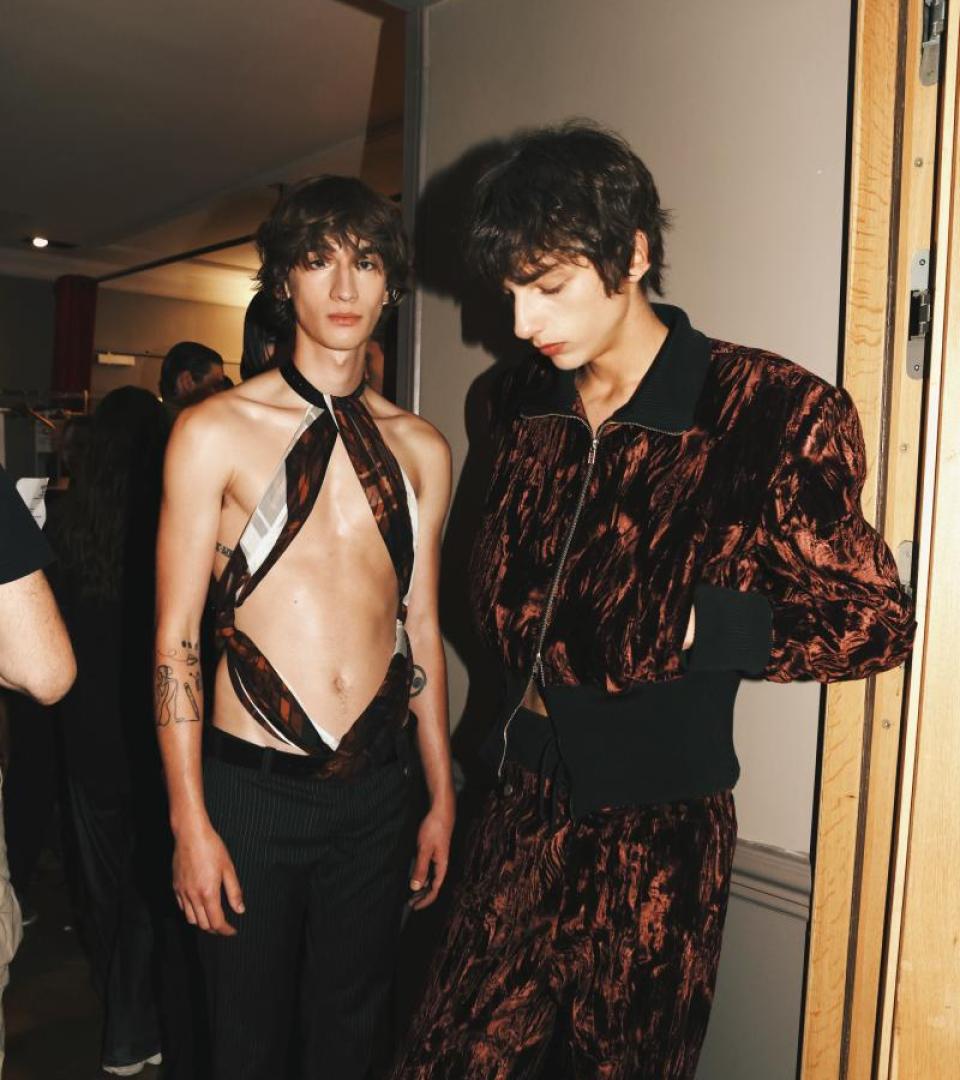
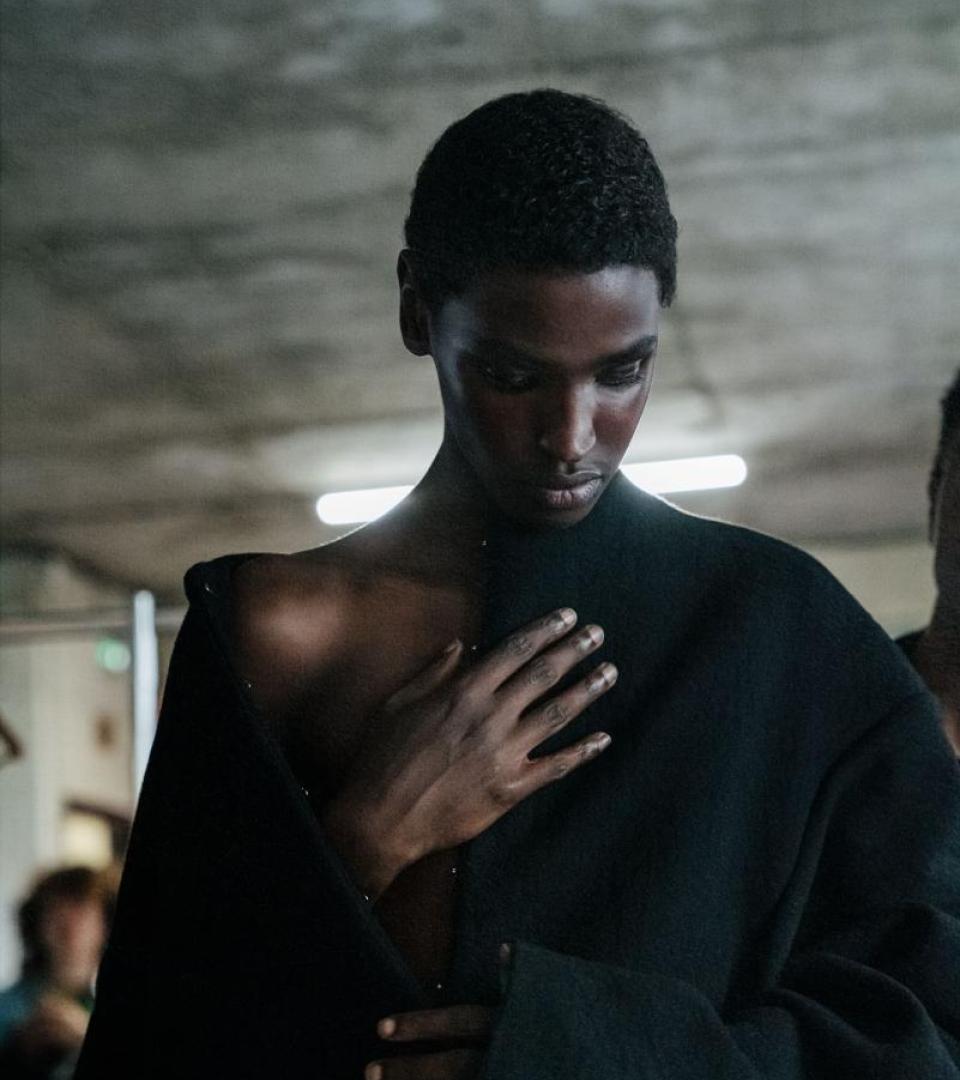
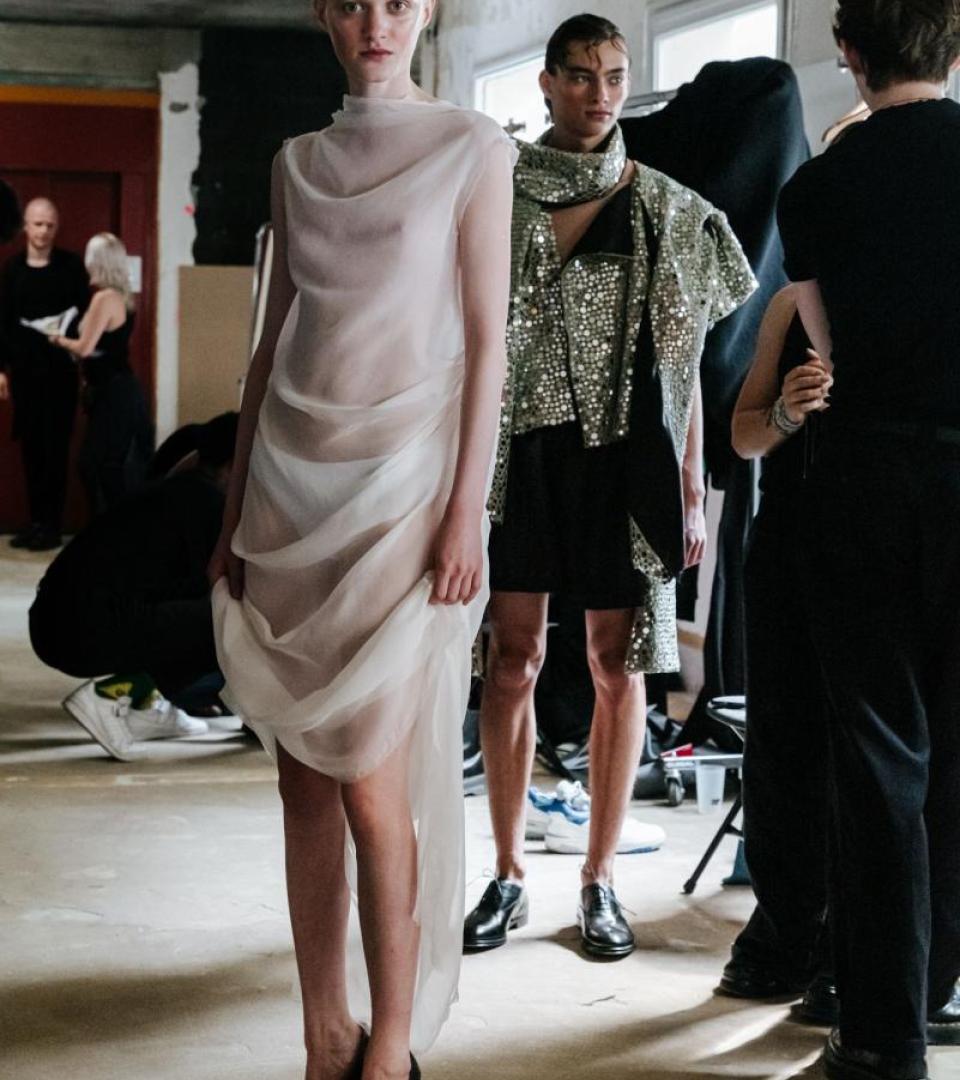
On paper, the offering is simple: Japanese tailoring and luscious fabrics. Leave it to Kostadinov to alter that perception. He rendered the ease and fluidity of tailoring with his signature geometrical play, this season borrowing from the clean lines of Dom Hans van der Laan, an architect and Benedictine monk, who designed buildings according to recurring mathematical formulas. Sumptuous cashmere and wool are at once pullovers and dresses. To advance the simplicity, there were no exposed zippers, buttons hidden by plackets and minimal topstitching piping, tapes and trims. The stripped back palette of black and navy is disrupted with flashes of vermillion and sulphur in the show’s color-blocked denouement. Other uncanny elements come in the form of a new collaboration with Crocs that is sure to tantalise fashion folk and the young acolytes clamoring peacocking outside the venue in equal measure. The result was a distinct maturation of his unique brand of sportswear that is as intellectually stimulating as it is sartorially stirring.
“There’s no vibes or characters or thinking about what the clothes will do after the show,” Kostadinov shared backstage after the show. “There was the idea of precision. I call it restricted variation.”
What would you like us to know about the collection?
It’s about getting to the core of an idea and working on fabrics. There aren’t many fabrics, no prints, no jacquards, no fabric development. It’s plain materials but rich in terms of using Loro Piana wool, cashmere, virgin wool, mohair. It’s being guided by the materials and playing with the garments so you can’t really describe what they really are. It was about making stuff on the stand. There’s no hiding behind the materials or the archetypes.
What was the jumping off point like for you this season?
It’s actually really nice and refreshing not having the resources, that was the reason why we're making it so simple and more like minimal, because we didn't know how to make a lot of the things we make today. And just having the access—sometimes it's not the best thing, so just restricting the access to what we have and building the collection around that.
How did the design process differ from previous seasons?
I wanted to focus on being excited again, making things I don’t know how they will look in the end. I had this idea and it’s only at the show when you see it come acros— it’s the moment it all comes together. It’s the best moment when they’re all walking and exiting together. In previous collections, I knew how it would look, how it would be styled, giving attitude to the boys, but nothing [this time]. The clothes had to bring attitude themselves.
The show notes talk about the clothes being ‘happy being challenging.’ Could you expand on that?
Being challenged: what does it do? How much of it exists beyond this moment? Who is involved? We don’t know yet. It’s one of those collections. We have all these other projects outside of the runway so it’s nice to do something that you have to take maybe a season or two to really like it. For me that’s what fashion should be. It’s not that you have to ‘get it’ because that’s pretending some people don’t know what they’re looking at.
This interview has been lightly edited.