What inspired this collection?
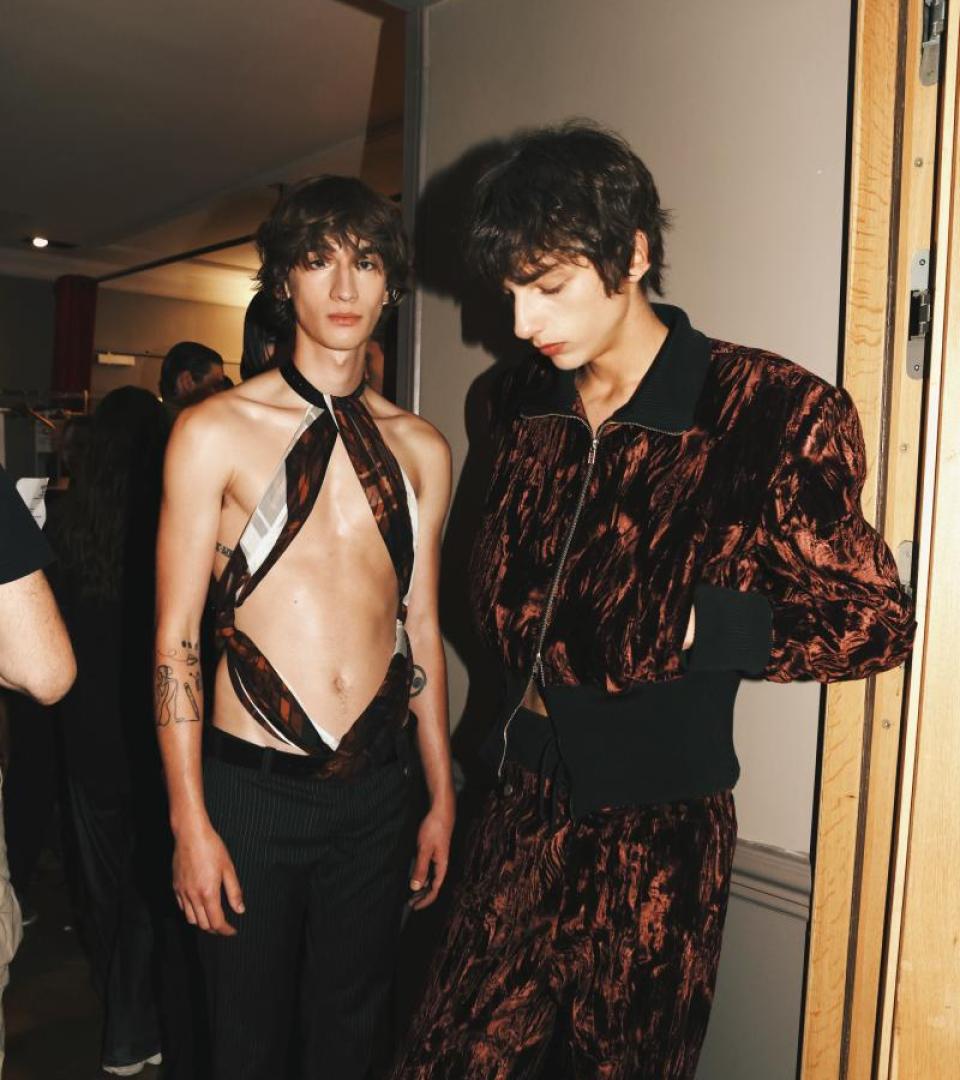
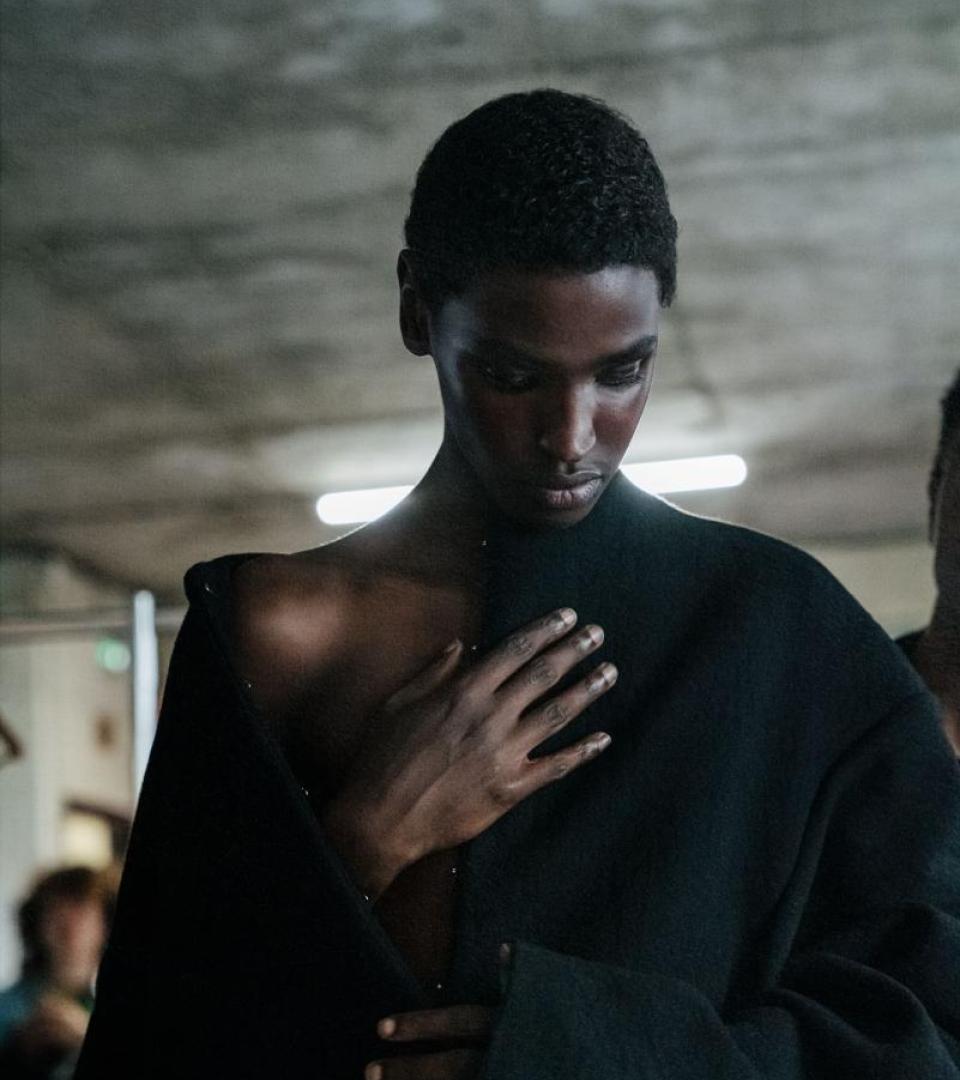
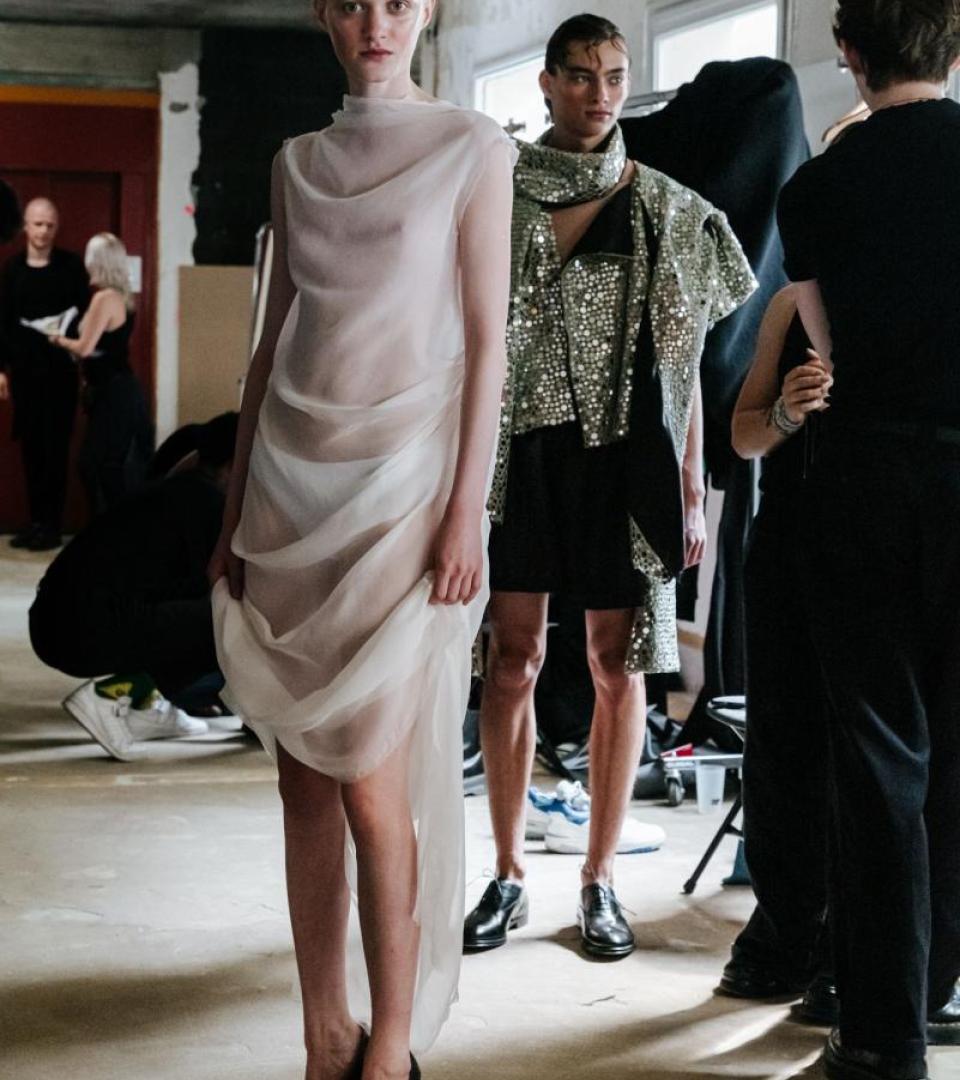
The material becomes a signature, but also a graphic element that I want to see in more wearable pieces. My fundamentals are still there: animals and plants, animal prints, leaves, the idea of camouflage, of blending into the background. The pieces remain utilitarian and technical, with great care to details. Anne Geene's Book of Plants particularly struck me: her approach to collecting and archiving resonates with my work. Like an herbarium of living things, where one collects, classifies and archives almost obsessively. There is also the influence of the cabinet of curiosities, an analysis of nature like a laboratory technician would do: something metallic, clean, neat, almost clinical. Archives, nets, mixtures... all this imagery feeds the collection.
How would you describe your colour palette?
The palette features shades that could be found in nature, in a herbarium, as if they came from a study of living things. The shades are quite muted and organic.
However, I wanted to keep a touch of blood orange, which is more pop. This colour came about almost intuitively: it comes from a pipe I used in one of my very first pieces. Over time, it has become a strong marker.
Which materials did you particularly enjoy working with?
I enjoyed working with technical materials – especially clashing stiffer, almost paper-like textures with softer ones.
Collaborating with workshops such as TDF was particularly stimulating. I like to develop new effects and to move away from traditional approaches.
What really drives me is the pleasure of inventing new materials, while remaining connected to contemporary textile technologies.
Share a movie or book that still fascinates you?
On my bookshelf, you'll find herbariums, vintage magazines on the art of gardening, but also books on wilderness survival.
Savoir Revivre by Jacques Massacrier remains a reference that has stayed with me over time.
A childhood memory that determined your vocation?
My family and I did a lot of gathering and harvesting. This deeply nourished my imagination.
Very early on, I developed this relationship with herbariums: keeping records, archiving living things, harvesting, gathering... then transforming the material into something else, a bit like cooking.
That's where my almost instinctive relationship with materials was formed.
How would you define yourself today? Your aesthetic?
Nature remains a constant in my work, but it has moved with me – from Jura to Paris – towards a more experimental interpretation.
I like to define myself as a mixture of gardener, chemist and alchemist.
My aesthetic is built on the crossroads where nature and new technologies meet: pushing materials, experimenting, revealing new patterns. The material is both my signature and my graphic language, including in more wearable pieces.
We always find animals and plants, camo process, utilitarian and technical pieces, with extreme care to detail.
The influence of Anne Geene's Book of Plants remains very present – this idea of archiving living things as in a herbarium, almost obsessively.
And always this dialogue with the cabinet of curiosities: nature observed through the eyes of a laboratory technician – metallic, sharp, organised, almost too clean.
Your mantra? Your lucky charm?
My Freitag bag.
Its very distinctive colour is both my favourite colour and a signature shade for me. I am a collector: I don't have many objects, but I treasure the ones I love.
It's a kind of ode to the object.
Your vision for 2026 and your plans?
The year will begin with a new, more structured collection, a new era for the brand.
I want to keep developing partnerships with workshops that are close to my heart, such as TDF and Pyratex in Portugal, but also with Parisian craftspeople with whom I deeply enjoy working.
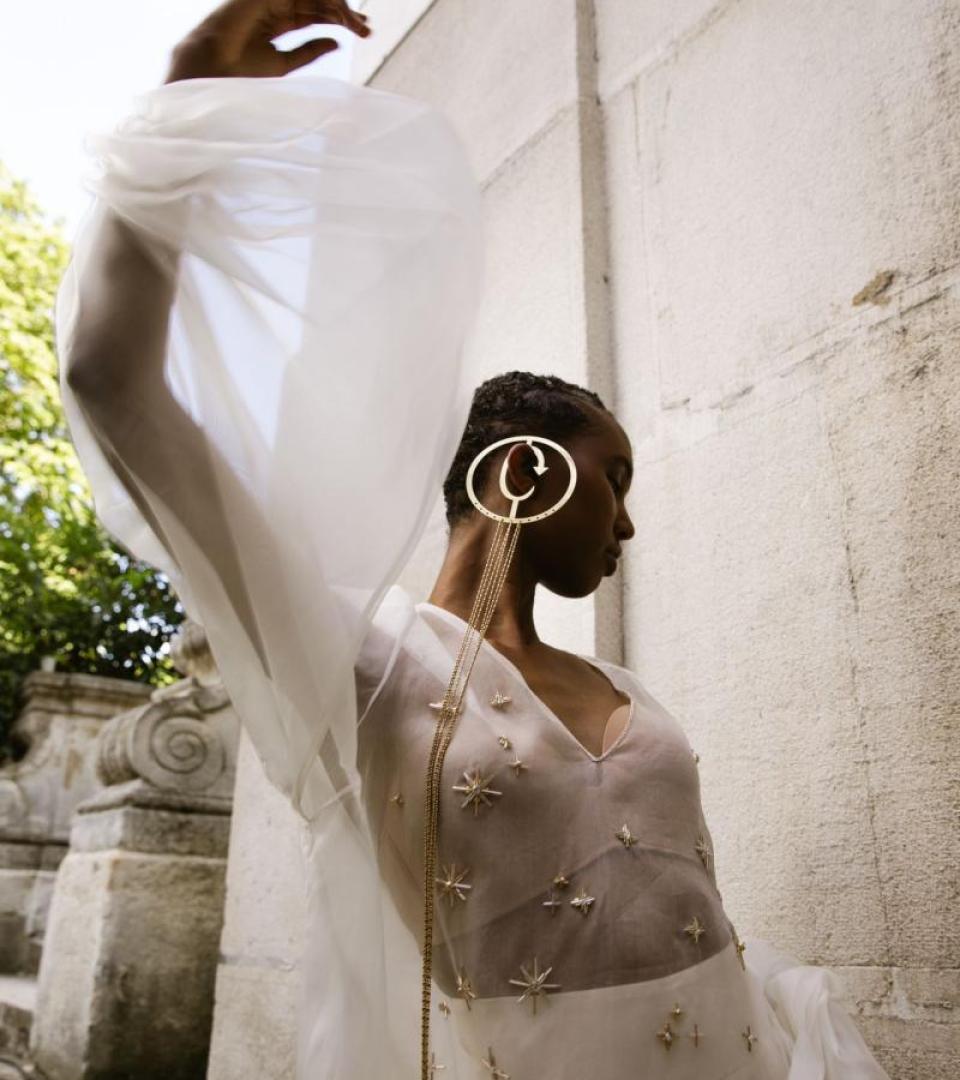
The development of jewellery is also a key focus for me. It's a very distinctive, signature area: continuing to develop the pipe in other materials, reworking it, transforming it.
L.B.
This interview has been lightly edited.