MATTHIEU RUIZ - Gentle brutality
Having studied design in Strasbourg, Matthieu Ruiz began his career as a visual merchandising manager before launching his own brand in 2023. His work with natural dyes forms part of a unique approach, in which the material becomes a narrative and the gesture evokes a trace. Ruiz’s work is part of the SPHERE Showroom, an initiative for emerging brands organised by FHCM with the support of L’Oréal Paris and Le DEFI taking place at the Palais de Tokyo until June 28.
How are you approaching this season ?
With great enthusiasm. This season marks an important milestone, as I am presenting my first wholesale collection at Paris Fashion Week. After several years of research into natural dyeing and contemporary craftsmanship, I feel that the project has now reached a new level of maturity.
How does this differ from the previous collection?
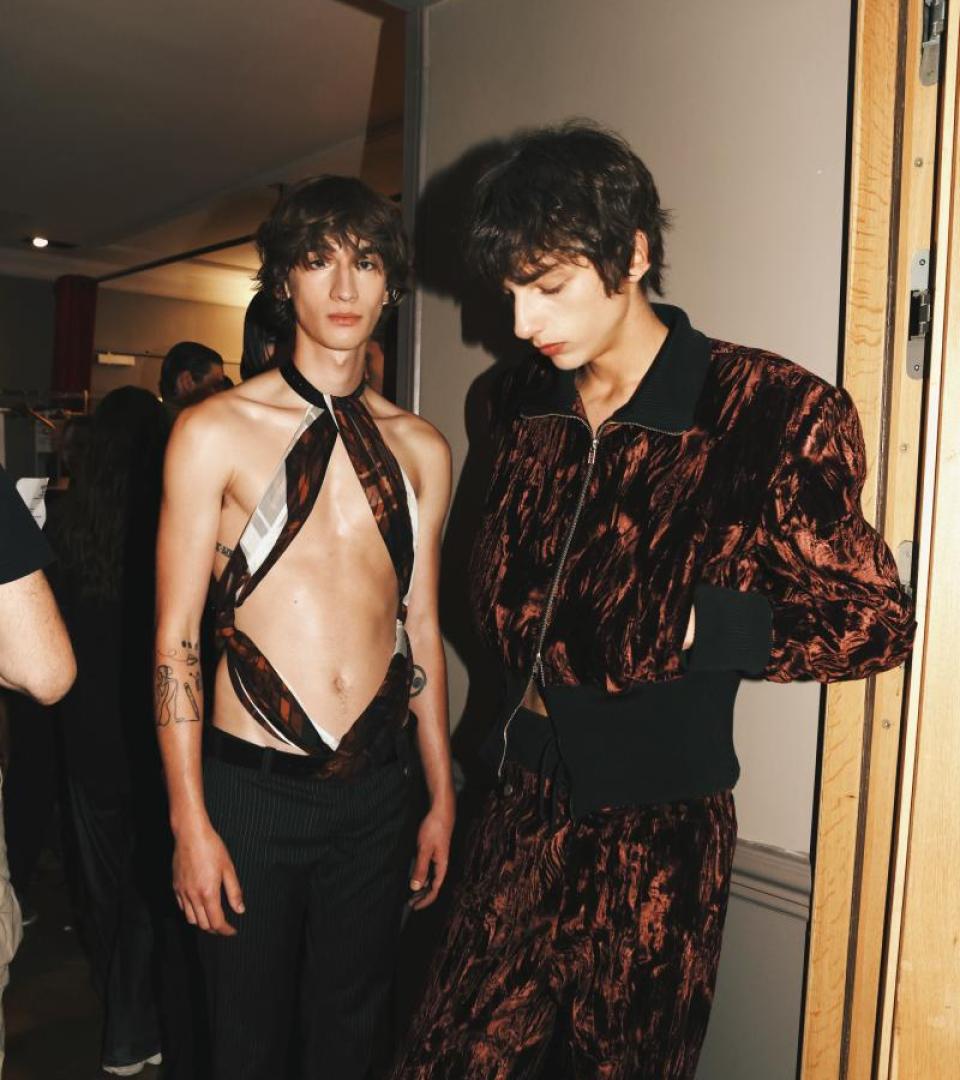
The previous collection recounted a very personal memory. This season broadens the perspective and focuses more on collective memory, rural areas and the everyday elements that surround us. The collection explores different forms of masculinity; the theme is more open, whilst remaining deeply autobiographical.
In what way is summer a special time for you?
Summer is a season that seems to slow down time, and yet it is so short that we do everything we can to make the most of it. It is often a time when we reconnect with our family, our village, our routines, or some childhood memories. Many of the stories I tell in my collections have their roots in moments like these.
A vacation-related memory ?
The summers I spent in my village in Moselle (a region in the East of France), riding my bike, playing football, but also the long days spent outdoors and family meals. These are very simple memories, but they still fuel my imagination today, particularly this Spring–Summer 2027 collection entitled, ‘Le flou du village.’
What are your influences or inspirations ?
My university studies in design have had a significant influence on my way of working, particularly through sociology, philosophy and the observation of everyday practices. I’m interested in objects we no longer notice; in everyday clothes and in what they reveal about us. I also like Tomi Ungerer’s work for his ability to tell universal stories; in fact, my cloche hats, which I’ve been making for some time now, are inspired by one of his stories. Specifically for this collection, I drew inspiration from the male role models of my childhood and teenage years: my father in a suit on his way to the office, my grandfather the postman, my uncle the footballer, my cousins who were handymen, the men coming out of church on Sundays;, the very same men you’d find around the football ground in the afternoon…
Your favourite place in Paris lately ?
At the moment, I’m spending a lot of time between the 19th arrondissement of Paris and Saint-Denis. In the summer, I can be found in the area between the Canal Saint-Martin, the Canal de l’Ourcq and the Parc de la Villette.
The importance of craftsmanship in this collection in particular ?
Craftsmanship is the starting point for this project. The entire collection is built around natural plant-based dyeing. The variations in colour, textures and irregularities are an integral part of the garment and lend character to my designs, which, paradoxically, remain minimalist despite featuring quite a few layers. I support the idea of contemporary craftsmanship, where the craftsman’s touch remains visible in every piece.
How to reconcile tradition and innovation? Any examples?
I believe that innovation can also arise from a new way of looking at and using existing expertise. I use traditional plant-based dyeing techniques, and yet I feel as if I’m bringing something new to the table.
I often use the example of a bear on a unicycle. A bear and a unicycle are almost commonplace, but when you put the two together, they create an unexpected surprise. My work exploring imperfection, blemishes and the unexpected, set against the world of fashion where standards are so high and the quest for perfection seems relentless, creates a certain tension and I believe that is where innovation arises. I’m developing near-cold dyeing techniques, using little energy, little water and few plants : is this an innovation? I don’t know, but it demonstrates once again that there are other ways of doing things anyway.
How would you define this ‘gentle brutality’ and your work, particularly with natural dyes?
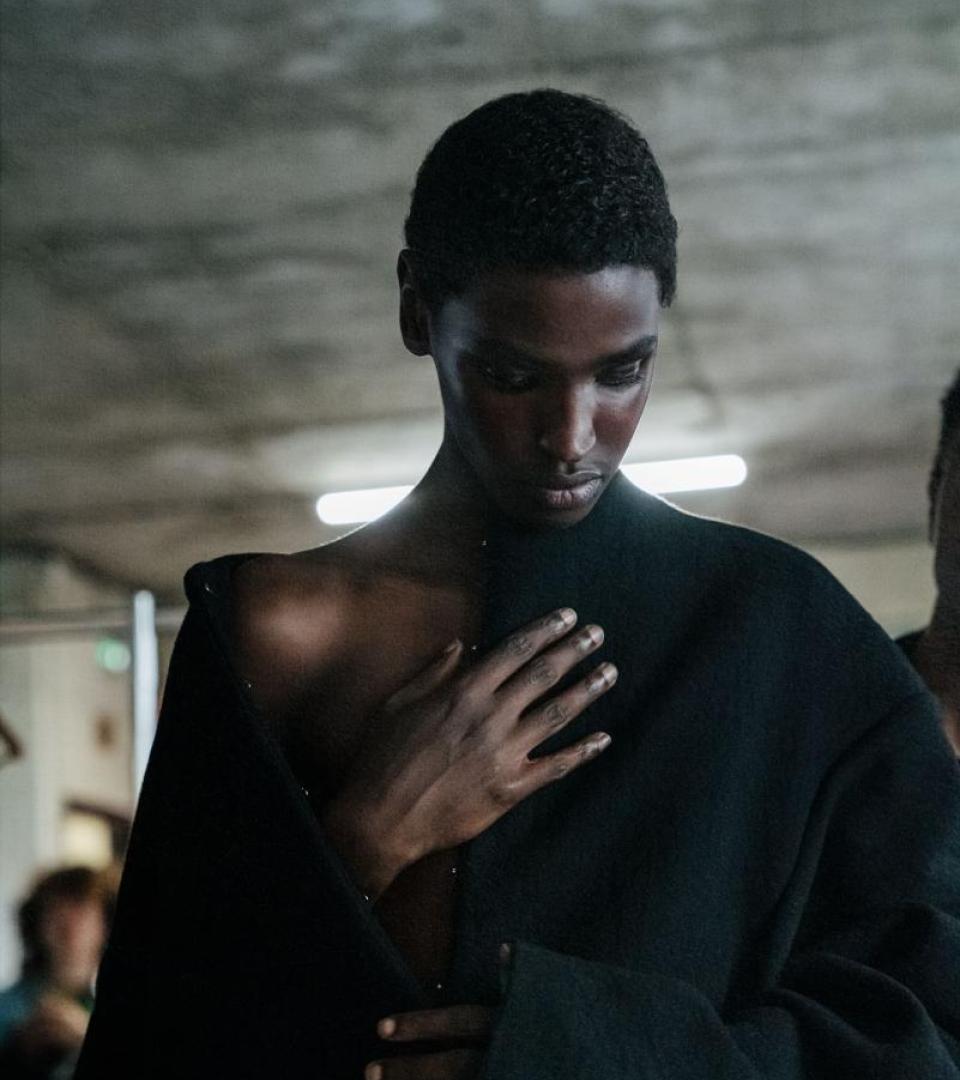
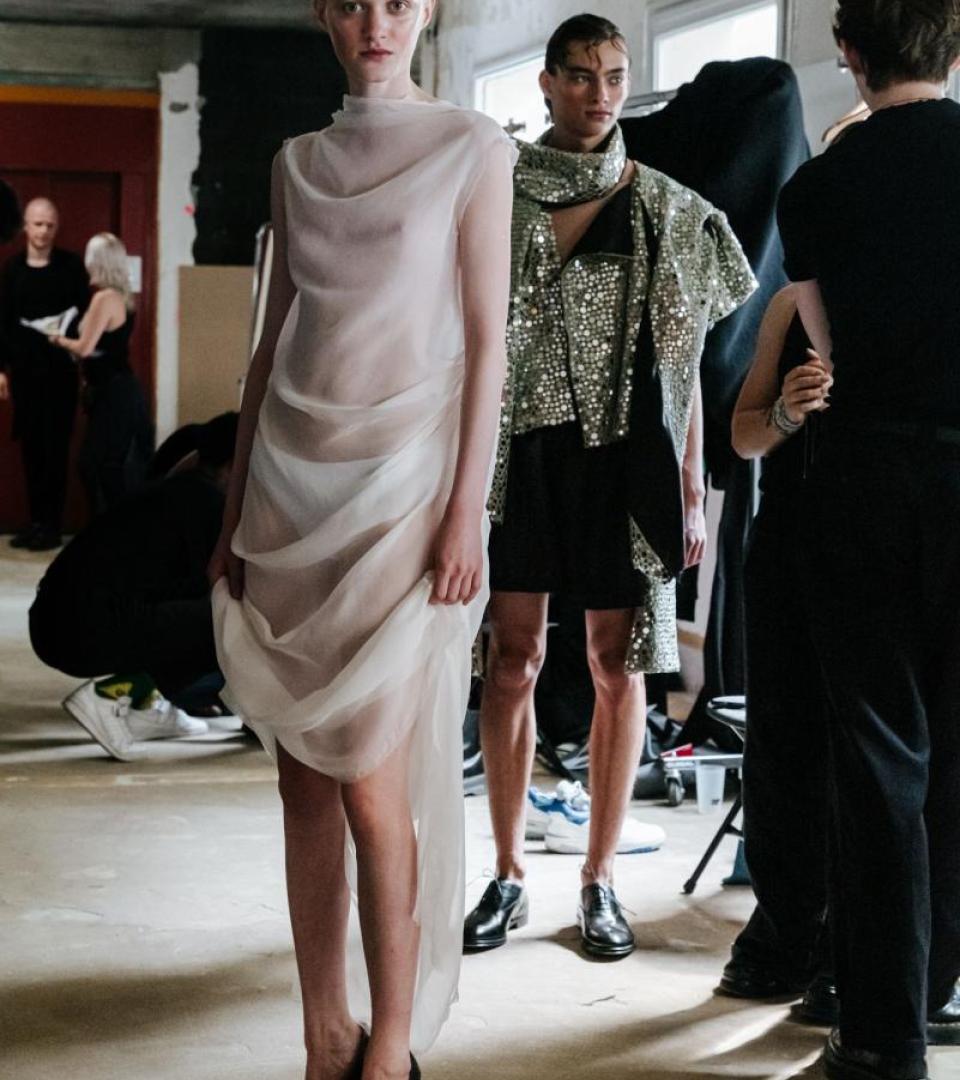
Soft brutality is the meeting of something robust and something sensitive. On the one hand, there is the idea of the uniform, of workwear, of durable materials and raw elements. On the other, there is the softness of plant-based colours, the traces left by the artisan’s touch, and the emotion and poetry that I infuse into imperfection. Natural dyeing alone is not enough; it is the composition of the silhouettes, the subtle details, the natural and lightweight fabrics… this complex synergy that precisely creates this balance between strength and fragility.
Where do you go to escape the heat during a heatwave?
My flat, where it’s cool there all year round, or my parents’ house when I go back to Moselle. Also – and sorry to keep going on about this – natural dyes really do act as a barrier against UV rays.
Your favourite destination?
Spain, whether the Costa Brava near the border, or the Costa Blanca near Alicante. I used to go there very often when I was little, as my father is Spanish. As I got older, I started travelling a bit late, and my first trips were to Spain or Spanish-speaking countries.
What does it mean to be European in 2026?
For me, being European today means living at the crossroads of many different histories, cultures and traditions. I grew up on the German border, where moving from one country to the other is quite natural. In Strasbourg, you can get to Germany by bus and tram, so I think you very quickly come to see Europe as an open and accessible space and, ultimately, a very tangible one.
Beyond that, I think that, philosophically and politically, there are certain subtleties that I haven’t yet incorporated into my thinking at this stage of my life; but which in no way fail to interest me.
L.B