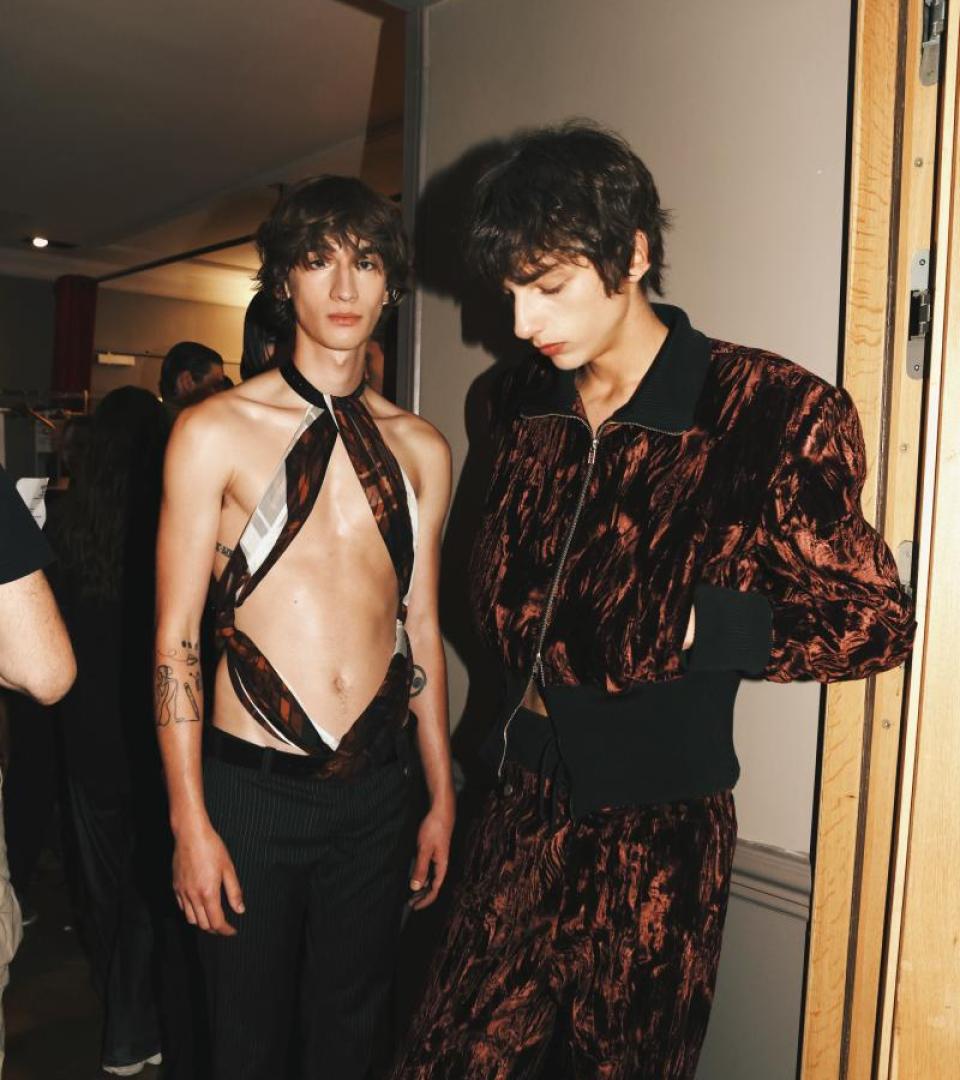
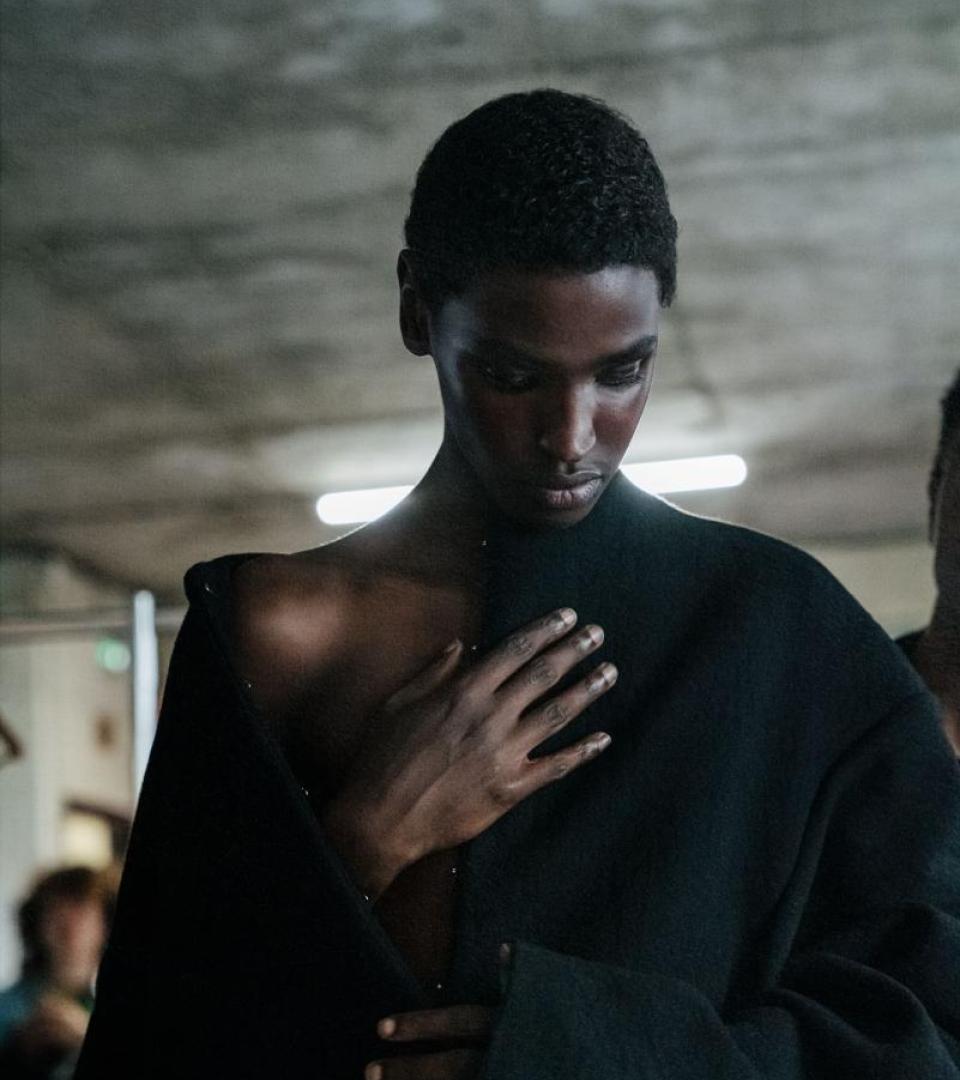
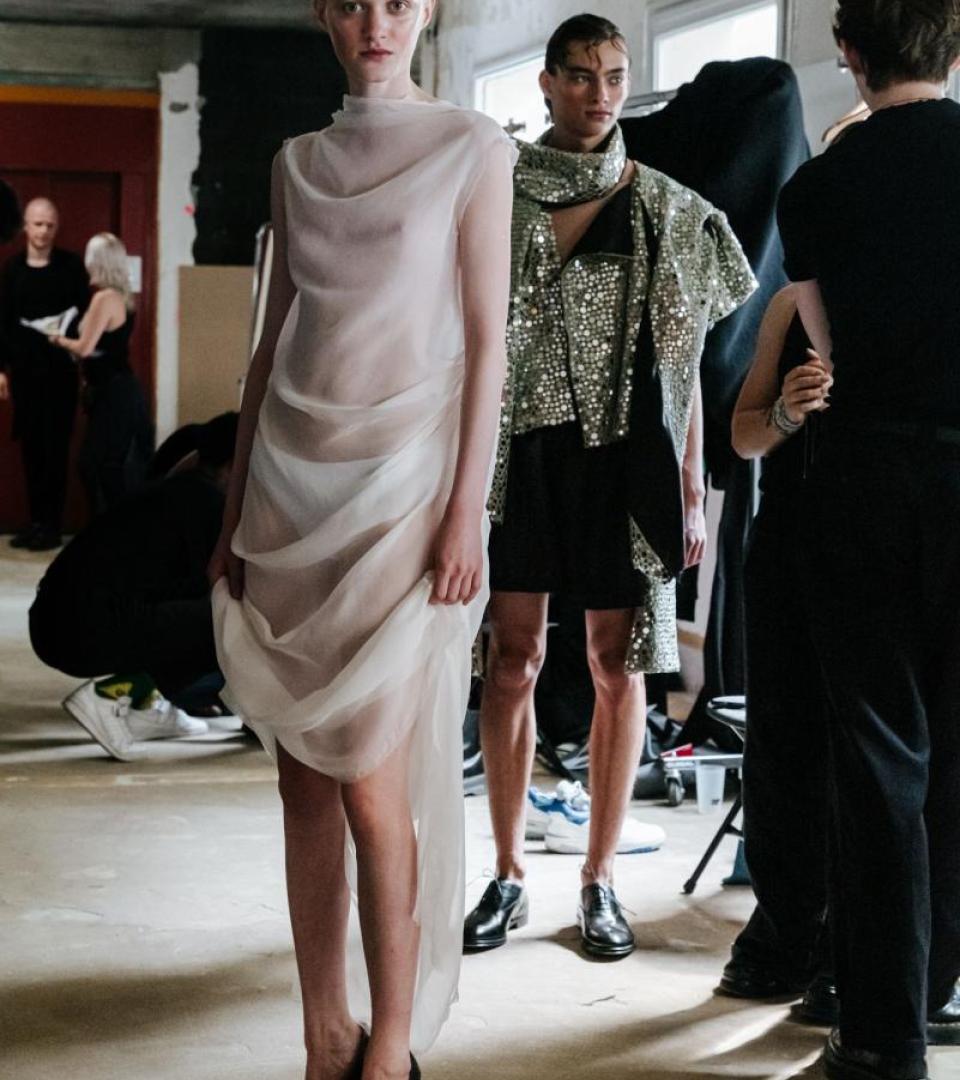
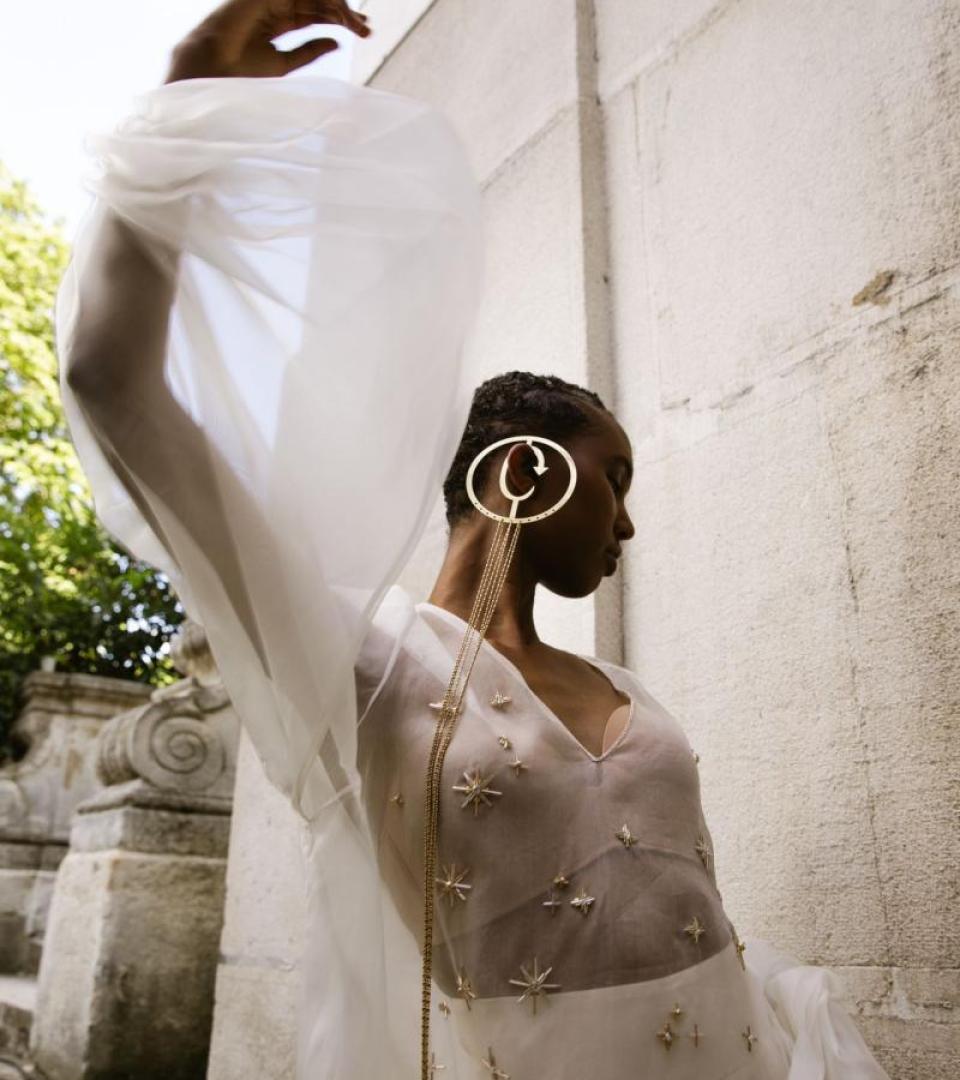
From the outset, SHOWstudio was about intention around process. Twenty-five years on, everything behind the scenes is often on social media and out into the world.
I always felt excited by what I see and what I do. And I think my frustration prior to SHOWstudio was I was in a studio with wonderful things in front of my camera and maybe only five to 10 people in the world would ever see them. I knew there are a lot more people who would be absolutely fascinated to see how Naomi Campbell models, to see what an incredible couture dress looks like. I think there were so many wonderful things happening and still happening; that it's really a question of sharing. It's sharing what you're excited about. And there's also a feeling that I wanted to dispel the sort of common understanding of what fashion was. What I saw in the press, especially the British press, was so far away from what I experienced that I really wanted to say, ‘It’s not like that; it’s not a sort of reworking of Blowup.’ It's about working in a team pushing to get the best possible image. And that some of these clothes are incredible. I didn't feel that they were really being given the sort of chance to shine I've always felt that fashion is an art form – a highly important cultural art form – that was presented far too often as some trivial, scandalous thing.
Then is it too much to say SHOWstudio has been an act of love?
I think that's a very fair way to describe it. To be honest, I think it's an ongoing act of love. And I think it's also bringing in a whole range of people who were excluded before, the audience being one of them – and a very important one because, of course, now we're so used to the audience being part of our communications through Instagram and what have you. I think that the audience wasn’t allowed in before; they weren't allowed into the process and they weren't allowed into the shows. It wasn't until SHOWstudio did Plato’s Atlantis with Lee McQueen when I said, ‘Let's broadcast this to the world.’ The world was a bit too keen and came crashing in the millions! There was really a lack of opportunity for the audience to get involved. I think that's really, really changed now. And I love that. I love the fact that we have a community; we have an audience; and we have a network – all these ways of describing it – and this means that they are part of the process of creating work and commenting on it and understanding it.
The notion of zeitgeist and SHOWstudio go hand in hand. You, and the teams around you, seem to have a sensitivity around defining the zeitgeist as it applies to fashion, but even more culturally. And somehow, you have always maintained a very interesting connection to it. What is the secret sauce there?
If I had to hazard a guess, because you're asking me, I think it's because SHOWstudio has not been run as a business. We haven't run it for profit. We haven't ever tried to come up with a clever marketing thing to make money. SHOWstudio has always been for the love of the art, for the love of fashion. That's why it was created. It wasn't like, ‘How can I make a million bucks on the internet?’ We never wanted to be that. We wanted to be something which really was just expressing our love of the art. And because the art changes, you change; and the designers come along with you. We've seen designers grow up with SHOWstudio – people like Jonathan Anderson, who used to come around here and sketch. It was a way of showing our love and our fascination, our ongoing interest in brilliant creativity, especially within fashion. So I think in some ways this keeps it going because [we are] permanently interested in new designers… And there's some great people coming out of India at the moment, like Raul Mishra. And how can one not be excited by Gurav Gupta, too.
And now to the inevitable subject of AI…
I totally understand and realise the worrying part of AI and the things that people are concerned about. What I also think with AI is that it is probably one of the most exciting ways to start to look at the world around us that we've ever had.
Let’s talk about the 25th anniversary box sets.
I’m in the studio at the moment, and in front of me is a sort of monolith of a hundred boxes, or actually 125 boxes. It's a year-long anniversary. So we are looking at 25 projects, which are all based on projects that have originally been on SHOWstudio. In 2001, we did the first box set; it was a bit like a time capsules. We had people like the architect, David Chipperfield. We had a young Jurgen Teller in there. We had Kata Moss in there. We had the kind of names that we were working with at the time we first started SHOWstudio. And I thought, ‘Okay, well, let's do another box set, like Marcel Duchamp’s Museum in a box [Boîte en valise]. We'll have 25 artists.’ And then I thought, ‘How can I represent SHOWstudio with 25 artists? I mean, we have Arthur Jafa in there, a really fantastic guy and I very much admire what he does. But you quickly think, ‘Well, what about so and so?’ So I thought, ‘You know what, in every box, I'll have the same 24 artists and then I will leave one space where I'll put one of the 100 artists.’ It could be Kim Kardashian, or Eugene Souleiman, the hairstylist. Everyone has done a piece of work with SHOWstudio, or they've all been interviewed. So there’s a bit more representation.
So once they're gone, they're gone.
Once they're gone, they're gone. There's a hundred of them that are for sale. They've started to go already. We're having an opening on the 29th where a lot more of them are going to go, but it's fine. I want people to have them.
This interview has been condensed for length and edited for clarity.