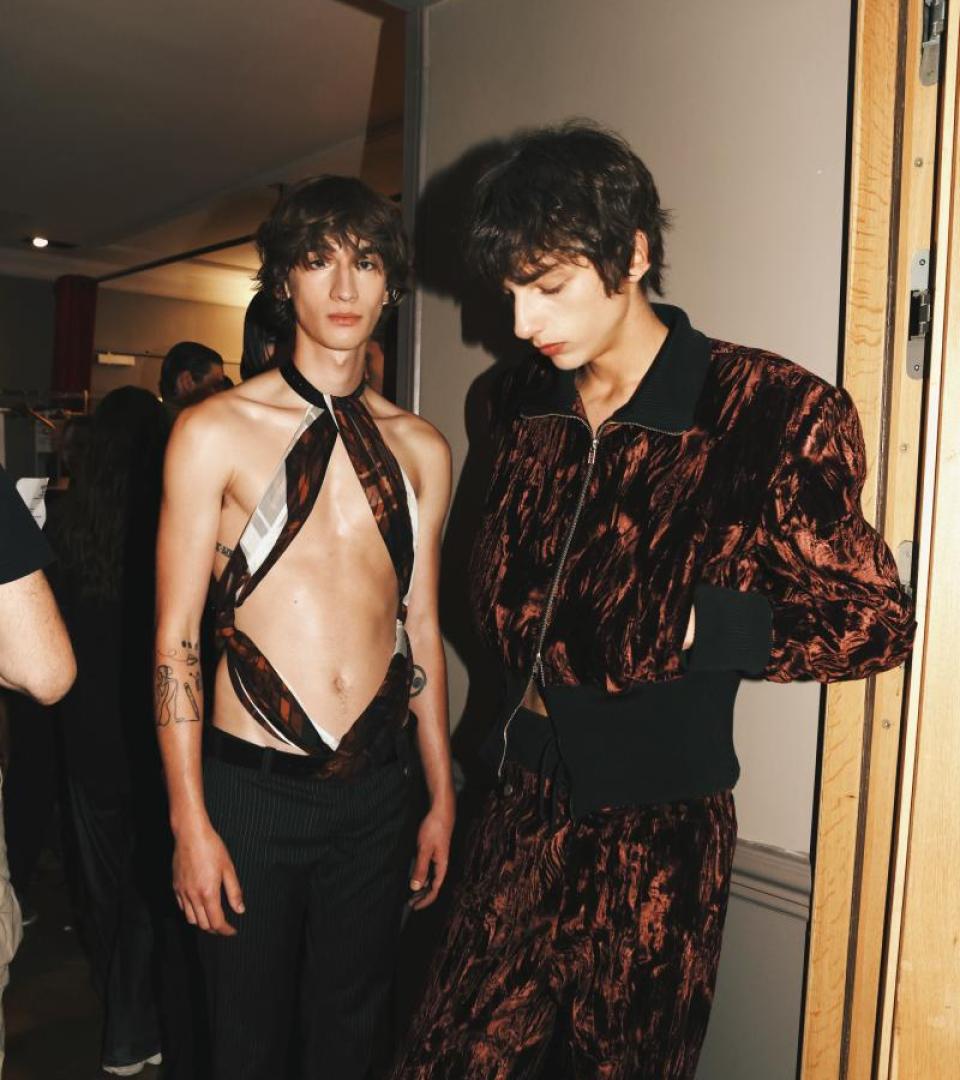
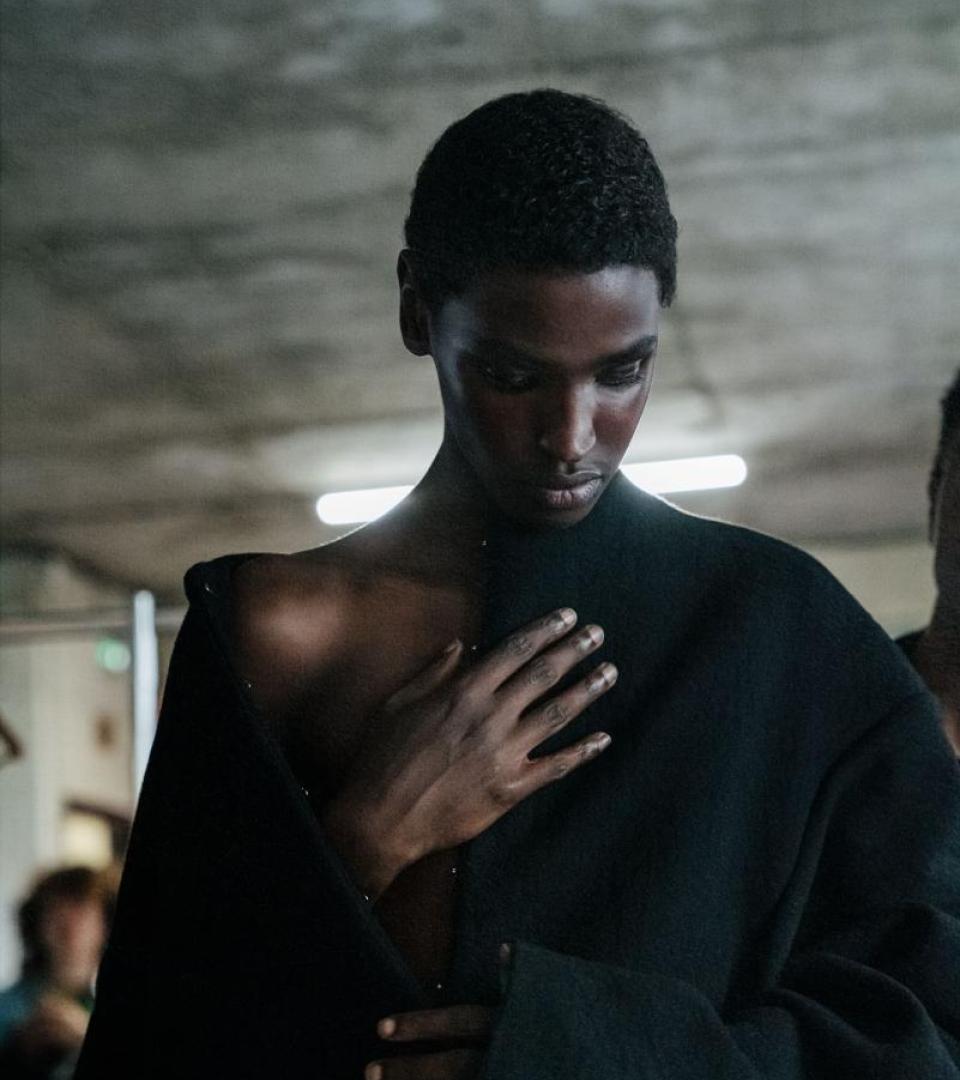
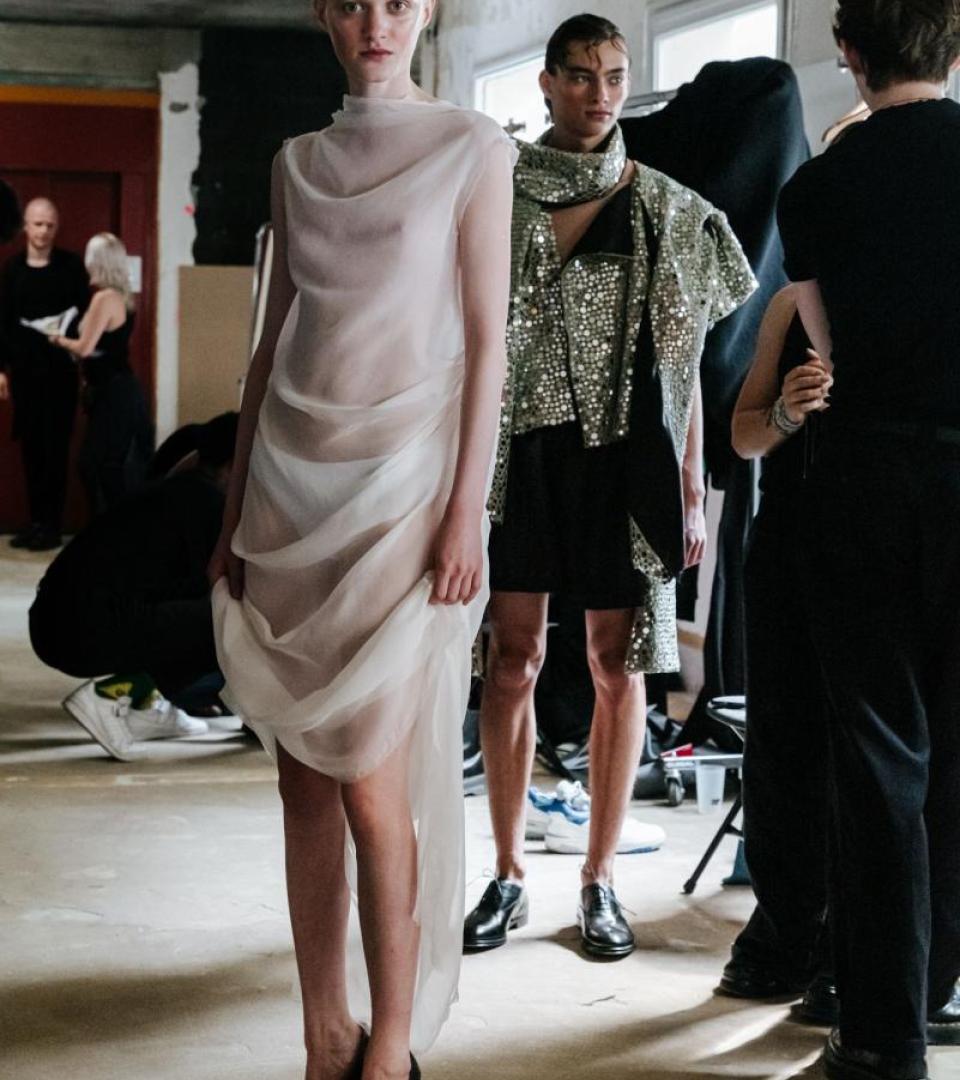
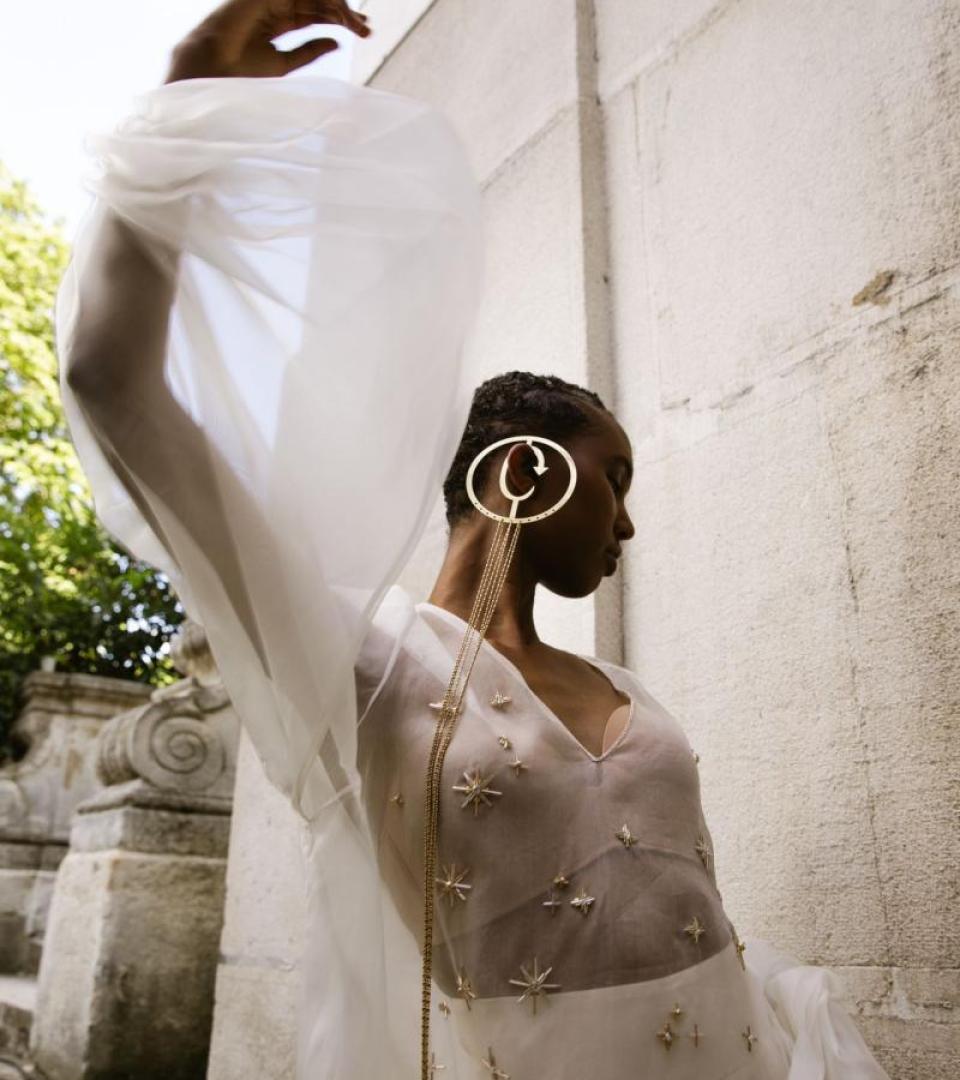
Every Robert Wun collection feels like a complete universe. What story were you telling this season?
I was trying to look back to childhood. We often look back and feel like these are [moments] we have lost, but it doesn’t make us any less connected to them. The more we realise that, actually the sensation we feel when we feel like some innocence in childhood, is a reminder to us of how important it is while you still have it, and it's our job now to be able to keep them protected and pass it on for a better future generation.
There’s the idea of innocence and the idea of what it means to have children, and the future generation of children. I looked back on cartoons and toys. What does it mean when we are young? These things already shape us and how we see society, identifying what is right and wrong; what is good and bad; you know, what is interesting or not. These are elements that, like toys and imaginary friends, we used to having when we're young and that create a surprising element here.
Was there a particular look that became the emotional anchor of the show?
I'm trying to push myself out of my comfort zone, so there's some new elements that I'm quite surprised to see, and some elements that maybe two years ago I swore I would never use, and this time we are trying it. I would say there are five or six looks that I am quite proud of this time.
Haute couture is often associated with tradition, yet your work feels remarkably contemporary. How do you balance heritage and innovation?
Perhaps it's something that just comes a bit more natural to me. I don't think I've ever – even before I started showing on the calendar – followed a traditional route. It’s never about needing to be more contemporary and less traditional. It's more about how we bring this concept forward and use craftsmanship to kind of immortalize it.
What does couture allow you to express that ready-to-wear cannot?
The story [behind couture] is the biggest difference between a ready-to-wear collection and couture. In ready-to-wear, you always have an anchor about what your consumer wants and what the market wants; whereas couture leads with what you want to say, and the client sometimes will actually take a back seat and try to understand what you want to do. I think it’s one of the beautiful things about the business model.
Your collections often blur the line between reality and fantasy. Why do you think people are drawn to escapism through fashion?
It may be more important than ever. What does fantasy mean to the world? You know, as long as there's a meaning, as long as there's intention, and as long as there is true purpose in what you create, it doesn't matter it's based on fact, it doesn't matter if it's ready-to-wear or couture, it doesn't matter it's fantasy or direct reference. As long as there's a purpose, then it's genuine, and there's a meaning, it's timeless, and it's relevant. I always believe fantasy is more important than ever for us to believe in a better future, to be celebrating imagination rather than confronting reality, in the sense of pointing fingers at people and blaming the world. Imagination sometimes leads us to believing in something.
This interview has been lightly edited.