Actualités

Street and Structure at Ujoh

Interviews

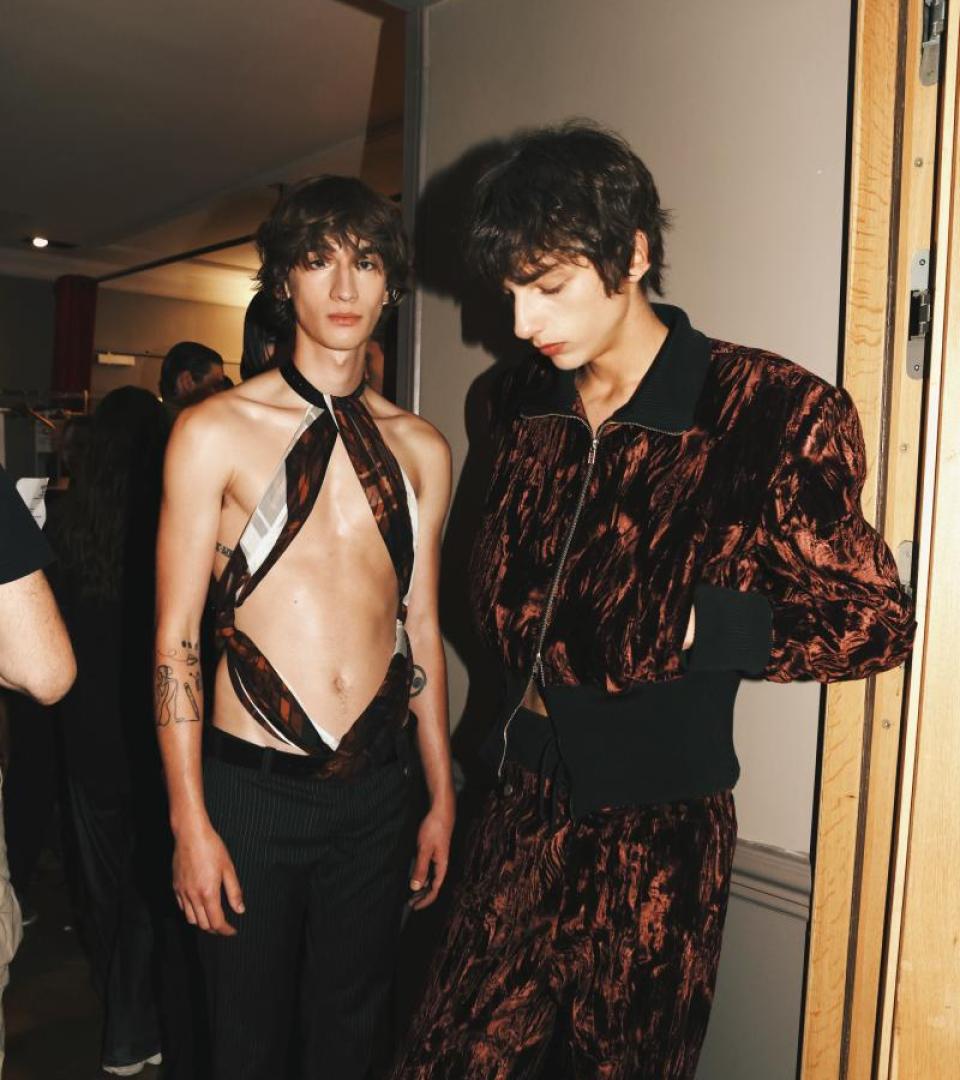
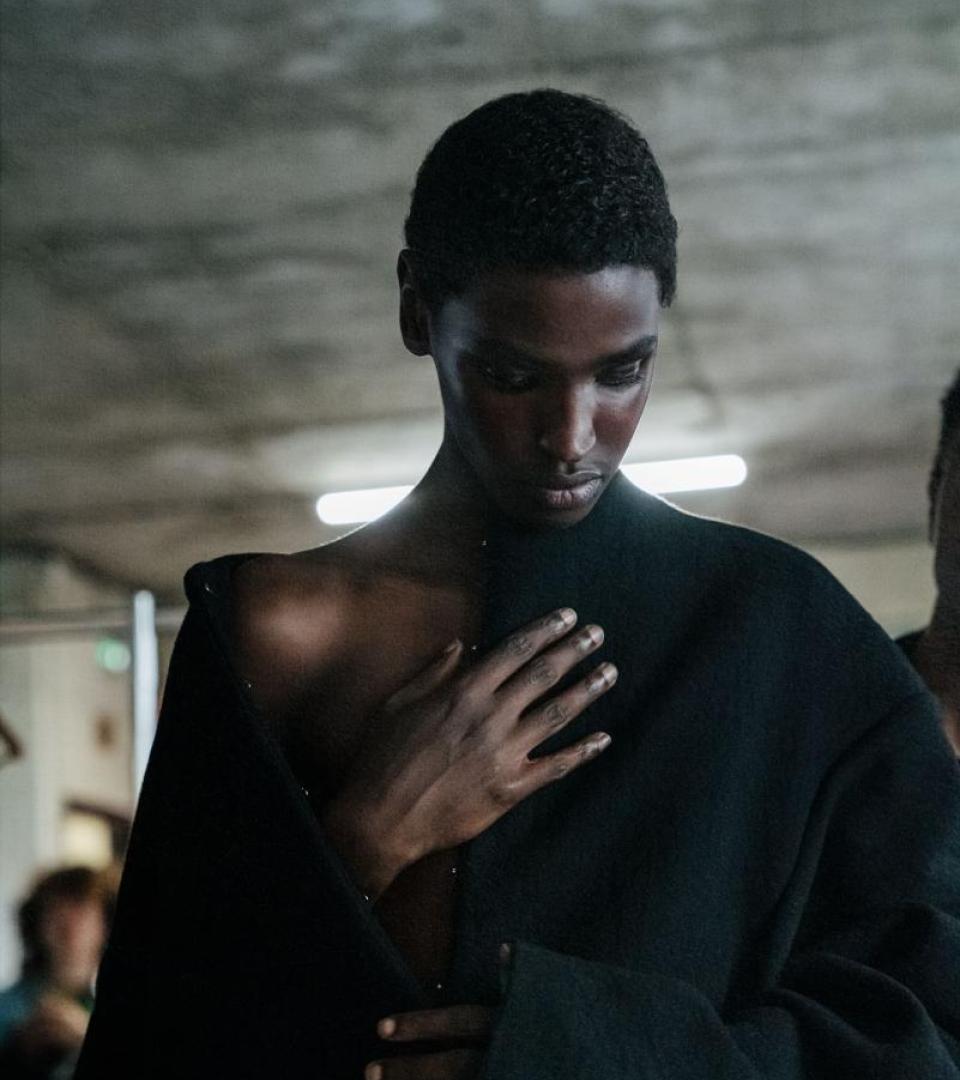
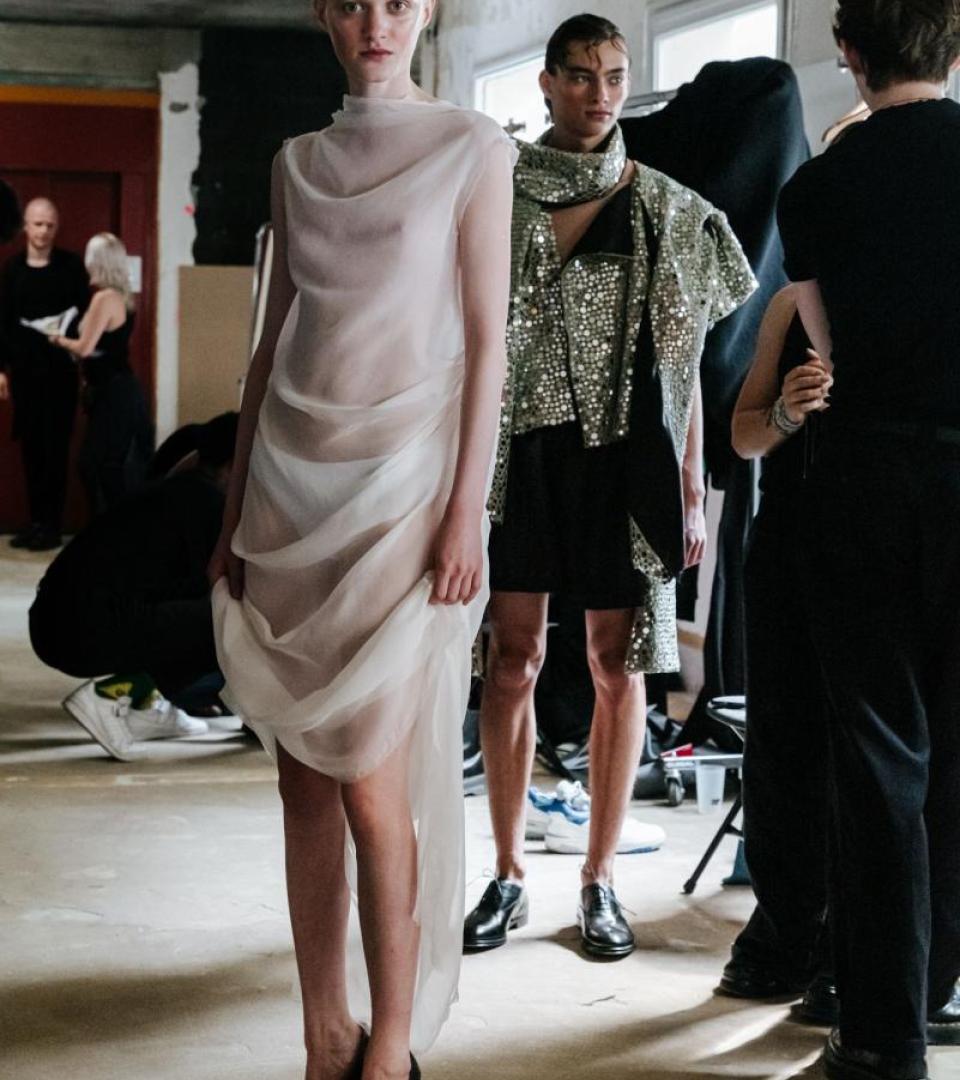
The intersection of street and structure, where workwear and streetwear collide with tailoring, is exactly where Ujoh designers Mitsuru and Aco Nishizaki conceptualised Spring-Summer 2027. Originally founded in 2009, the design duo have been expounding on hybrids, an amalgam of formal and casual elements, for Western audiences since they arrived on the Paris calendar five years ago. This season’s show, at the Maison des Métallos, was a continuation of that deep commitment to tailoring, but also a constant desire to disrupt the tradition.

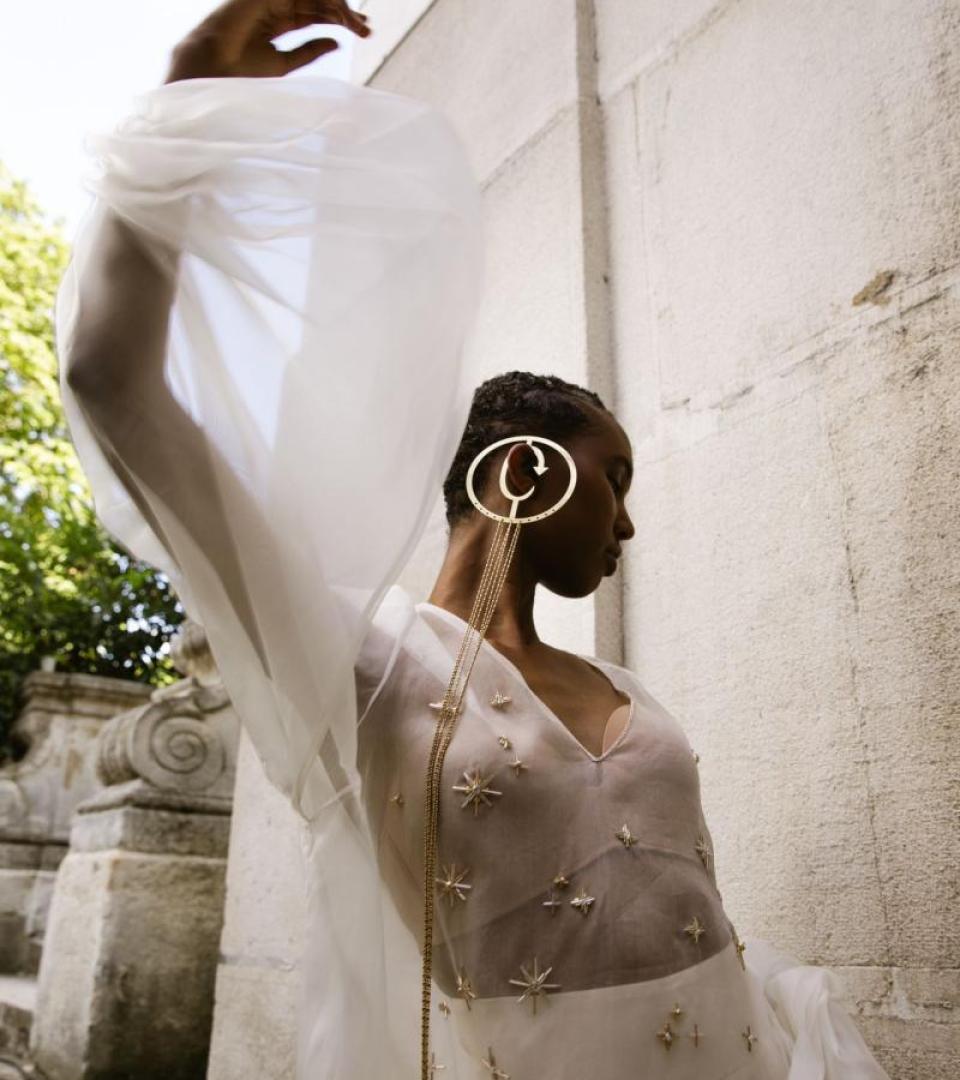
With a shift in collective lifestyle, partly owing to the increasing heat and changing climate in recent years, Nishizaki was sensitive to a growing demand for lighter clothing. Their predisposition for the tradition was imparted with a sense of the ease and freedom of streetwear and workwear like denim from Okayama. The result is a considered effort to liberate each garment from its predetermined role or category, creating unexpected exits that begin with familiar tailoring and then are disrupted through openings, asymmetry and unexpected proportions. The cut is lighter, more effortless than in previous seasons, reflecting the sinuous lines of a skate bowl. Fabrics, too, are supple and fluid like while finishes are painstaking such as a floral pattern hand-painted using a technique called Hikizome.

“When we pare away the elements defined as necessary from a garment that is considered finished, we feel a sense of tension mixed with a thrill, and we really enjoy the process of creating it,” said Mitsuru and Aco Nishizaki, in a joint email statement.

After questioning UJOH's own design language with Antithesis last season, where did you want to take that conversation for Spring-Summer 2027?

As we are both designers and pattern cutters. When we wish to truly understand something, we often begin by taking it apart. We strip away established roles and frameworks, liberating it and setting it free. From within this, we seek out novelty, absorbing the spirit of the times whilst infusing it with fresh movement. I believe this is one of the roles we have learnt as pattern cutters. In this collection, too, by deconstructing and reconstructing traditional tailoring, we have created a new sense of lightness and movement.


Was there a particular construction or silhouette in Spring-Summer 2027 that proved especially challenging to resolve?

Many of our designs have emerged as we’ve explored the possibilities of denim – the very epitome of workwear. We were inundated with an endless stream of ideas, making it a real challenge to narrow them down. The more established an item is, the more rewarding it is to reimagine. I enjoy incorporating mechanisms into our garments that allow the wearer to control how they look – whether by tidying them up or letting them fall loosely to create movement. Furthermore, creating minimalist pieces that can be styled like accessories is another hallmark of UJOH. 


UJOH now designs both womenswear and menswear within the same vocabulary. Do the two increasingly inform one another, or do you still begin each with a different understanding of the body?
I feel that there is a wider range of items in womenswear, and that it offers greater freedom. By working on both lines simultaneously, there are often moments when I can give free rein to our creativity in menswear as well.


How do you and Aco divide creative responsibilities on a collection like this one?

It is extremely difficult to explain the balance of our roles in a single sentence. UJOH’s creative output is shaped by the experience we have accumulated together season after season and the mutual respect we share. We met at our previous workplace; we are both designers and pattern-makers. I kick off each season by giving the go-ahead; I prepare the materials and put forward new ideas, whilst she concentrates on the design and patterns. I still find that the time I spend creating tailored patterns is my favourite part of the process, but I am always impressed and delighted by her woman-centred perspective and her incredibly bold ideas. As we share a common understanding of what is important whilst moving forward with these bold concepts, our thoughts are generally conveyed to one another without the need for discussion, which means the production process moves along very swiftly.


Ujoh has shown consistently on the official Paris calendar. How has that platform shaped the brand's growth?

I believe the awareness that our work will be seen by a large audience helps to accelerate our creative development. I see the collective response of the audience as the world’s fairest stage – much like a panel of judges – and I would like to present proposals that are true to who we are.


This interview has been lightly edited.