What was the starting point for the Spring-Summer 2027 collection, and what was the first image, idea or feeling that set the tone for the season?
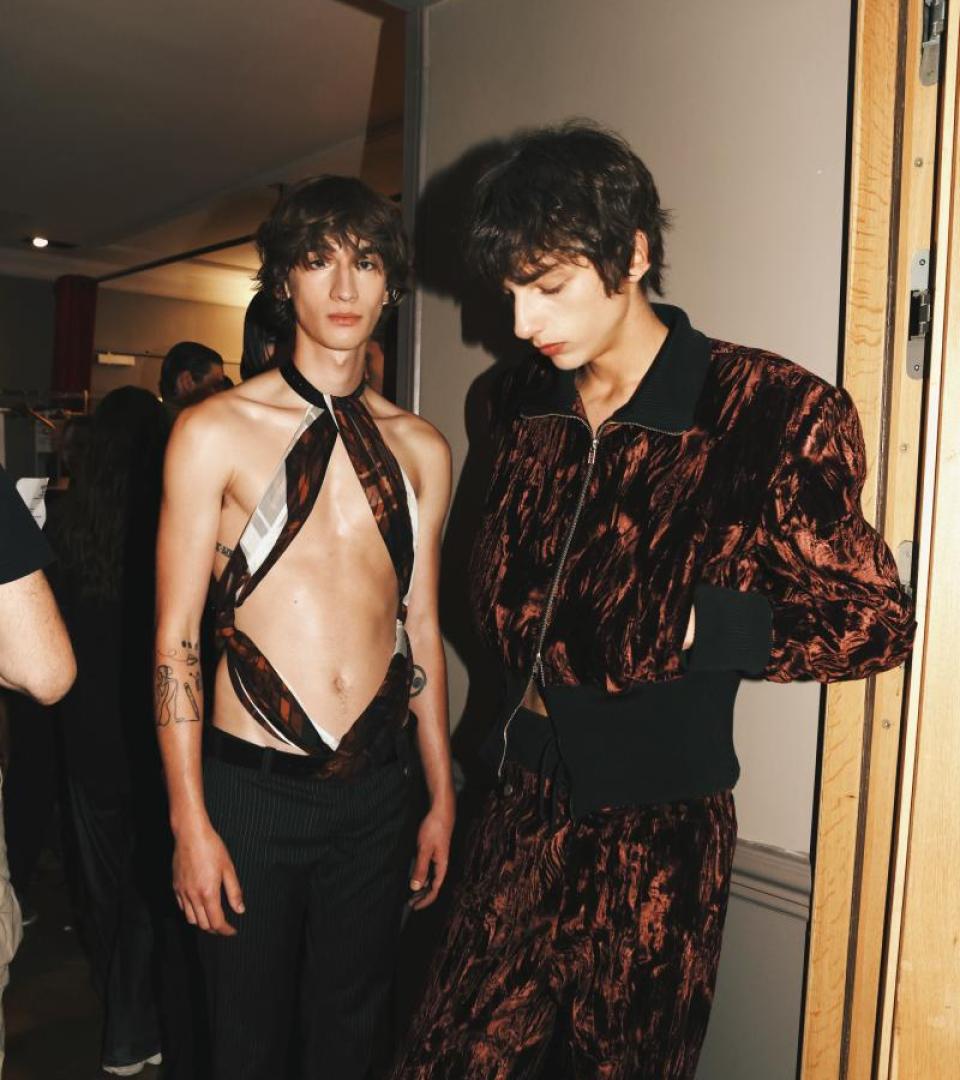
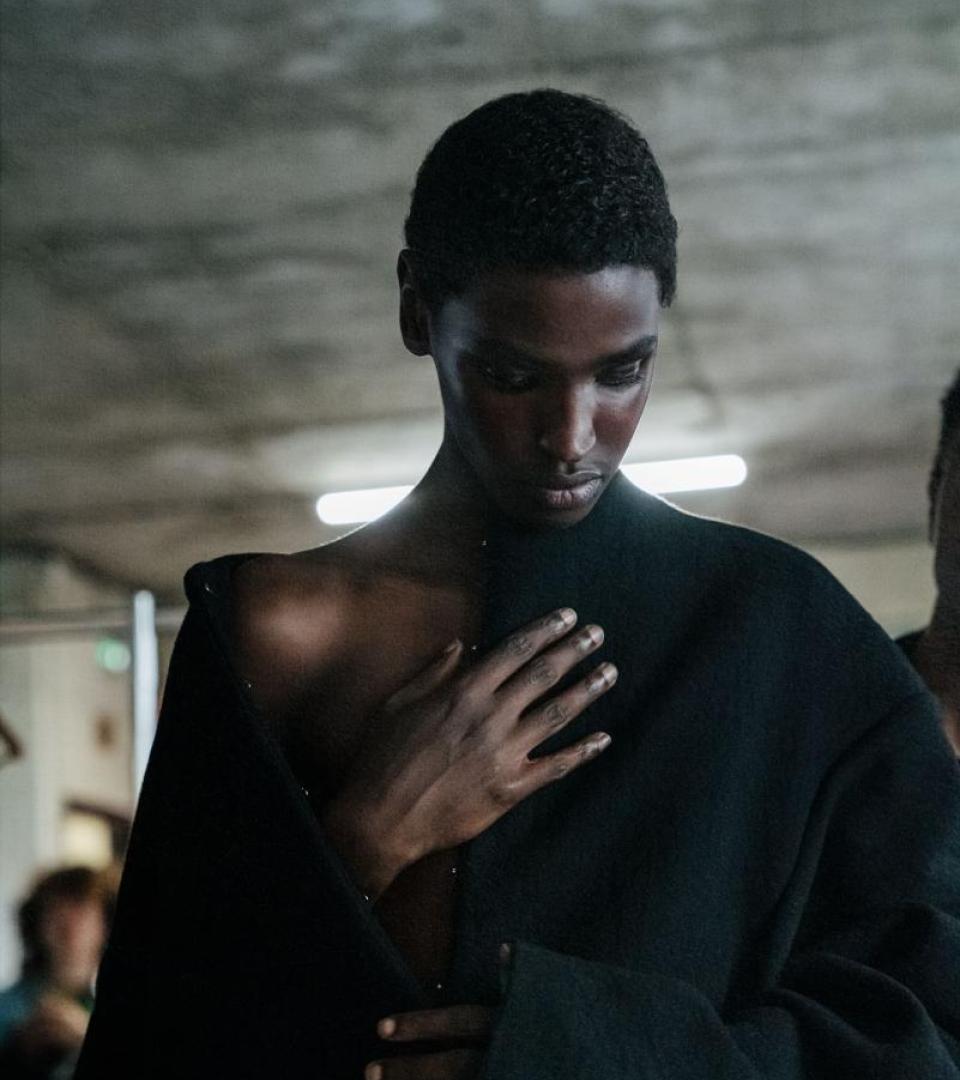
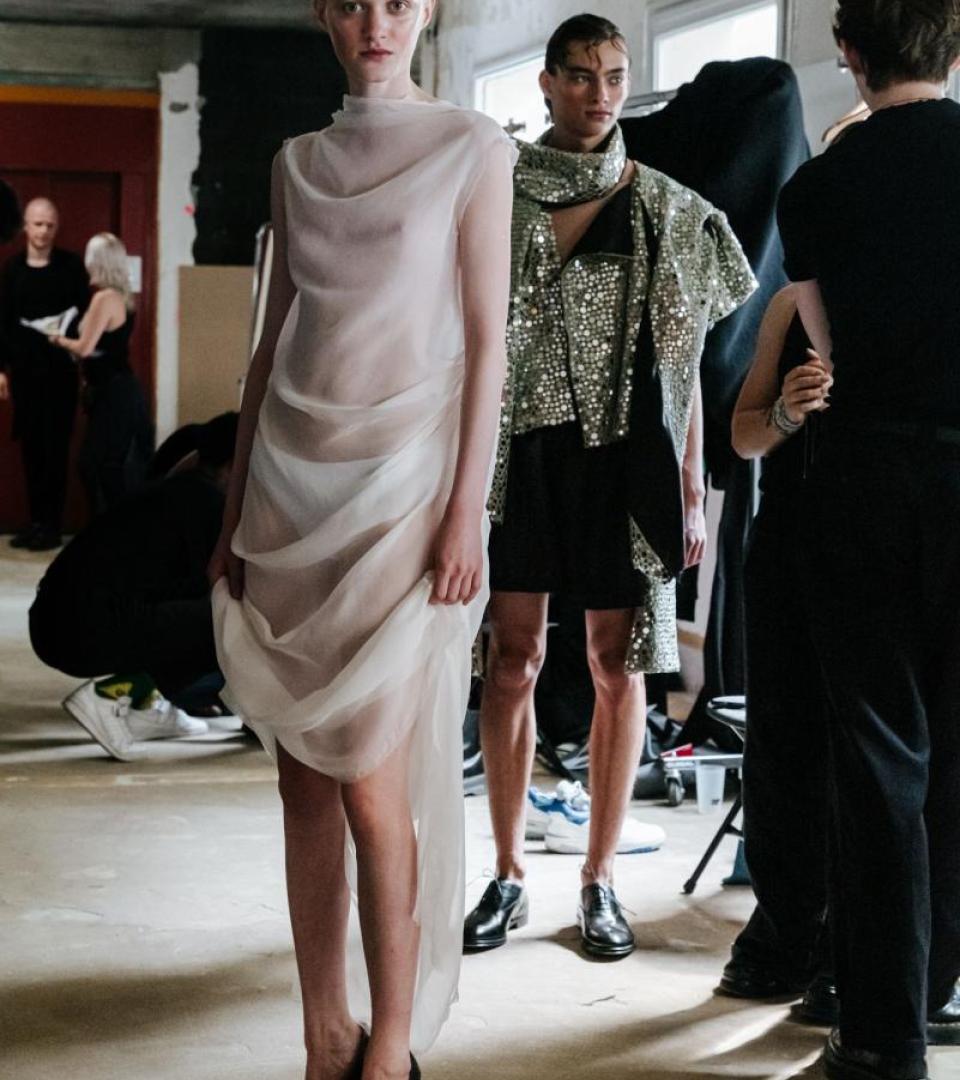
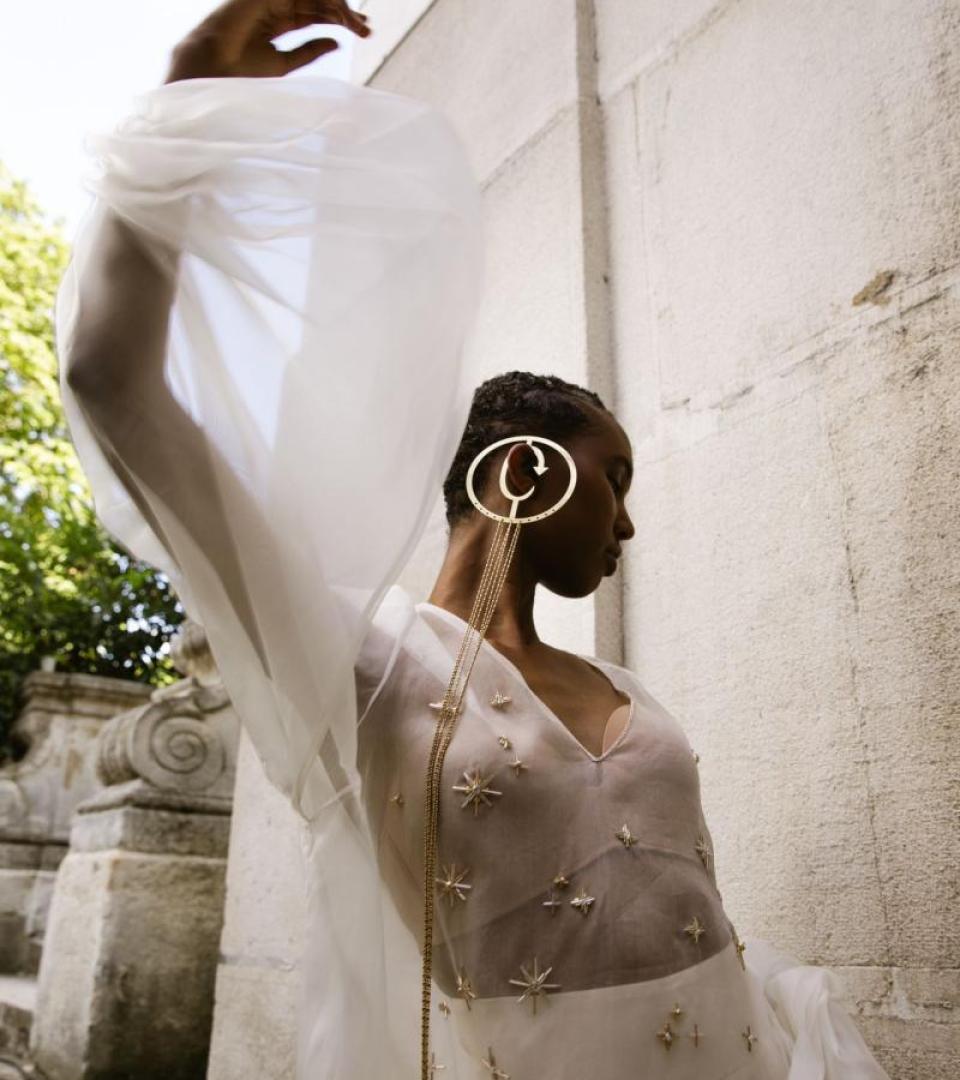
Balthazar Delpierre: It’s a comeback show. We didn’t show anything for the last few Paris Fashion Weeks, but we were still working away with the company and selling products to clients. We also had a baby and are building a family. All of this fuelled the story we can tell and the woman we want to dress. It was inspired by Ester and how she was dressing everyday to manage everything.
Ester Manas: It wasn’t a romantic image, but in The Office, when Michael Scott is trying to write a book called ‘Somehow, I Manage’... I mean, he’s not really managing anything. It’s like us right now.
BD: It was a cute way to say, you might have a happy accident in your look because you woke up too early and you didn’t know how you were going to dress today.
EM: You might be ready with a beautiful look and suddenly you have milk on you. It’s like a sexy ‘oops’ situation.
BD: Embracing the messiness.
Was there a particular garment, technique or material that unlocked the collection for you creatively?
BD: We have an exciting partnership with Primadonna, an iconic large brand in Belgium, and they have been inclusive since the beginning.
EM: They propose 94 different sizes, up until the cup size M. In Paris we can call this couture, but their atelier in Belgium has 40 pattern makers who hand make everything in Belgium. It’s crazy!
BD: We did a deep dive of their archive; you will find a lot of their archive redesigned by us in the looks.
EM: It’s lingerie but we didn’t develop a brief or bra, It was more the technique of lingerie to develop the cut of a catsuit, dresses, and outerwear. We used it as a starting point too for shirts and jackets.
Your clothes are designed around adaptability and movement rather than a single idealised body. How did you explore that technically this season?
EM: Before, it was eveningwear in a way. It was something dressy, sexy – and it still is. But it’s also based on my experience and feelings. Now that I’m a new mum, we were inspired by this, so we opened up to shirting and outerwear..
Ester Manas has become closely associated with size inclusivity. Do you ever feel that conversation can overshadow other aspects of the brand that you would like people to pay more attention to?
BD: Without being too political, we are true to our values and defending them. Nowadays, you are forced to speak about those issues and values. It’s really exciting and I think it helped us to understand what we have to say as a brand. We are proud and happy about that. Inclusivity is our main subject but that’s not universal in fashion.
As an independent label, how do commercial realities influence the way you design today compared with the early years of Ester Manas?
EM: In June 2024, we cut wholesale and started selling on our website and through physical pop-ups. It was a game-changer. It’s why we’re still here. It was risky in the beginning, but now we’re quite happy because we understand the reality of the business and the needs of our customers – what they like and what they don’t like. We are not building collections blindly. Before, we were guessing because we sold to big stores and we didn’t really know who our final customer was. Now, we have the data, so we can really say, ‘Okay, this dress is fine.’ We’re more confident.
This interview has been lightly edited.