Hubert Barrère: “Embroidery is a millennia-old craft that demonstrates the natural bond between artist and artisan.”
Artistic Director of Lesage since 2011, Barrère steers the embroidery atelier founded in 1924 that joined Chanel's Métiers d'Art in 2002. He works at le19M, place of the Maisons d’art, a hive of exceptional craftsmanship bringing together nearly 700 artisans. Throughout his career, he has collaborated with some of fashion's greatest names: Karl Lagerfeld for 21 years, Alexander McQueen, John Galliano, and Yves Saint Laurent, to name a few. He works across fashion, theatre, dance and opera. It was theatre, in fact, that opened first his eyes, then his hands. A journey shaped by encounters, curiosity, and an unfailing quick wit. He would add “by luck,” out of modesty.
Picture an eight-year-old child compulsively drawing stiletto heels and evening gowns in the margins of his school notebooks. “I come from a family that has absolutely nothing to do with fashion and I was a sort of alien. I was always told that drawing isn't a profession.” So, he does as he’s told: studies law and begins his career at the Ministry of Justice. Yet childhood obsessions have a way of becoming destiny. In the summer of 1987, at the Avignon theatre festival, everything shifts. “Being in contact with theatre people was the wake-up call.” He meets Maria Casares, a towering figure of French theatre, who tells him that if he has a passion, it is his duty to pursue it. The next day, he sees Paul Claudel's Le Soulier de Satin, directed by Antoine Vitez, “a giant of the theatre”, who had notably discovered the actress Dominique Valadié. She performed the Moon’s monologue. “She was so frail on stage, and I was fascinated by this woman who cried, who spat, who completely surpassed herself to embody emotions.” The revelation is immediate. Even today, he remembers the text word for word. He stops, smiling. “But I won't subject you to the full 15 minutes!” Upon his return from Avignon to Paris, he enrolls at the École de la Chambre Syndicale de la Couture Parisienne. “I was older than the other students. From that moment on, I've been racing against time.”
“I've been lucky to meet the greatest designers on the planet. You should never overlook the paths you take. Sometimes a small road gets you where you need to be more easily than a clogged motorway.”
He takes his first steps in a couture atelier during an internship at Thierry Mugler. “Thierry would arrive very late, around 6 pm, and we'd work mostly in the evening. When he arrived, life entered the House.” In his final year at school, he crosses a path that will prove pivotal. Two of the silhouettes he must present for his diploma are embroidered. Through a friend, he secures a meeting with Gérard Trémolet, right-hand man to François Lesage, who had inherited the embroidery house supplying the greatest names in Haute Couture, founded in 1858 by the embroiderer Michonet and taken over by his parents, Albert and Marie-Louise Lesage, in 1924. “I was waiting in the corridor when François Lesage himself asked what I was doing there. I explained it was for my school project. ‘Show me!’, he said. Suddenly I was in a meeting with him. We walked through the House to fetch materials. It was a wonderful shambles.” Once graduated, Barrère returns to show him the result and thank him. “He told me it wasn’t bad for someone who didn't know how to embroider.” The young man is far from suspecting that, three decades later, François Lesage will anoint him as his successor.
Embroidery comes almost by chance, out of financial necessity. He needs to repay his student loan and can’t afford to. When Monsieur Vermont, an embroiderer about to retire, is looking for a young designer, he applies. “I wanted to be Saint Laurent’s assistant, or even Saint Laurent himself, because you have big ambitions when you’re young. I wondered if I was making a mistake going to [Monsieur] Vermont in 1990, and it turned out to be the best decision of my life.” He quickly becomes head of the creative studio and meets the greatest couturiers: Yves Saint Laurent, Hubert de Givenchy, Marc Bohan. “I was terrified to meet them alone. When I think about it, I came in through the small service door at the back of the garden.” When he’s refused promotion after a few years, he leaves to forge his own path. From 1992 to 1995, he returns to Thierry Mugler and works in parallel as a freelance stylist for the British brand, Hartnell, famous for its creations for the royal family, as well as for Daniel Swarovski. His reputation grows and encounters multiply. In 1994, he's appointed artistic director of Ghislain Vicaire. “He was very famous for creating embroideries for the Moulin Rouge, the Lido and also international circuses. We’d go from decorations for elephants to rhinestone bras. Better not mix up the deliveries!” he recalls, amused. “I even made the entirely embroidered costume for Johnny Hallyday’s concert at the Parc des Princes.”
In 1995, Barrère decides to launch his own venture and chooses as his signature piece an element that pays tribute to both his love of technique and the historical heritage of couture: the corset. “I'd already made corsets for Emanuel Ungaro, and I wanted to make my own corsets, supple ones, modern corsets you'd want to live in. It was instinct, because the British were about to arrive. John Galliano was appointed at Givenchy that same year, in July 1995.” The following year, his corsetry work is honoured with the Grand Prix de la Mode de la Ville de Paris. Alexander McQueen, appointed artistic director of Givenchy in 1996, is looking for a corsetier different from Mr. Pearl, corsetier extraordinaire and Galliano's go-to, to distinguish himself from his peer. Barrère keeps a tender memory of McQueen. “He was possessed by extreme creation, between life and death, angels and demons. He was adorable, extremely sensitive, with extraordinary culture. He shook up codes with incredible irreverence.” Collaborations multiply, including with Stella McCartney for Chloé, who calls him to create the corset for Madonna's wedding. “I found myself at the Crillon where Madonna put her son Rocco in my arms and explained she didn't want a cute corset. It was wild.”
“Karl Lagerfeld had extraordinary erudition, caustic humour and thousands of ideas per second. He always made us want to surpass ourselves.”
In 1997, Barrère is appointed artistic director of Hurel, an embroidery atelier that has been a historic supplier to Chanel since 1921. “I was in the studio with Virginie Viard, who had returned to Chanel that year after following Karl to Chloé.” She makes the introductions with Karl Lagerfeld. “Karl immediately asked me, ‘Are you wearing Mitsouko by Guerlain?’ And off he went about this perfume created in 1919 that evoked Puccini's Madama Butterfly. A few weeks later, I run into him again at Chanel. ‘Hello Hubert, are you still wearing Mitsouko?’ I was so surprised he remembered. Our story with Karl began in the best possible way.” An exceptional collaboration that would last 21 years, until the Kaiser’s death on February 19, 2019. Under Barrère's impetus, the House of Hurel develops considerably, growing from a handful of collaborators to a structure capable of meeting the demands of the greatest designers. He remains there until 2011.
“Embroidery has survived for millennia because it’s been passed down while remaining modern, adapting to new materials and innovations. Technology helps us, but it will never replace what we do by hand.”
At Lesage, succession has devastating timing. On December 1, 2011, Barrère takes up his position as artistic director on the very day François Lesage passes away. “At 7 am, his partner called me. She said nothing and I understood. His last words were, ‘Everything is in order’. It wasn't easy to succeed someone so exceptional, and I remained quite discreet when I arrived. I thank him for the trust he placed in me. He was a master and a great friend,” he confides, looking at François Lesage's photograph in his office. A few months before taking up the position, Bruno Pavlovsky, President of Chanel Fashion since 2004 and of le19M since the venue's inauguration in 2021, had offered him the role. “I didn't know if I was the right person; I hadn't thought at all that they would offer it to me. Bruno told me that François Lesage himself had chosen me and that the entire Olympus had followed: Karl, Virginie... He explained that I would face new creative questions, new challenges, and I'm grateful to him for that.” At Lesage, Barrère works for Chanel but also for other Houses, established or more confidential. “Throughout my career, I've always worked for different designers in parallel. You’re more creative for others and for yourself when you encounter different visions.” Since taking over the atelier, transmission, also dear to François Lesage, has become imperative. “Our crafts' survival depends on it. The atelier welcomes trainees to awaken vocations, young people from traditional academic backgrounds but also those in professional retraining. The participatory workshops organised at the Galerie du 19M also help people discover these hand crafts. It’s exceptional to make something yourself that makes you proud.”
“Métiers d'Art collections sit between ready-to-wear and Haute Couture. They’re a great gift from the House of Chanel that allows us to showcase our crafts.”
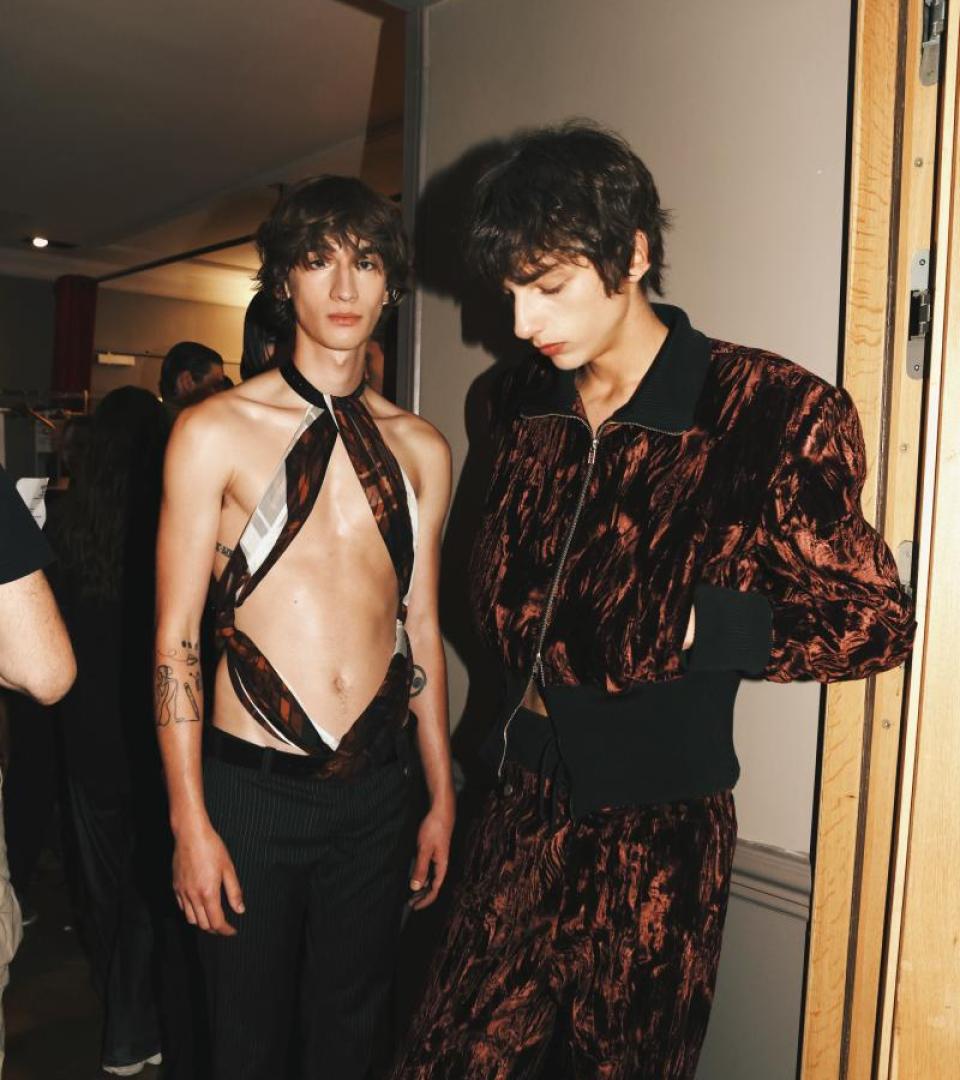
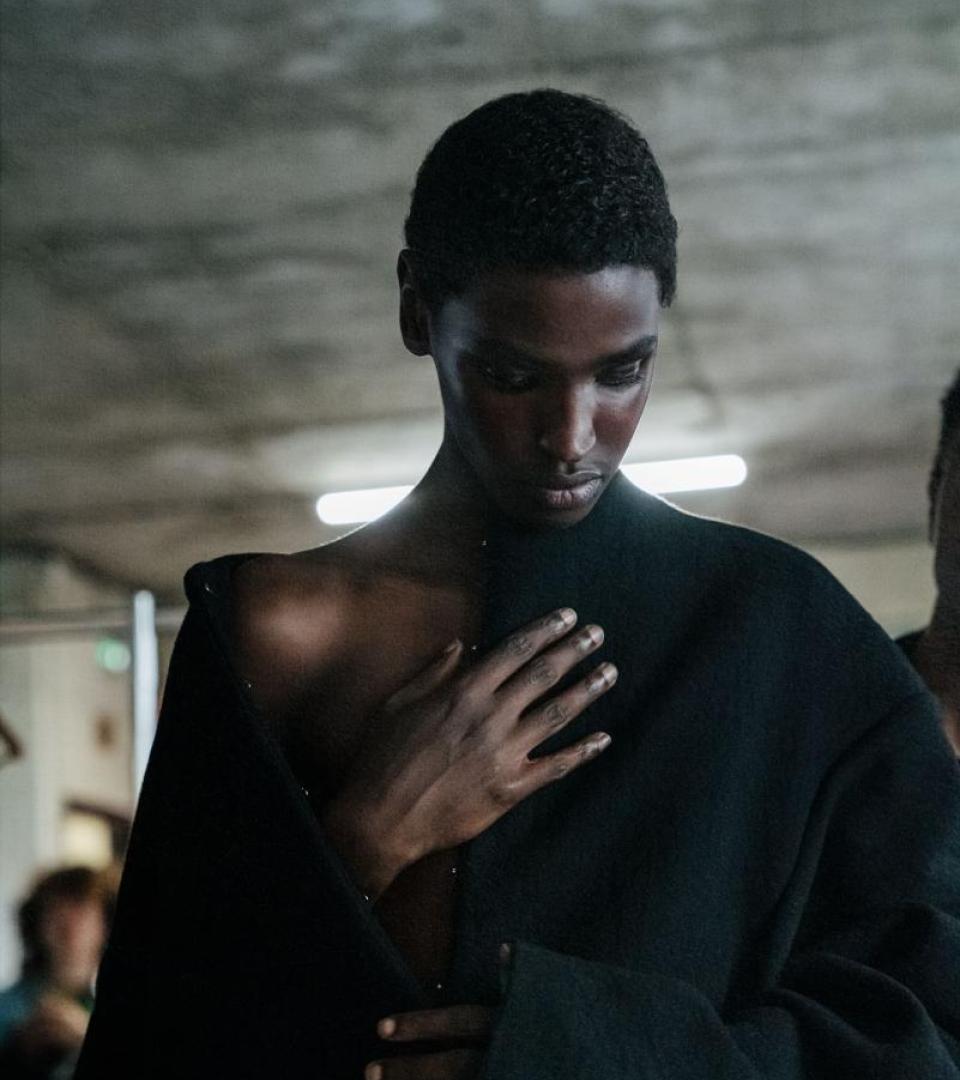
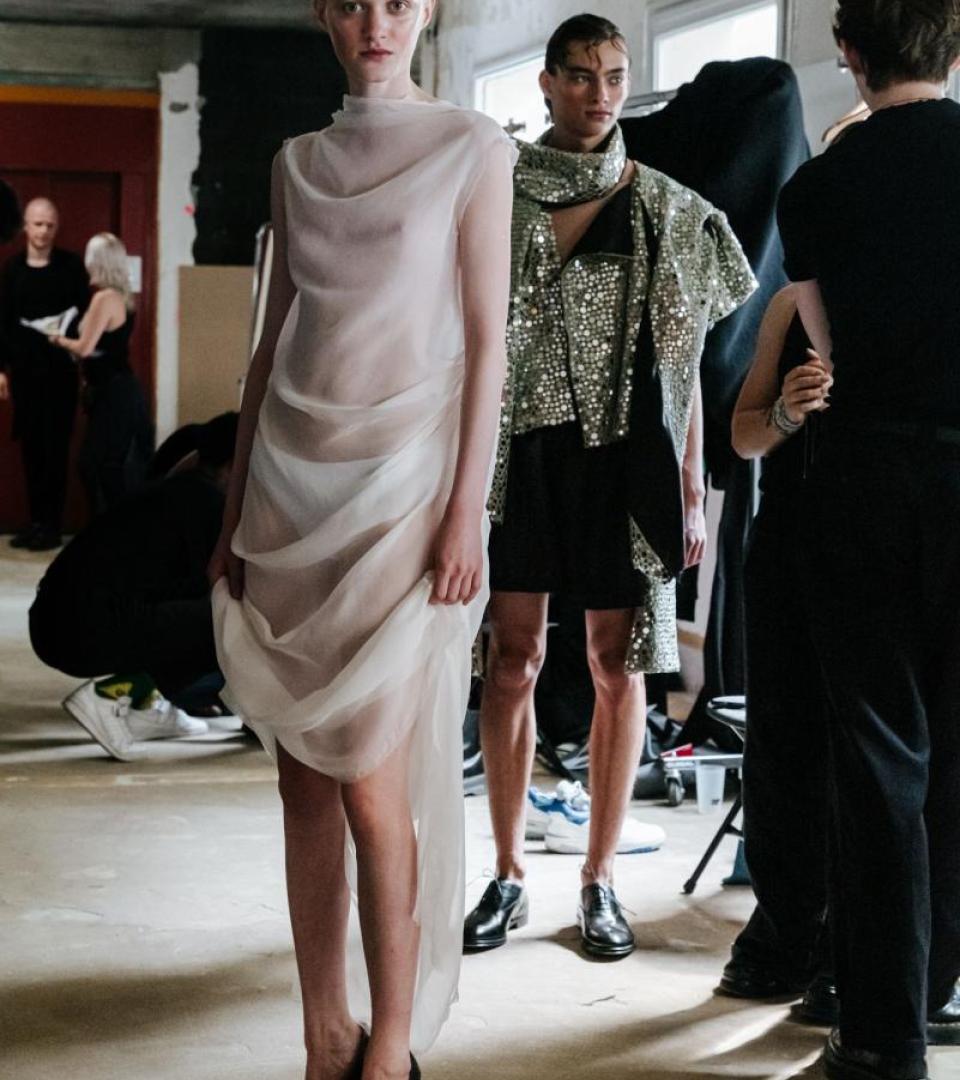
Since 2002, Chanel has presented an annual Métiers d'Art collection, a visionary initiative by Karl Lagerfeld to celebrate the exceptional savoir-faire of the Maisons d'art gathered at le19M. These collections constitute a dialogue between Chanel's creative studio, the ateliers and the 11 Maisons d'art that include embroiderers, feather workers, jewellers, goldsmiths, pleaters, bootmakers and milliners. “We are more involved than in ready-to-wear, where there’s less embroidery. And Haute Couture is a world apart, a world of experimentation, of dreams, an absolute of creation, of exception.” In December 2025, Matthieu Blazy presented his second Métiers d'Art collection in New York. Appointed artistic director of Chanel in June 2024, he succeeds Viard and becomes the fourth artistic director of the House since its foundation. “He explained he wanted life, women in their daily existence, in their diversity. Matthieu followed the irreverence and freedom of Gabrielle Chanel from the 1920s and 1930s. The advantage of Chanel is that the brand is so strong, so recognisable, that when an element doesn't belong to its universe, it absorbs it. I loved working on this collection. You have to be generous in creation to offer clients the best, for it to be joyful while celebrating them.”
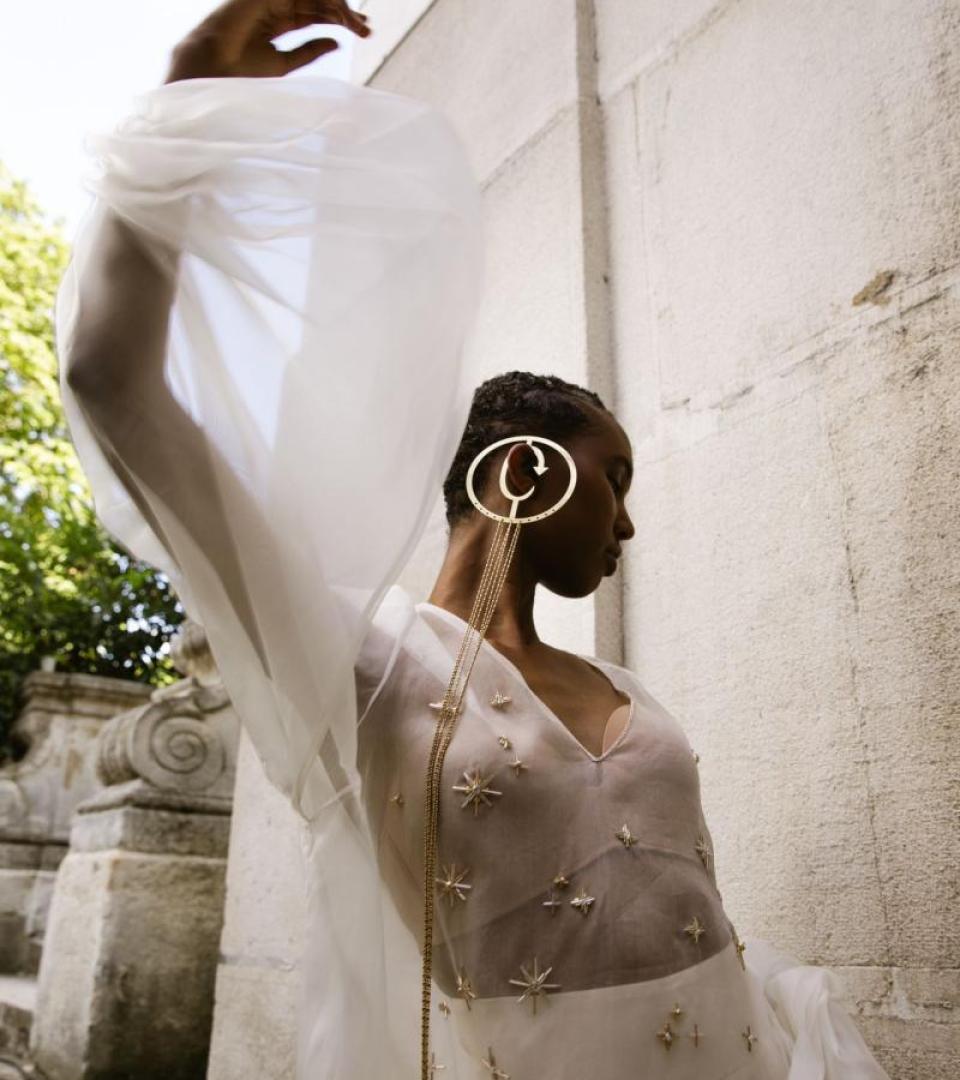
The “Métiers d'Art” label championed by Chanel speaks to something essential: the distinction between artist and artisan hasn’t always existed. The separation occurred when an intellectual dimension elevated the role of the artist at the artisan’s expense. “Embroidery has existed since 3,000 years before our era. In Mesopotamia, China, among the pharaohs, it was used for social differentiation and communication with the afterlife. In the Middle Ages, when gold embroidery from Uzbekistan, Persia and northern India reached France, it became a primary art form, even before painting.” For Barrère, working with artists represents a natural return to this bond. Lesage has thus developed collaborations with visual artists like Eden Tinto Collins and Rakajoo. In Paris, at the “Finding Your World” exhibition at 19M in 2025, they created with the latter an embroidered carpet that extended beyond the canvas, as well as a mask, a totemic element in the artist's work. “For me, he’s a contemporary Vermeer in the sense that he depicts everyday life and elevates it.”
“Designing theatre costumes fills me with joy, with a sense of wholeness. It thrills me.”
If theatre sparked everything in 1987 in Avignon, Barrère has never stopped returning to it. In 2018, choreographer Nicolas Le Riche gives him carte blanche for B comme... at the Opéra National de Bordeaux. “I'm from Nantes, so I dressed the 18 dancers as the local candies. They performed to Bach’s music, the music of all refuges, mystical and soothing.” In 2023, Michel Fau calls on him for Zémire et Azor at the Opéra-Comique. “He wanted creation and pushed me to my limits. For the Beast's costume, I initially thought of Jean Cocteau. He had me design what I never would have imagined drawing: a cockroach-alien. And I loved it.” In December 2025, he designs the costumes for Chasing Rainbows, a show about Julie Andrews performed by mezzo-soprano Lea Desandre and directed by Sophie Daneman. He notably creates a corseted smoking jacket for the character of Victor/Victoria. “It was marvellous. I loved doing that,” he said. “Life feels beautiful in those moments.”
Reuben Attia