News

Jeanne Friot Starts the Resistance

Interviews

By Paul McLauchlan

Following the death of Renée Nicole Good, a queer woman who was shot dead by a federal ICE agent in the United States, the regression of transgender rights in the United Kingdom and the systematic erasure of the rights of LGBTQIA+ and racialised people across the globe, Jeanne Friot was compelled to respond to the crises of the current climate with an act of resistance in her Fall-Winter 2026 collection. Entitled ‘Awake,’ she recalls themes from previous collections like nightlife, dance and celebration. Here, they are intensified by the current political climate and Friot galvanises fashion, and dance, as a refusal to stay still or silent during a tense moment.

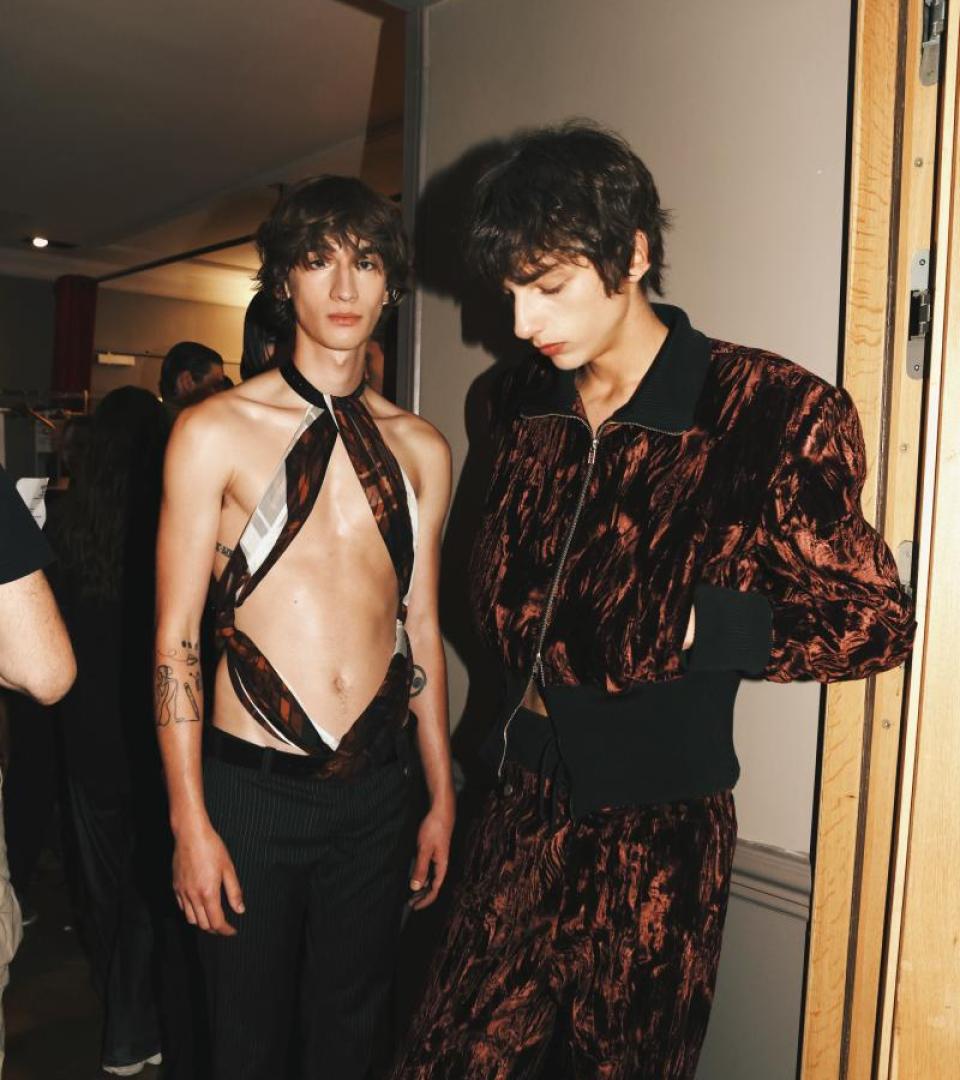
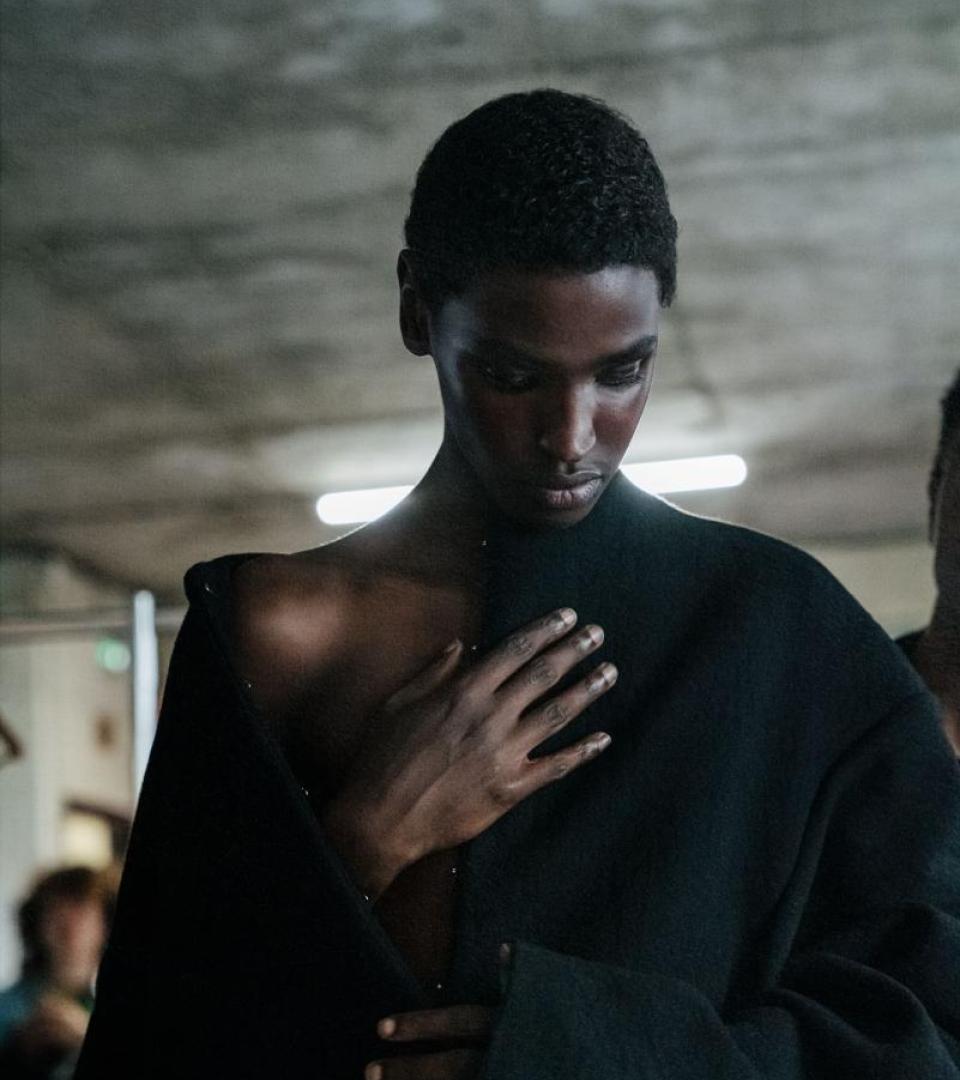
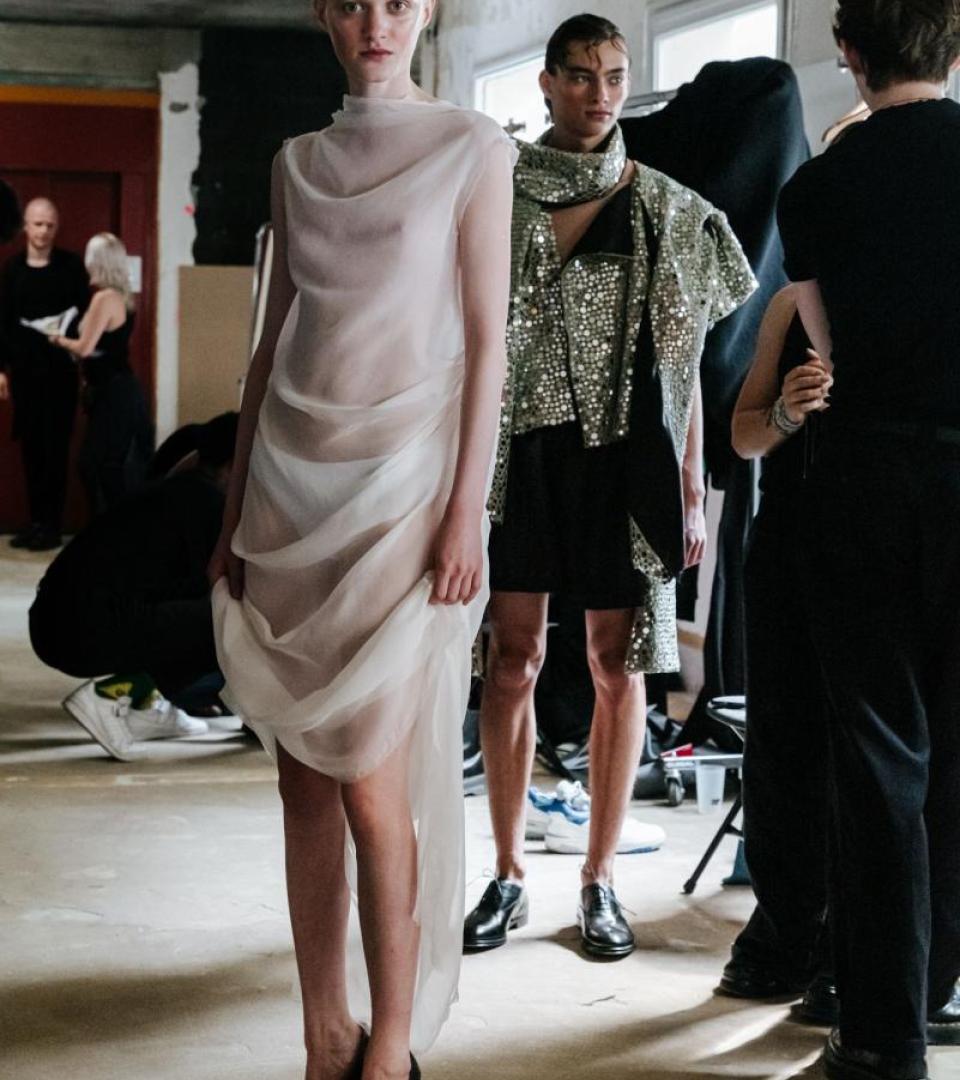
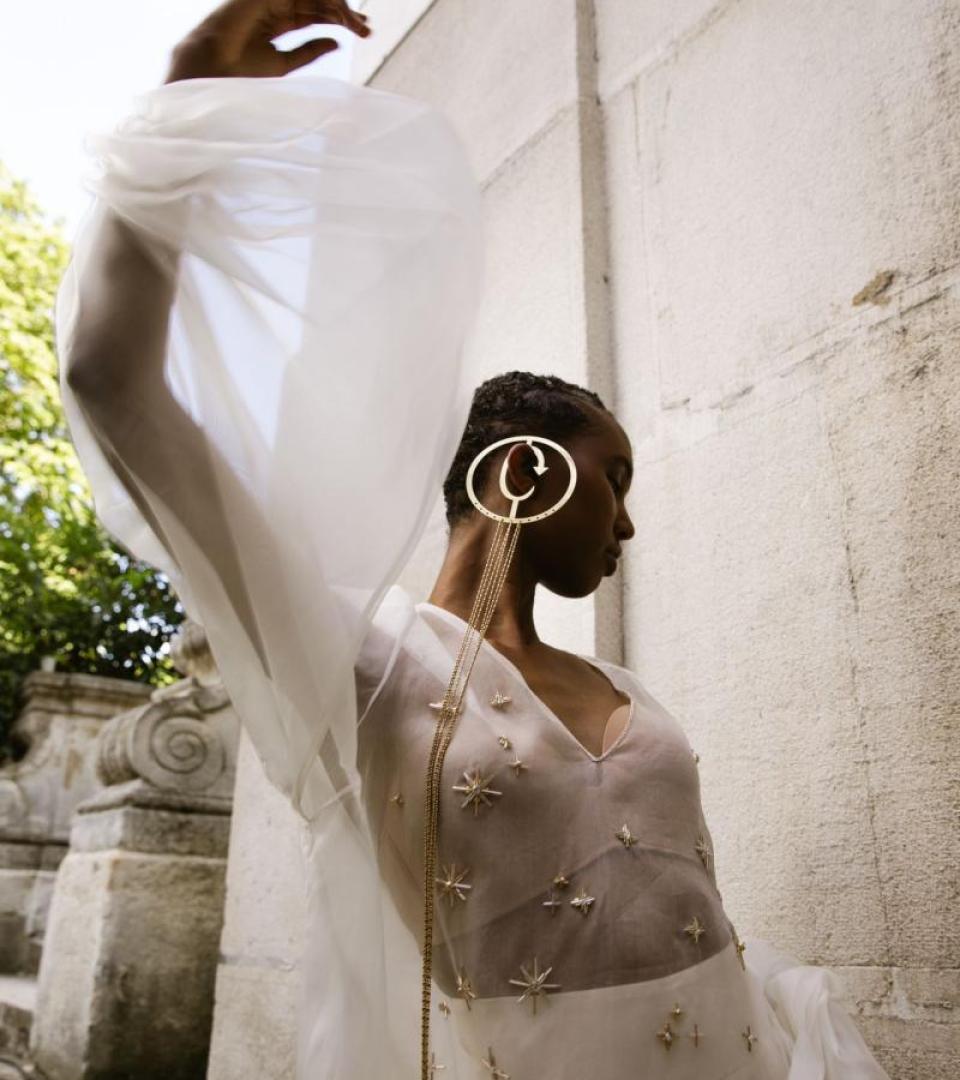
Friot imbued that sense of defiance and self-expression into the show, which takes place at the Théâtre du Rond-Pont. Her signature tartan is embellished with sequins and denim is appliquéd with feather embroideries. Other subversions come in the form of belts appearing unexpectedly, as accents on bustier dresses and at the collar of a coat. Houndstooth tailoring forms a tribute to Micheline, the designer’s late grandmother, who passed away recently. They give way to cigarette silhouettes and knee-length skirts. Despite the flourishes and flirtation with ornamentation, Friot is sensitive to both celebration and resistance, eschewing naivete with structured silhouettes. Throughout, the collection disregards the gender binaries entrenched in mainstream society. It’s how her friends dress and it reflects shifting paradigms in the world today, regardless of who refuses to accept them.

“Fashion is still binary so my point of view is an outsider in all of that but I never think about gender when designing,” said Friot.

What would you like us to know about the collection? 

The collection is titled ‘Awake’ so it’s quite clear. I started working with the choreographer, Maud Le Pladec, and the dancers of the Ballet de Lorraine, two years ago on costume and set design. I used to do classical dancing for 15 years. So coming back to it through my work reminded me of my childhood. I’ve always seen dancing as an act of resistance, especially in the queer community. It’s a way of seeing our identity in motion, not as something that is regular or fixed. It’s also this moment of joy and channelling grief — I lost my grandmother this year and she was a very important figure for me. What people leave behind are their clothes and objects.


How does the shifting role of gender influence fashion design?

I never think about gender when I’m designing. I never think about it as a category. It’s important for me to blur the lines. I look at fashion in terms of the day to day. We need the shift the point of view about gender binaries.


How do you perceive that in terms of menswear? After all, you are presenting on the Menswear calendar.

I chose menswear for many reasons. One is that we make non-binary fashion in a binary world, so we need to choose. In terms of commerciality, the buyers that come to Paris in January are here for menswear and womenswear. It’s not the same for the womenswear calendar. It feels interesting to play with masculinity while also having an impression on women’s clothing. 


I have male friends who don’t shop in the men’s corners of stores. It’s not that way anymore. Everything has shifted. A lot of my male friends buy ‘women’s’ clothing because it’s cooler. But we still have this barrier that is constricting. It’s shaped by buyers and the stores remain really classic in a way. It’s quite rigid. When we’re selling, there’s no gender, which is quite difficult for them when they’re trying to figure out where things sit. It’s easier in Asia where they don’t care as much. 


What role, if any, does AI have in fashion design?

I don’t use AI in my work and, from a sustainability perspective, I don’t want to use it. I’m sure that it helps a lot of people, especially with regards to the image-making side of things. I look at my friends that are doing videos or fashion shoots and they can produce interesting work. For my team and I, we design clothes around the body and there’s no interest for us in AI.


What are your hopes for the rest of 2026?

I hope that it’s going to be a successful year and that we continue to work and expand.


This interview has been lightly edited.