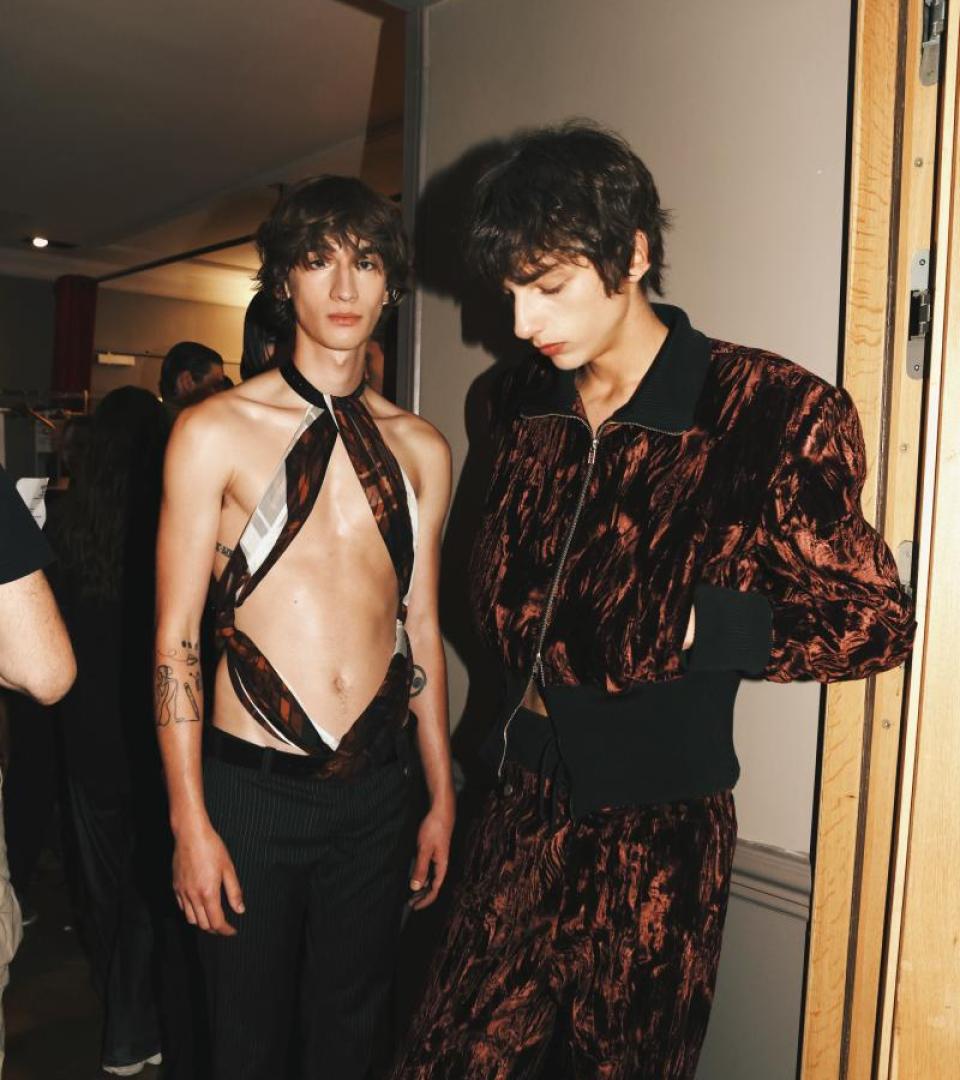
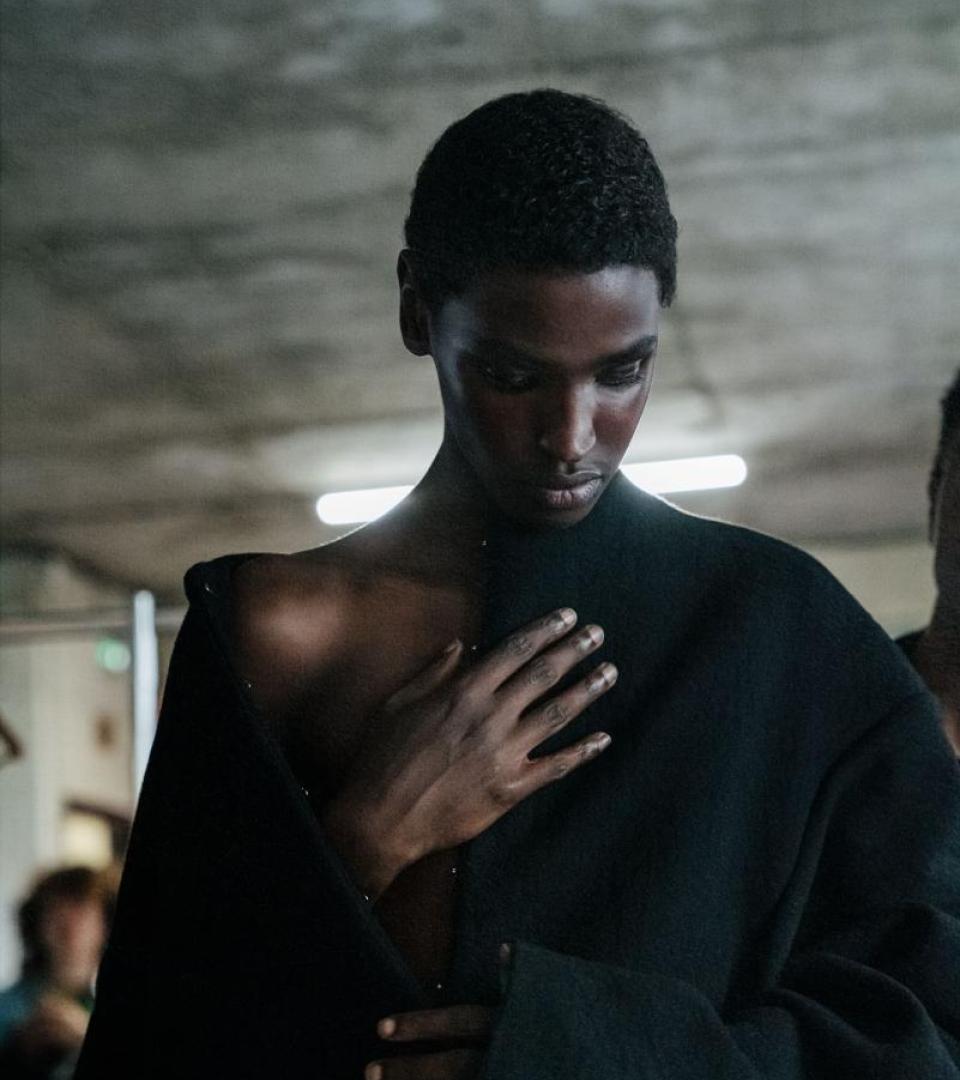
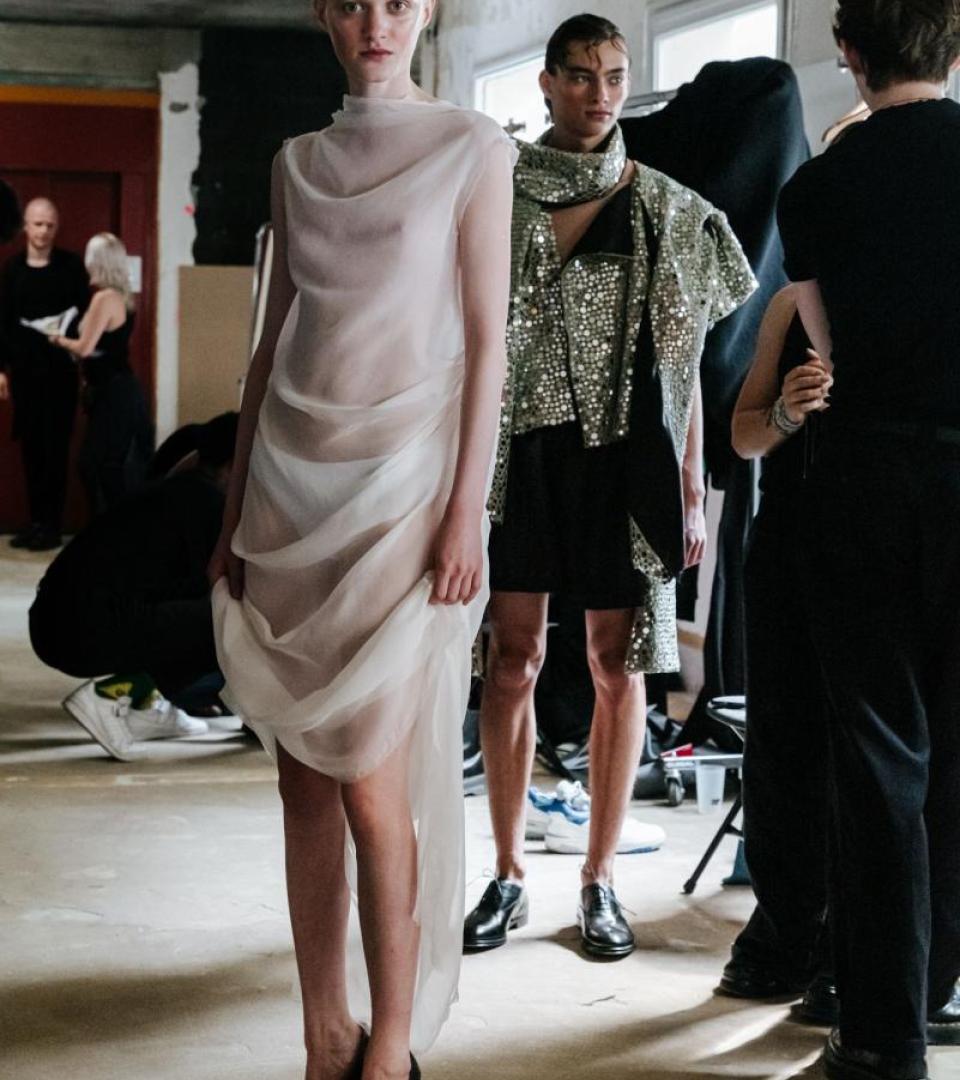
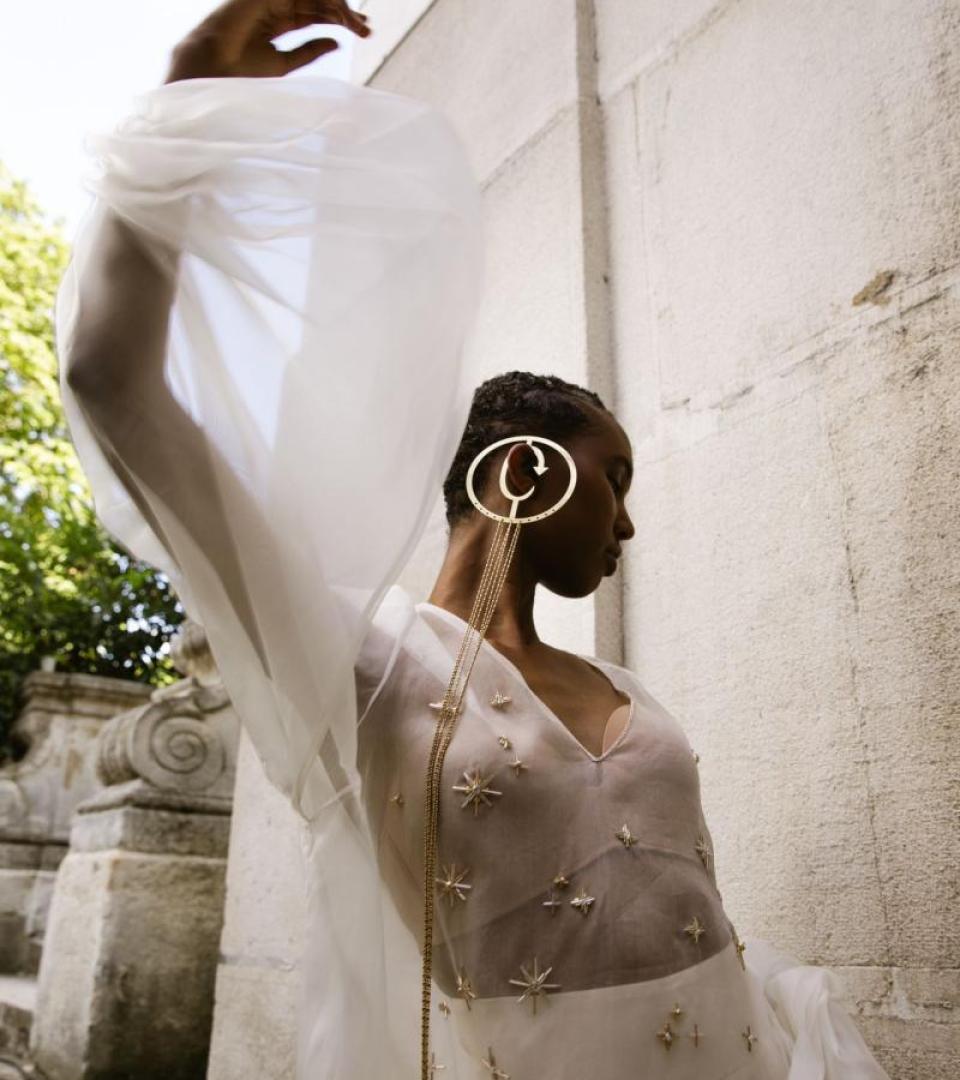
Fascinated by the past, Ashi’s modern approach to haute couture is firmly in the present. While traditional houses work with specialists in embroidery, feathers, and tailoring, Ashi expanded the métiers to include painters, hairstylists and nine other practitioners in art and film. In the 18th century, locks of human hair were cherished in mourning rituals. Here, they are woven into corsetry, a process that took 600 hours to complete. Keys and death moths are intricately embroidered into resplendent gowns. A handpainted trompe l’oeil creates an illusion on draped fabric. Smatterings of contemporaneity are forefronted in handpainted latex and crocodile skin, molded into a seamless dress.
“I like to provoke. It’s this translation between something old, something new, giving it a momentum that people would feel right now,” said Ashi, in his Paris showroom, where castings for the show were about to begin.
What would you like us to know about the collection?
I watched Nosferatu on a plane and it triggered something in me. When I got back to Paris, I started digging into the Victorian and Edwardian eras trying to understand the feeling of fashion and the aesthetics of the time. I watched the movie four or five more times after that, examining each scene. I came up with this image of a woman as she progresses from moving from her bed in the morning, taking that first breath, the sunshine hitting her face – these different sensations that build up her character. It goes from daytime to nighttime as she gets into character. There’s a scene in the bedroom and the garden. There’s always this dark romance in my work too.
How do you think your brand can spare desire when there is so much happening in the world?
There is something that we all look for in fashion: it’s a freshness. It comes with culture, it comes with history, it comes with a lot of things. It’s what makes it desirable. When we look at a lot of what’s happening in the fashion industry, we are always seeking desire.
How important is heritage in haute couture?
I’m a couturier at heart. Everything I do, I see it from the perspective of Cristobal Balenciaga, and all of those big houses. This season, I went even deeper in my research. I went to the archive of Charles Frederick Worth, among the earliest couturiers. He was an Englishman presenting in Paris. It wasn’t called ‘haute couture’ then, there was no collection. It was tailoring but it led to the creation of haute couture and the Fédération [de la Haute Couture et de la Mode]. I wanted to dig deep into that era. When we say heritage, I feel like it’s embedded in what we do. I would say I’m ‘old couture’, that world and aesthetic. It’s the basis of haute couture and you take it somewhere else. When I design, even if it doesn’t look like that, the base is always with me.
What role, if any, does AI have in haute couture?
I’ve been introduced to AI by the new generation who work with me. Sketching by hand is essential as it gives you the feeling. Even when they’re digitalised, you lose the soul and purpose of what we do in couture. I like to preserve old techniques of sketching with charcoal, using hand embroidery, not using tools like AI. We don’t really know what the result of it will be or where it’s going to lead us. I’m not against it but I’m going to stick with the techniques and knowledge that I have.
Your work engages with the world of celebrity quite a lot. Could you speak to the importance of that and how those figures embody Ashi Studio?
It’s quite funny, actually. Whenever I like something on Netflix or get my hands on a new movie, I will reach out to the actress and would love to see them wear Ashi Studio. I love Stranger Things so I reached out to Millie Bobby Brown. I like Wednesday so I was able to create a moment with Jenna Ortega too. I’m attracted to the dark side of cinema. When I dress these celebrities, it’s sensational because it represents the actress and the work. I like to represent characters in my work.
This interview has been lightly edited.