A Feel For Fashion: Kat from Finance
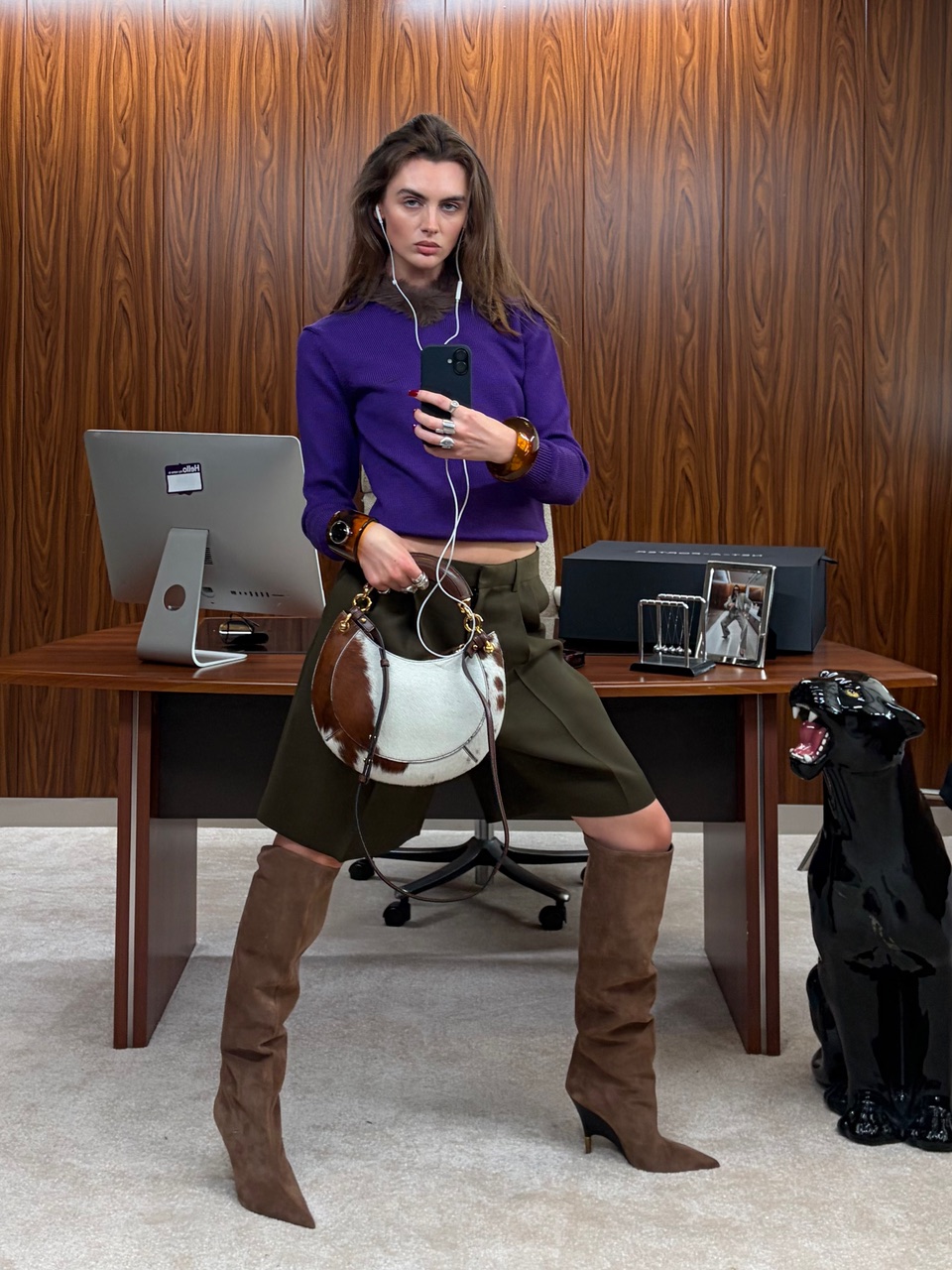
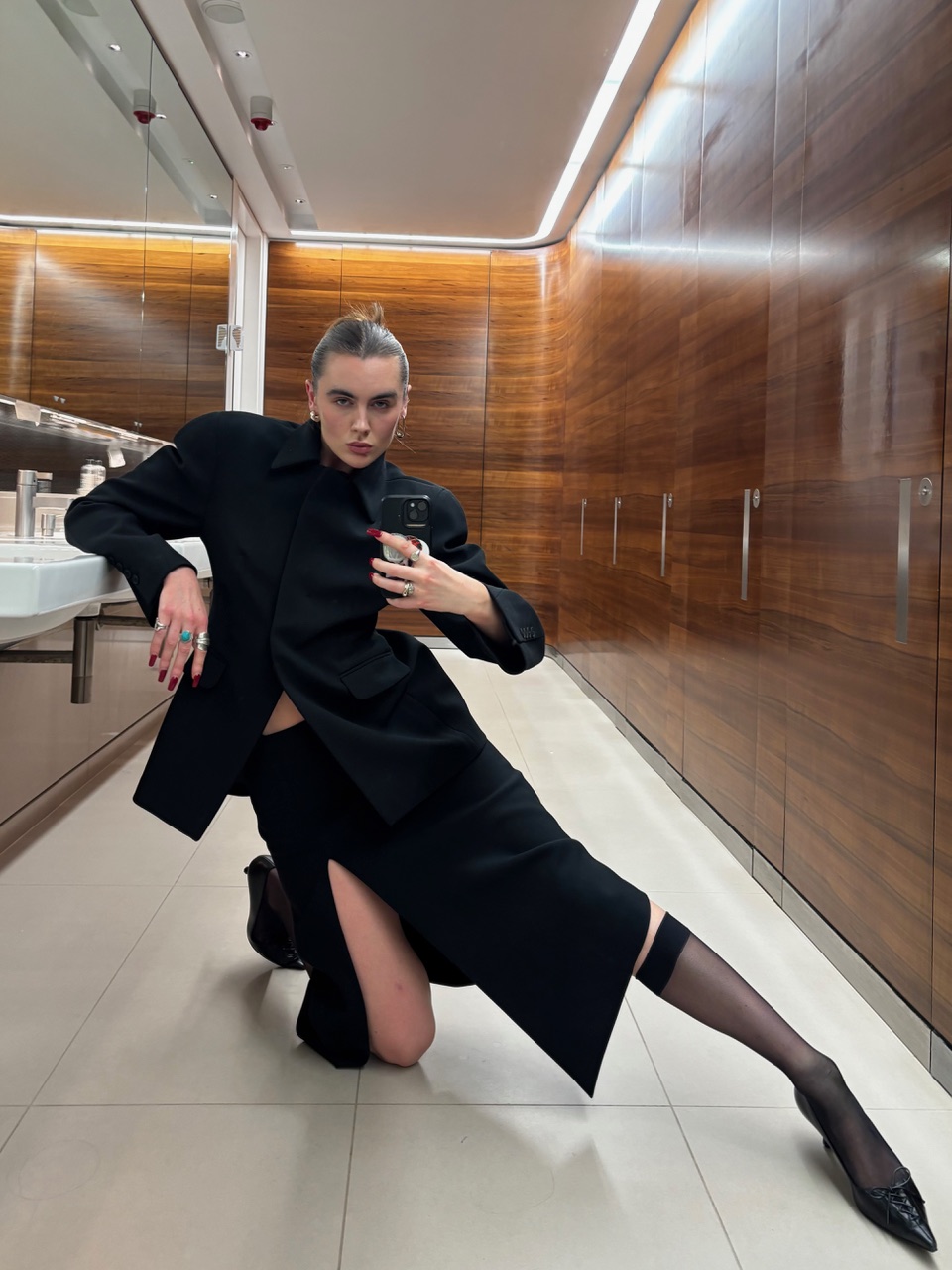
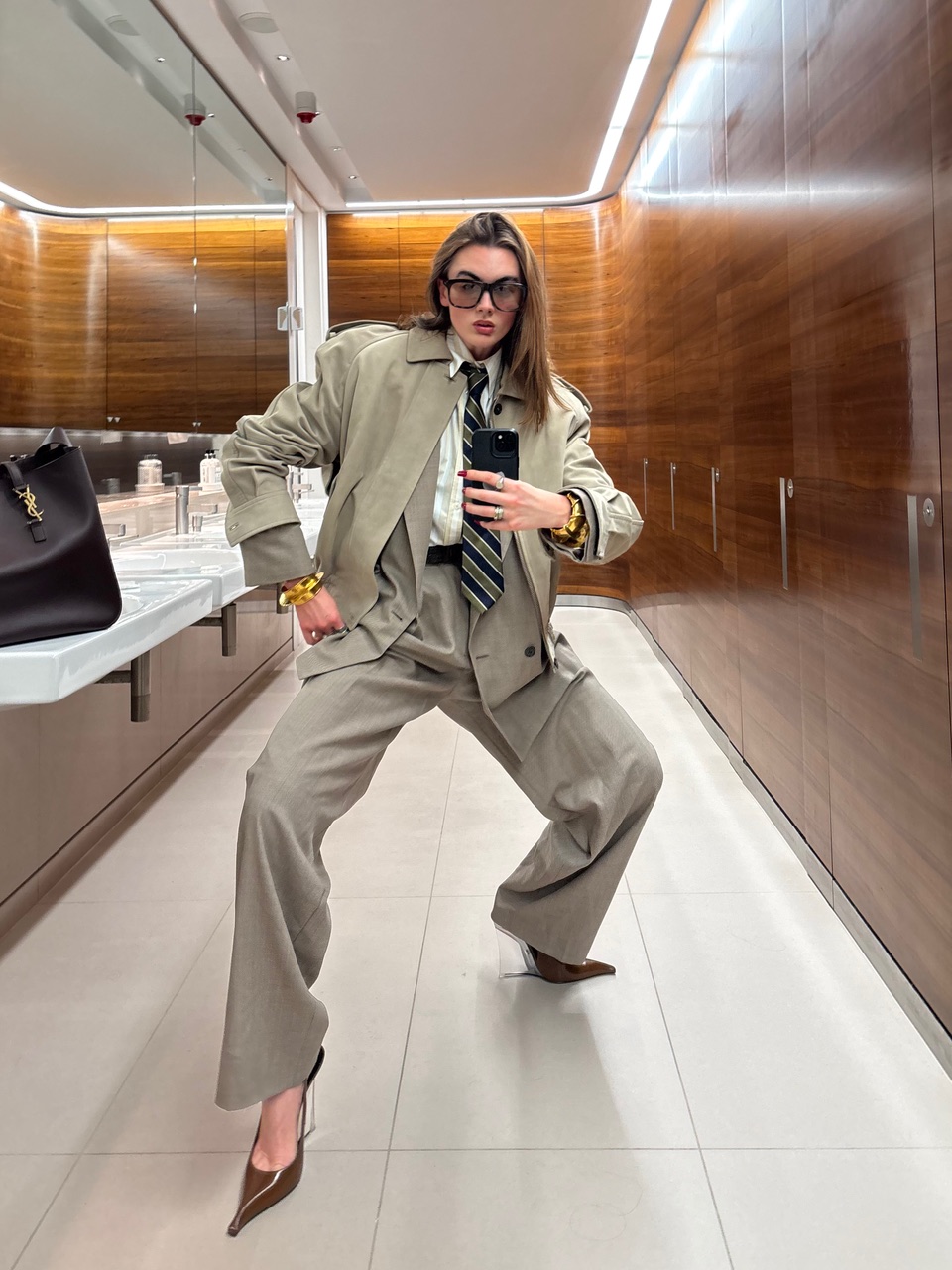
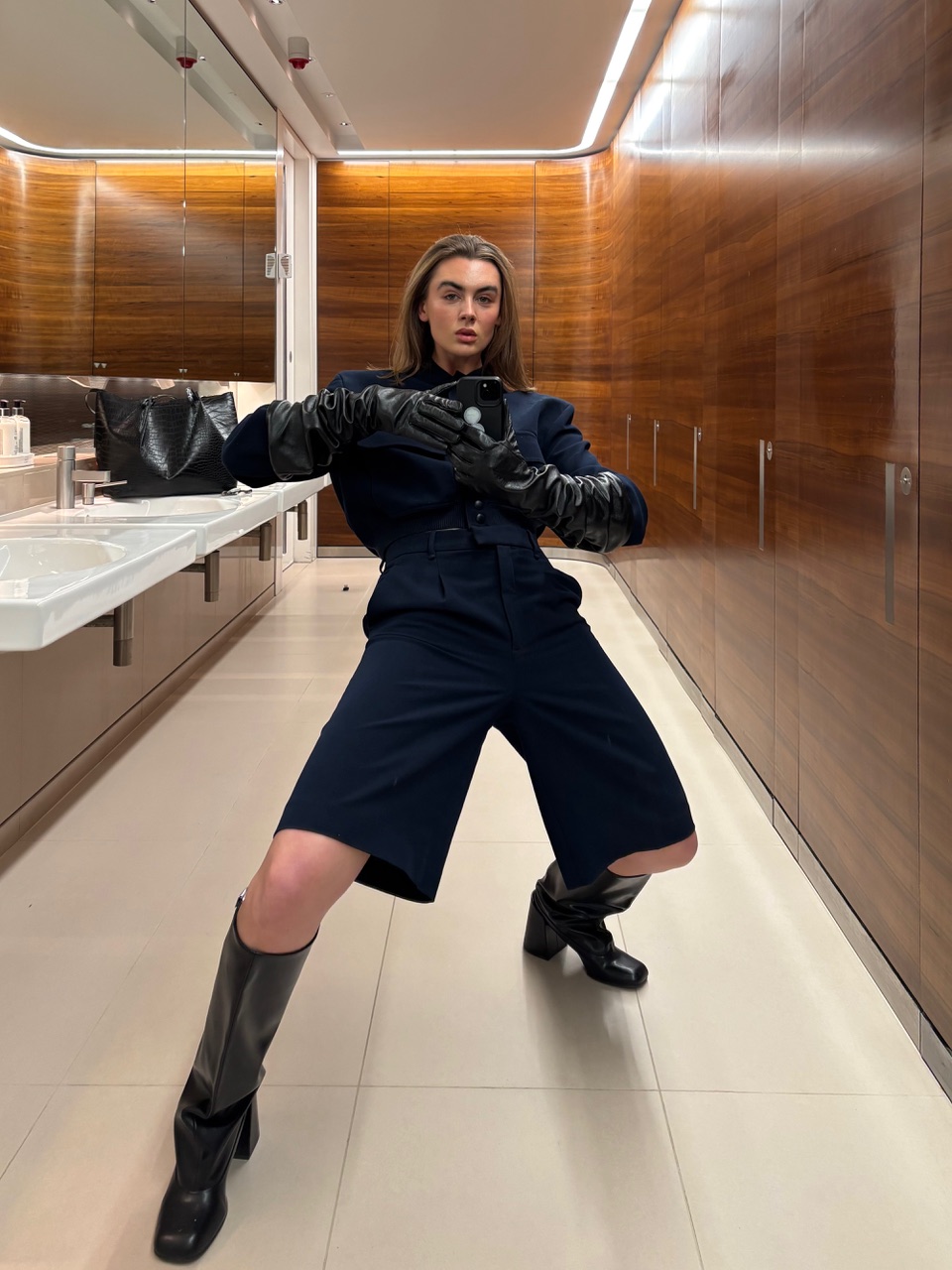
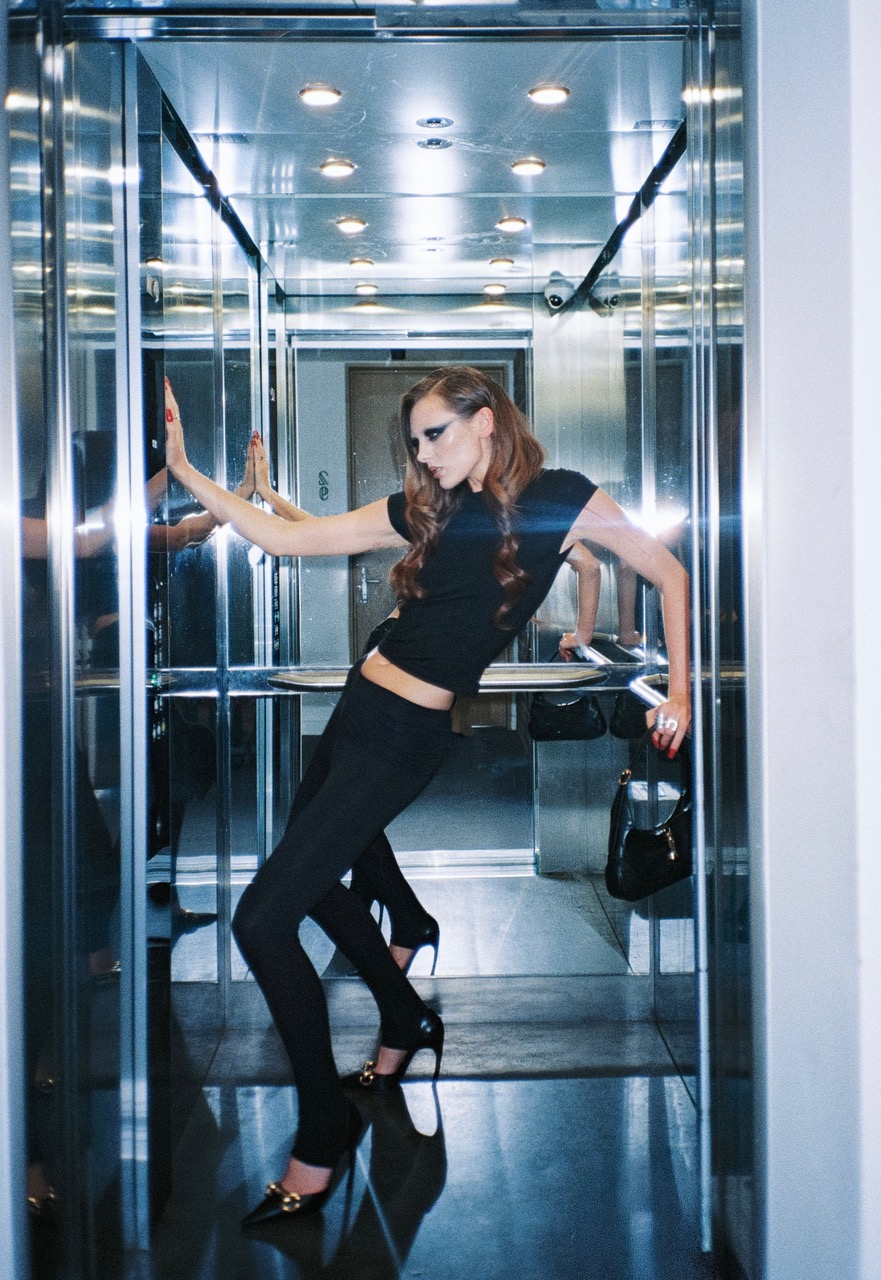
What happens when you bring a real career in finance directs the way you dress for it? You turn a corporate girl into a fashion phenomenon. This is what Katrina O'Shea, aka Kat From Finance, began to do before launching the series "Fashion & Finance" on Instagram, TikTok and, more recently, Substack. The latter grew out of the impulse to go deeper than a one-minute Reel and analyse fashion through her knowledge of business, structure and the codes of professional identity. Her looks are strong, inspired by the codified business aesthetic of the 1980s and translated into today's fashion: oversized, power-shouldered blazers, structured shirts, wide-leg trousers, pencil skirts, leather gloves, square-toe or pointed boots. Essentially, she elevates power dressing into its most fashionable form, turning it from symbolic armour into something worn for whatever the day demands. Her office restroom selfies – inspired by Willem Dafoe and his physical, intense act of posing – have become iconic. O’Shea makes images not for passive consumption but to provoke a reaction.
Where do you look for new ideas or voices in fashion?
Magazines such as Dazed, i-D and AnOther Magazine are a big source of inspiration for me, particularly because they tend to champion a strong point of view rather than simply document what is happening. In terms of photographers, I love Nadia Lee Cohen’s work. I always find it incredibly inspiring – whether it’s her projects for Saint Laurent or the Interview cover featuring Zendaya and Robert Pattinson. There’s something raw, surreal and slightly uncomfortable about her work that makes it feel instantly recognisable. Film also plays a huge role in shaping the way I dress. I remember when Euphoria first came out and suddenly, I was going to parties covered in face gems. Years later, I’m still lusting after Maddy’s wardrobe. I think that demonstrates how powerful visual culture can be. Fashion doesn’t exist in isolation: music, film, photography and art all feed into the way we construct our identities through clothes. I’m increasingly conscious that social media can make fashion feel very repetitive. You see the same stories and references circulating constantly, often without much perspective or personality. I’m much more interested in someone who makes me look at something familiar differently. Information is abundant; original interpretation is not.
What is the most significant change you are seeing in fashion right now?
Lack of longevity. At a consumer level, trends are moving incredibly quickly. You see something, it becomes ubiquitous within months, and then suddenly it feels passé. I have always preferred timeless classics combined with more directional pieces. To me, building a wardrobe should be more like building an archive: collecting things that acquire meaning and relevance over time, rather than constantly replacing them because something else has gone viral. I think we are also seeing a lack of longevity at a creative level. There is enormous pressure on creative directors to immediately prove themselves, reinvent a house and generate headlines. We increasingly judge a creative director after one collection, when historically it could take years to establish a meaningful vocabulary. A house is not a blank canvas. It has an existing language, archive and consumer, and interpreting all of that takes time. I worry that our appetite for constant novelty is sometimes at odds with the time required to create something genuinely enduring.
Who or what is generating the greatest influence in fashion today?
I think it’s difficult to pinpoint one particular person. If I had to identify what is generating the greatest influence, I would say it’s the new generation of commentators, critics and creators online. Social media has fundamentally changed who gets to participate in the fashion conversation. People who may previously have been marginalised or excluded from the traditional fashion establishment can now build their own audiences and influence the conversation directly. I think that is a really positive development. Fashion feels much more accessible than it did when influence was concentrated among a relatively small group of editors, critics and industry insiders. People like Lyas are a good example of this. His watch parties have made fashion accessible to people who may previously have felt like spectators rather than participants. There is something fascinating about seeing fashion shows generate the same kind of communal anticipation and fanfare that we traditionally associate with football matches. But I think the next challenge is what people do with that access. We have more voices than ever, but I want to see more individuality within those voices. There is a difference between participating in the fashion conversation and actually contributing something new to it. For me, the most influential voices will ultimately be the ones that don’t simply report or repeat what everyone else is saying, but bring a perspective that makes people see fashion differently.
How have you seen the fashion narrative change over the past five years?
I think fashion has become far more participatory, and consequently far more fragmented. Five years ago, the fashion conversation was still largely mediated by traditional publications, editors and critics. Now, a show can be dissected in real time by millions of people who have never been inside a fashion week venue. I think that democratisation is hugely significant. But there is a paradox. We have more voices than ever, yet sometimes less genuine diversity of thought. Algorithms reward what is immediately understandable and repeatable, so the same opinions can become amplified until they feel like consensus. The interesting question for fashion now is therefore not who gets to speak? Almost everyone does. It is whose perspective cuts through the noise, and why?
In what ways is AI impacting the quality of the information in fashion?
I think AI is creating a strange paradox: there is going to be more fashion content, but potentially less fashion thought. Anyone can now produce a polished article or Substack within minutes. The issue isn’t necessarily that the information is inaccurate; it’s that it can become homogenised. You start seeing the same observations, the same vocabulary, and the same conclusions reproduced across different voices. Opinion is valuable precisely because it belongs to someone. It should have an authorial fingerprint – their references, experiences, biases and perhaps even their ability to articulate something imperfectly. AI is incredibly useful as a tool; but if everyone uses it to arrive at the same polished answer, we risk removing the very thing that makes cultural commentary interesting: human subjectivity.
How essential is heritage and/or a distinctive identity in contributing to a brand’s success?
I think it is incredibly important, particularly because we live in a world of excess. Consumers are confronted with an extraordinary number of brands and products, so increasingly the question isn’t simply what are you selling? but what do you stand for? A distinctive identity allows a brand to become recognisable without necessarily putting its logo everywhere. Take Rick Owens, Maison Margiela or Matières Fécales. You can see their work and instinctively know it’s theirs. It might be the silhouette, the materials, the proportions or simply the attitude. That, to me, is a much deeper form of branding. I also think Schiaparelli is a fascinating example of how heritage can be reinterpreted rather than simply preserved. The house has an extraordinary historical legacy, but its contemporary identity has been built by taking those surrealist codes and translating them into something that feels relevant now. Heritage becomes a creative resource rather than a constraint. But heritage in itself isn’t enough. There are many brands with extraordinary histories that haven’t necessarily translated that heritage into contemporary relevance, popularity or sales. Heritage is an asset, but it still needs to be interpreted in a way that feels meaningful to the consumer today.
In what ways are you seeing fashion houses enhance their identity/image through experiences beyond the runway?
I think fashion houses are increasingly trying to create immersive worlds rather than simply collections. The runway is only one touchpoint now. Brands are moving into film, music, art, hospitality, food and architecture because consumers don’t necessarily want to buy into a product in isolation, they want to understand the world surrounding it. There is a sense of escapism to this. The strongest houses create such a coherent universe that you can almost imagine what their hotel would smell like, what music would be playing there or what book would be on the coffee table. The Dior and A24 collaboration is an interesting example because it demonstrates how fashion can borrow from cinema to expand its own mythology. The boundaries between different creative disciplines are becoming increasingly porous.
When was the last time you marvelled over something in fashion?
Matières Fécales for [the model] Gabriette’s wedding. What struck me wasn’t simply that the clothes were beautiful or unusual; it was that everything communicated something about the person wearing them. The Louboutin shoes, the suit, the gothic references – there was an incredible consistency to the visual language. She looked like herself, rather than like someone dressed as a bride. And I think that is one of the most interesting things fashion can achieve. When clothing becomes an extension of someone’s identity rather than simply an aesthetic choice, it becomes much more powerful.
There seems to be more overlap between fashion and show business than ever. Thoughts?
I think the distinction between fashion, entertainment and popular culture has almost disappeared. Fashion has always understood the power of spectacle, but social media has accelerated the relationship between the two. A fashion show is no longer simply a presentation for buyers and editors; it is entertainment, content and cultural currency simultaneously. I don’t necessarily see that as a dilution of fashion. In many ways, it reflects what fashion has always been good at: creating fantasy and giving people something to believe in. The interesting distinction, for me, is whether the collaboration adds something culturally meaningful or simply creates attention. Celebrity can generate enormous visibility, but visibility and cultural relevance aren’t necessarily the same thing. The most successful collaborations are the ones where the celebrity, designer and house create a new piece of cultural language together.
Can you share a mantra for the coming year?
"Be cringe." Don’t let the fear of other people’s opinions stop me from creating. I think we are living through a period of extreme self-consciousness. Everything can be photographed, commented on, dissected and judged, which creates an incentive to make everything safe and polished. But originality requires a degree of vulnerability. You have to be willing to make something that other people might not immediately understand. I’d rather risk being cringe than become derivative.
This interview has been lightly edited.