A Night of Firsts for Standing Ground
By Paul McLauchlan
It was a night of firsts for Standing Ground. It was the designer Michael Stewart’s debut on the Paris Haute Couture Week schedule for Fall-Winter 2026. It was his first official haute couture collection, though his labour-intensive and painstakingly crafted work has long resonated with the tradition – not least before you count that he sells exclusively to private clients. It was the Irish designer’s first appearance on the runway since February 2024, when he showed a collection that underscored his sleight of hand. In that time, Stewart picked up the €200,000 Savoir-Faire Prize at the LVMH Prize in 2025, and found a new studio space on the Strand in London.
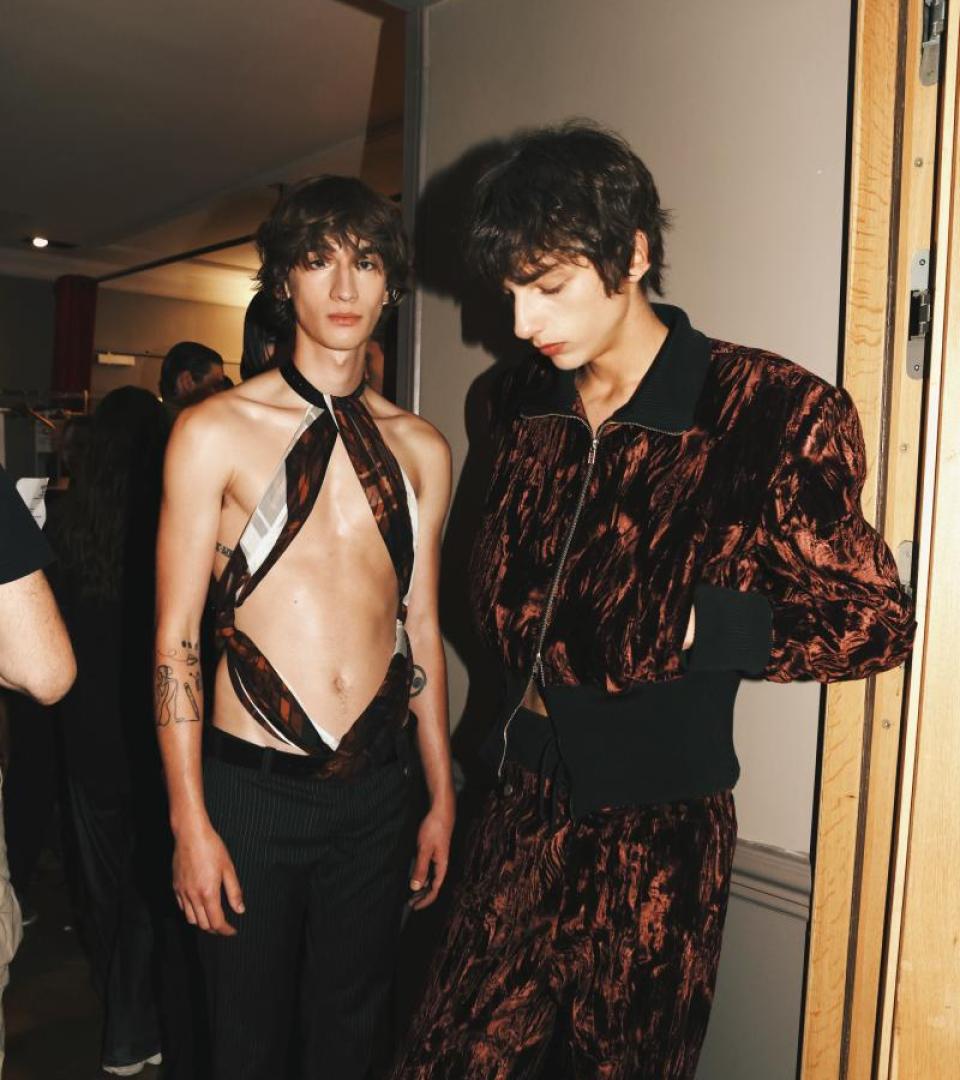
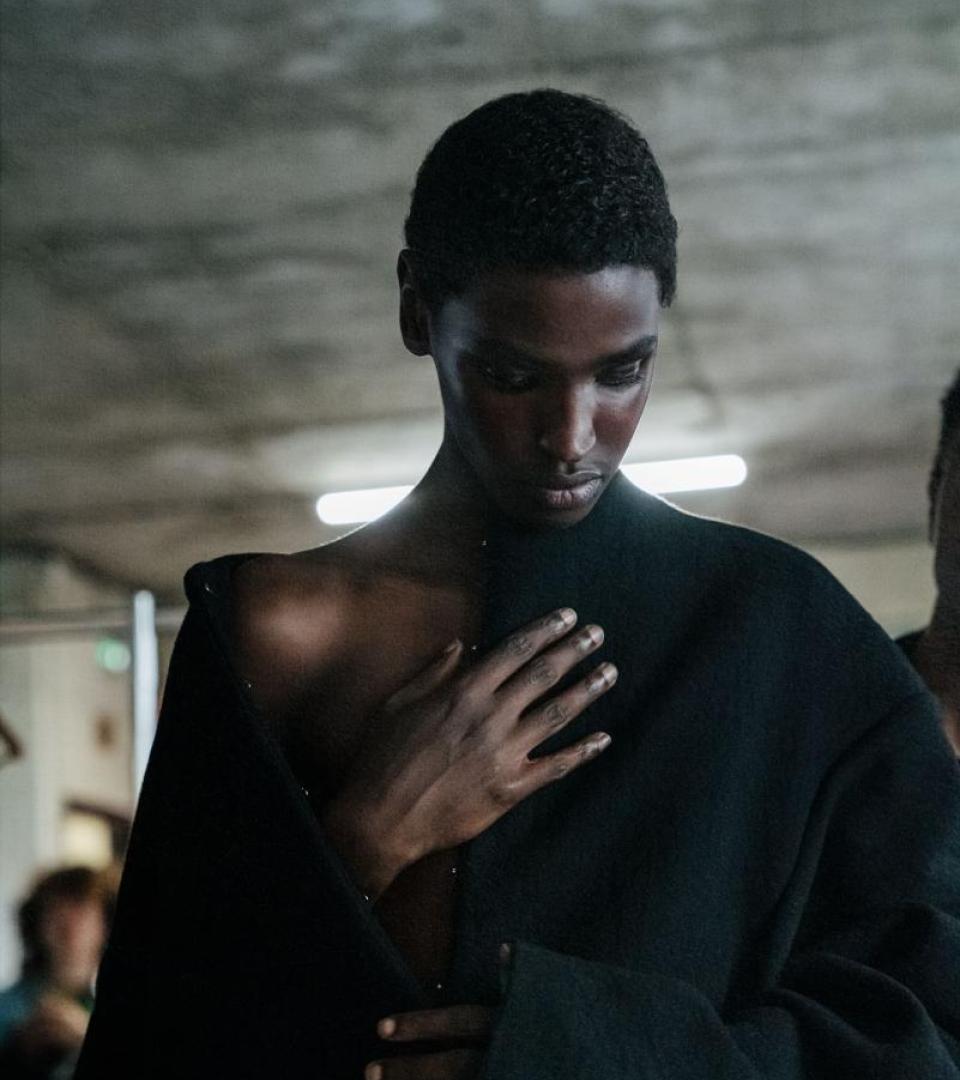
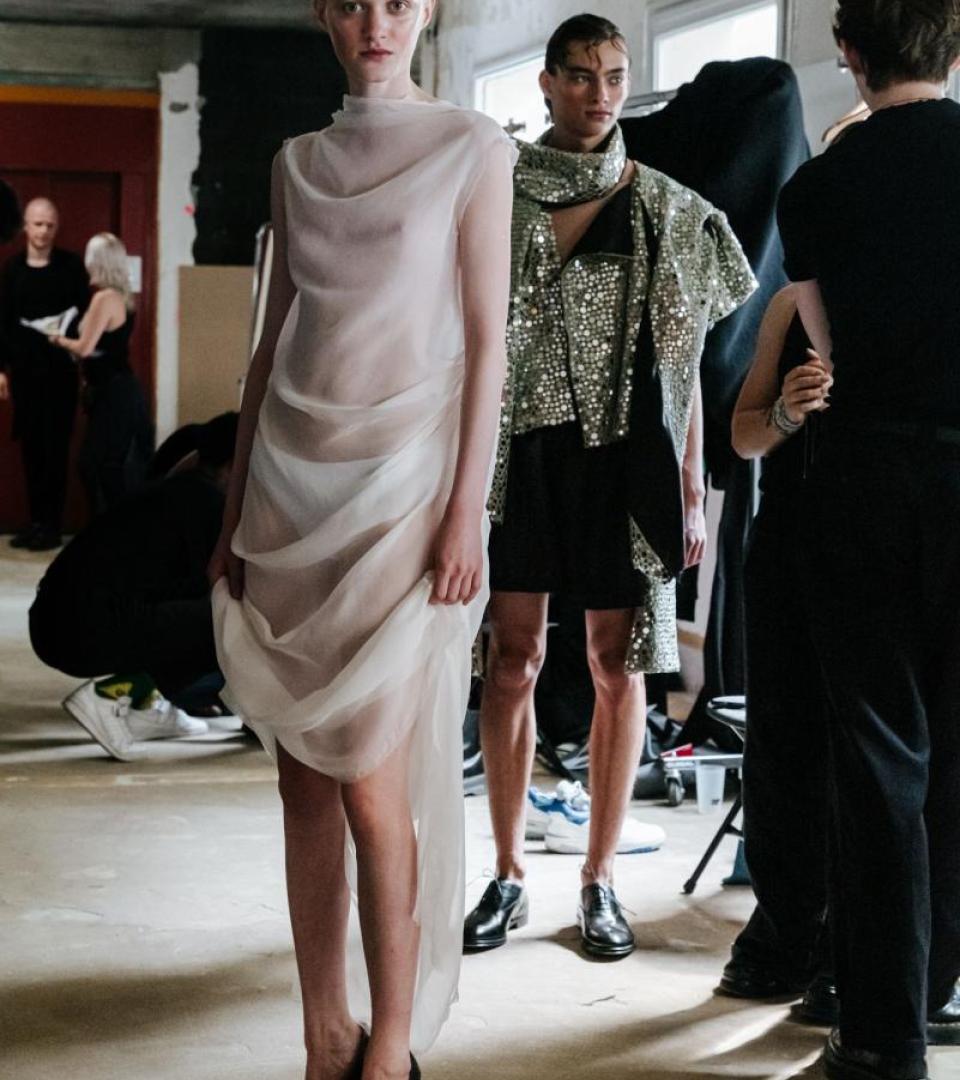
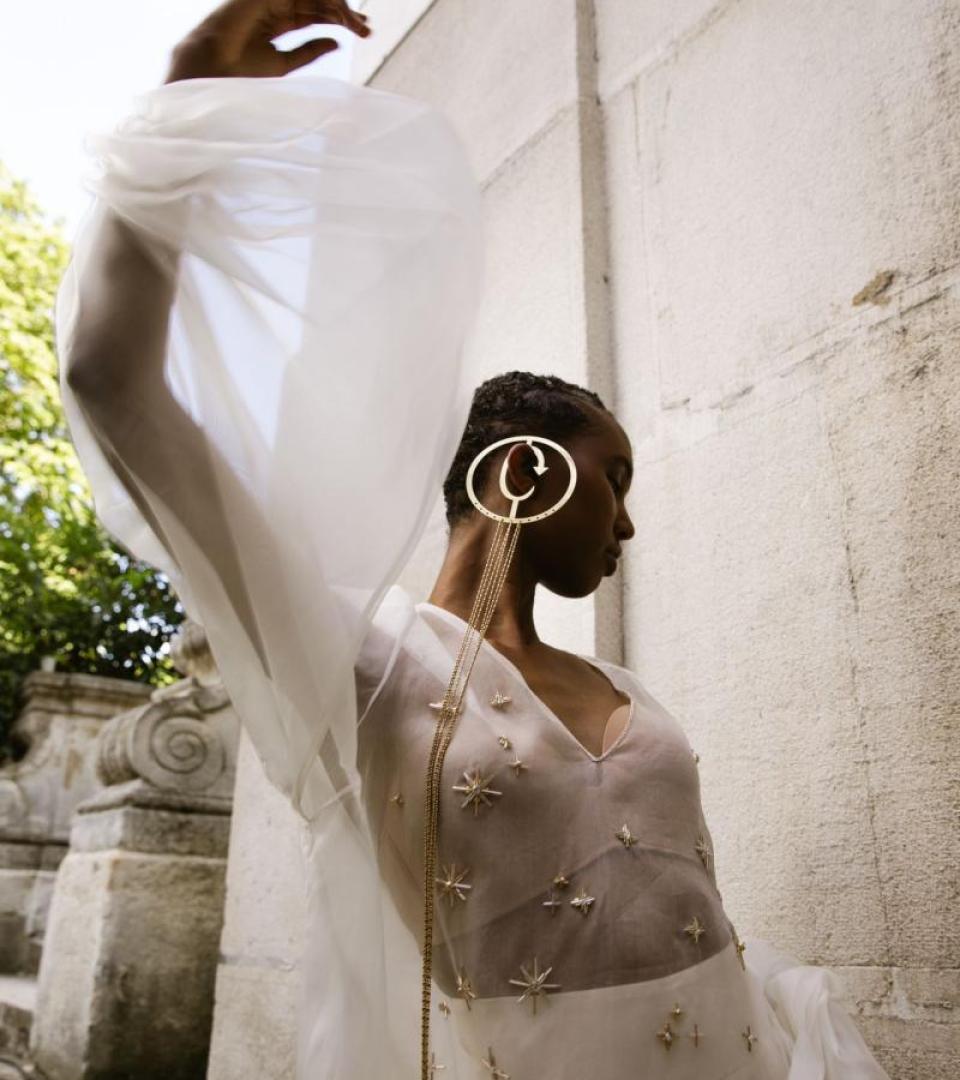
On Monday evening at the Irish Embassy, Stewart was back with a graceful procession of eveningwear that evoked the serenity of ancient monuments. Each exit was direct in its simplicity. Stewart’s ethereal beings were corseted, their slender silhouettes encased in deadstock velvet and silk jersey, with intricate beadwork tracing lines across their bodies. In an unconventional colour palette, where sorbet contrasts with vermillion, peaty browns and stone grey, like the landscapes he grew up around in County Clare, pose a counterpoint to highlighter orange and fluorescent pink. He loosened corseted shapes with voluminous ball gown skirts and a pale yellow sack dress. The final exit, worn by a celestial Kristen McMenamy, paid homage to his roots featuring the handwork of Irish lacemakers. Dating back to the early 1800s, Carrickmacross lace tradition, unlike needlepoint or bobbin lace, is finished by appliquéing fine net onto organza with delicate motifs like flowers secured with careful stitching. Over 20 lacemakers spent 9 months developing the dress, which was supported by the Design & Craft Council of Ireland and The Heritage Council. It would take one lace maker 5 years to make.
“I don’t want something that’s traditionally beautiful,” said Stewart backstage at the show. “I want it to have something else and that’s where you find a new beauty – that’s what I’m most interested in.”