Contemporary Nostalgia at Ernest W. Baker
By Paul McLauchlan
In the 1982 independent film Smithereens, a rebellious teenage girl travels from New Jersey to New York City to join the waning punk subculture. Along the way, she meets a mysterious musician and falls into the hands of some shady characters. The post-punk musical drama was the nucleus for Ernest W. Baker’s Spring-Summer 2027 collection. As a starting point, Reid Baker and Inês Amorim transported their audience to another filmic universe for their sophomore catwalk. The pair are as connected to emotion and unafraid of the darker tales of humanity to express.
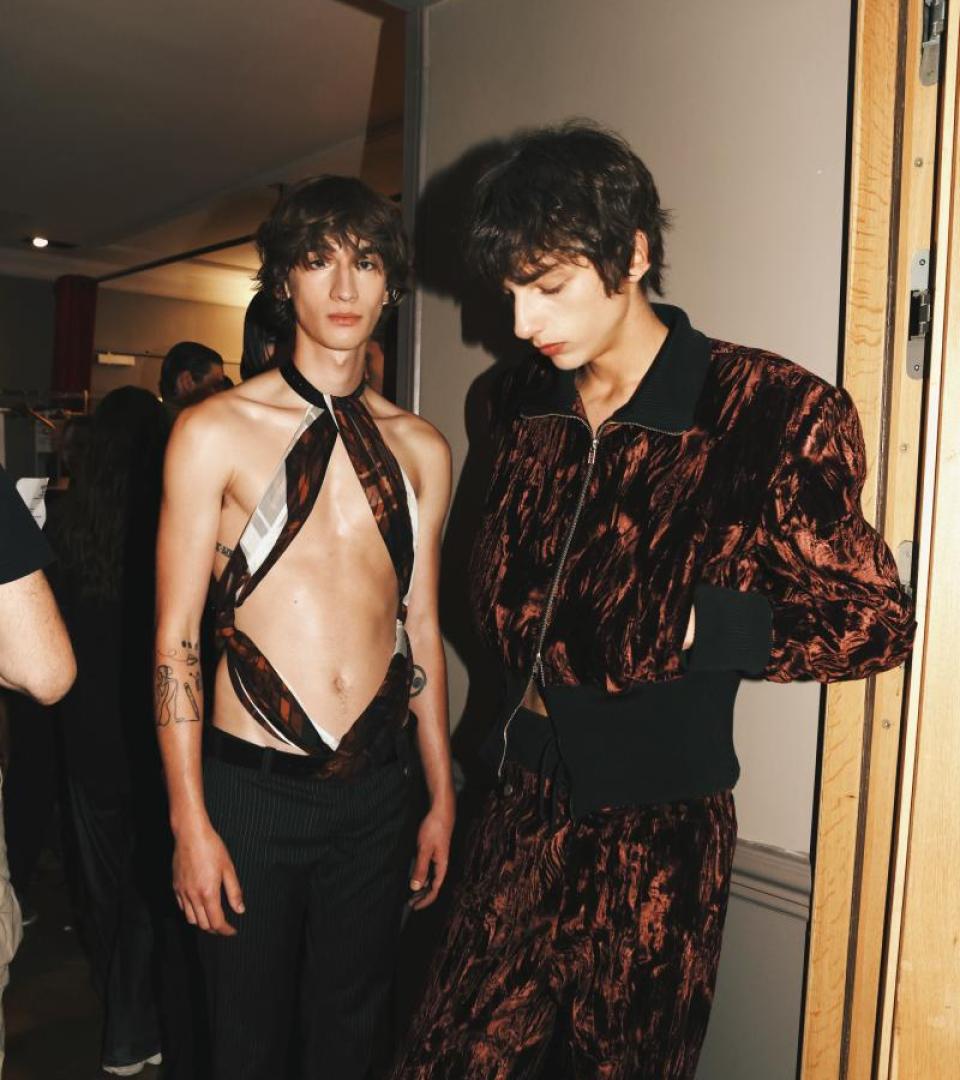
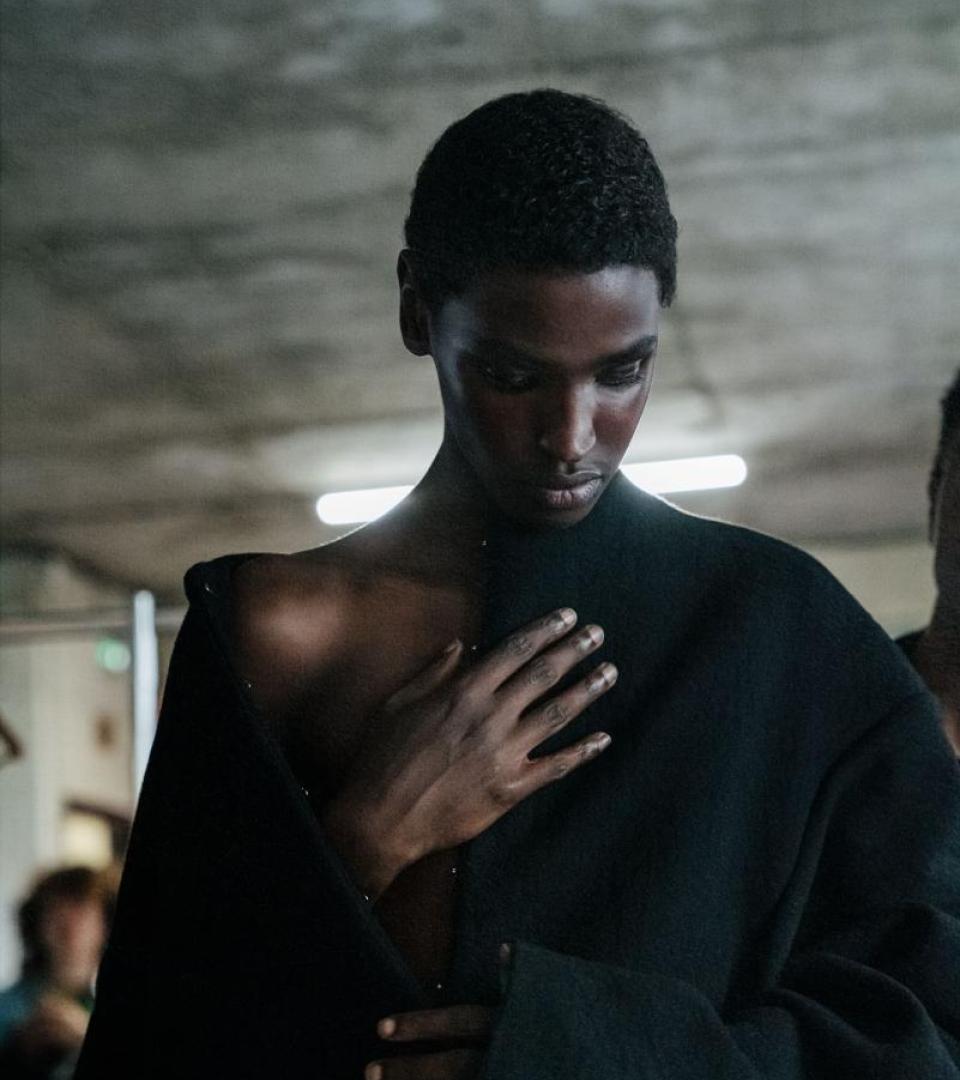
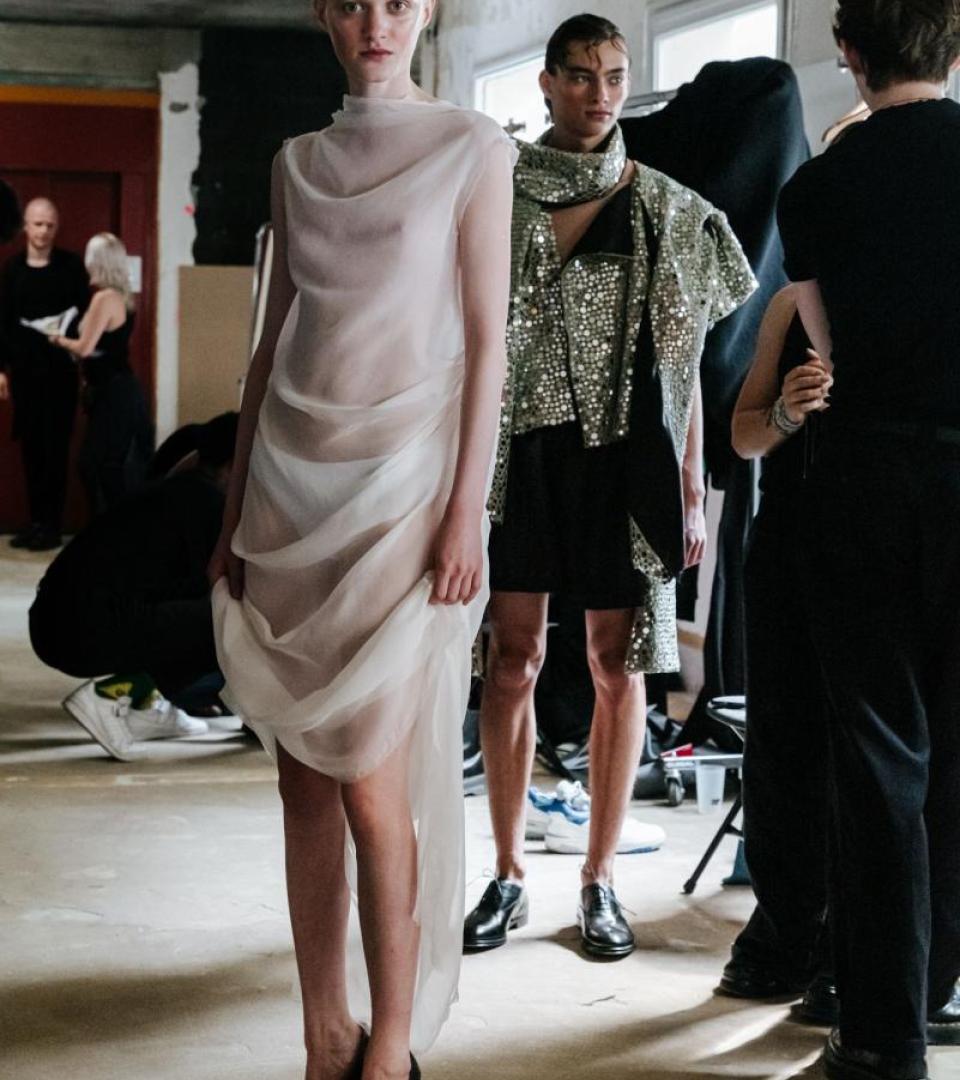
The label has adopted slick suiting as an identifier of its sharp sensibilities. This season, it manifested in a dark palette, shot through with touches of pink (a charming blouson), beige (polos inspired by Baker’s grandfather’s wardrobe) and brown and green checks. A waxed cotton jacket evokes leather but is effortlessly lightweight, updating the sartorial codes of the punk uniform. A black jacket shimmers with tonal Swarovski embellishments. More glamorous punk sensibility emerges in double-breasted vests in check. Slick smoking suits with their pronounced lapels are given an uncanny update with Dalmatian-print satin shirts and ties.
“We’re making sure one foot is in the present and being aware of what's going on stylistically, aesthetically. Whether you choose to ignore that or not is your choice, but being aware of what's going on [in the world] and letting that infiltrate your work naturally is important,” said Baker, on a video call from the brand’s headquarters in Porto, Portugal. “It's important to make the nostalgia feel contemporary.”
What was the starting point for this season's collection?
We've been growing, and we feel like we've established a very nice rhythm, understanding the collection concepts, and how to bring everything together. Every collection is a combination of just being in touch with our feelings and stimulating that feeling with film, with imagery, creating mood boards. Something that really spoke to us was this ’80s indie film called Smithereens. We really liked the stylistic approach of the way of dressing; it’s very DIY, but in a very nuanced, specific way from the ’80s. It felt very aggressive so it was cool to look at it in the sense of how we take this very aggressive, full of character approach to the dress and smash it with the kind of established Ernest codes of tailoring. Taking the very formal and then breaking it apart with very iconic kind of strong DIY prints, or if we have this smoking lapel, a smoking jacket, what can the shirt and tie do to break that feeling, or what can a simple check or stripe in a blazer immediately give a totally different feeling to something so classic.
Ernest W. Baker has always explored masculinity in a nuanced way. How has that conversation evolved over the years?
When we put the collection together, there is no separation between men's and women's. Obviously, some skirts we do are intentional for the woman but other than that, everything is developed with the intention of being for whomever. Obviously we have a very strong, powerful man and woman, and we like to present that with tailoring; it can give a certain sense of power establishment, but it's important to also break that apart and also make sure that the casting is contemporary and feels relevant, and the stylistic choices you make feel aware and in touch with right now.
What keeps Paris the most important stage for presenting your work?
It’s the only place that really makes sense. Every single one of our clients is only travelling to Paris. Most of the magazines that cover us, friends from editors to stylists are just coming to Paris Fashion Week. It’s sort of become the hub for us to celebrate a moment with the brand, and we want to be sure that our entire community is there to see it.
What role does storytelling play in creating a runway experience?
It’s a totally different beast of its own, but we have a very strong understanding from several years of lookbooks and videos, which comes into making the right choices to push an aesthetic at a show, so that the lighting says something, the set design says something, and we're testing the imagery from the show, so everything is very specific. The runway is very demanding. There's a lot that goes into it, but it's very exciting, and I think it's a fun way to celebrate a collection, the whole team's work. It's very much like a finish line to a running race, whereas a lookbook and a video is sort of never necessarily like this is finished. A runway gives a nice feeling of that for everybody on the team, which is something very nice that we saw last season – having a moment to celebrate our work together. It’s actually quite liberating.
Fashion often feels dominated by trends and algorithms. How do you stay connected to instinct?
Not over-consuming things on the phone, as much as it's becoming even more difficult. Staying true to what has always interested us: making, traveling, going to Paris, going to galleries, going to exhibitions, watching interesting films, picking up a different book that you wouldn't. Consuming information outside of what you're being told to consume,which is as simple as what we were doing five or six years ago. Pursuing interesting choices that will stimulate your brain in a different way. I hope everybody can continue to do so. Even your choice of a movie to watch for the night is not through the Netflix algorithm, and your choice of TV show to consume or a book to read has not been force fed into you. It’s being aware when these things are thrown at your face and making sure you're choosing things to kind of stimulate yourself in a different way.
This interview has been lightly edited.