JONATHAN CARMEL/ VAUTRAIT - WAVES AND CONSTRUCTION
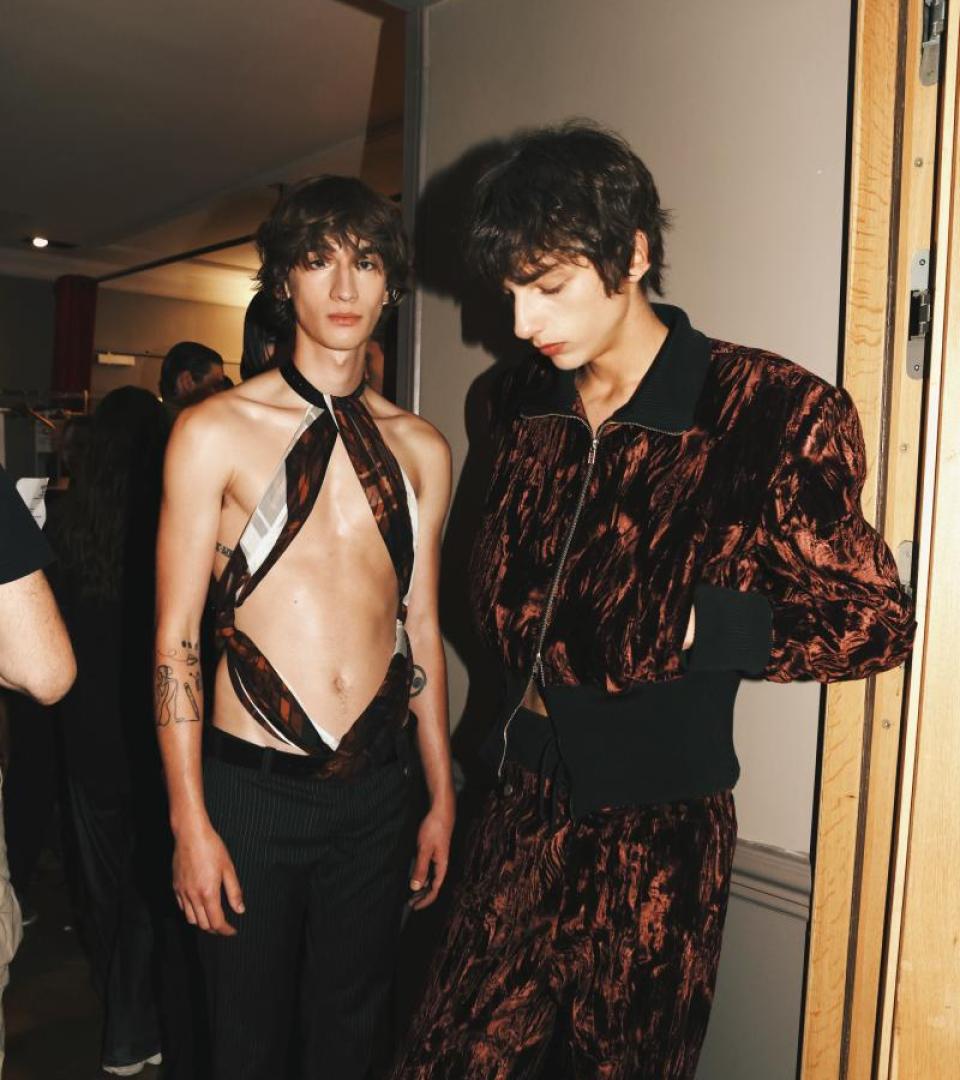
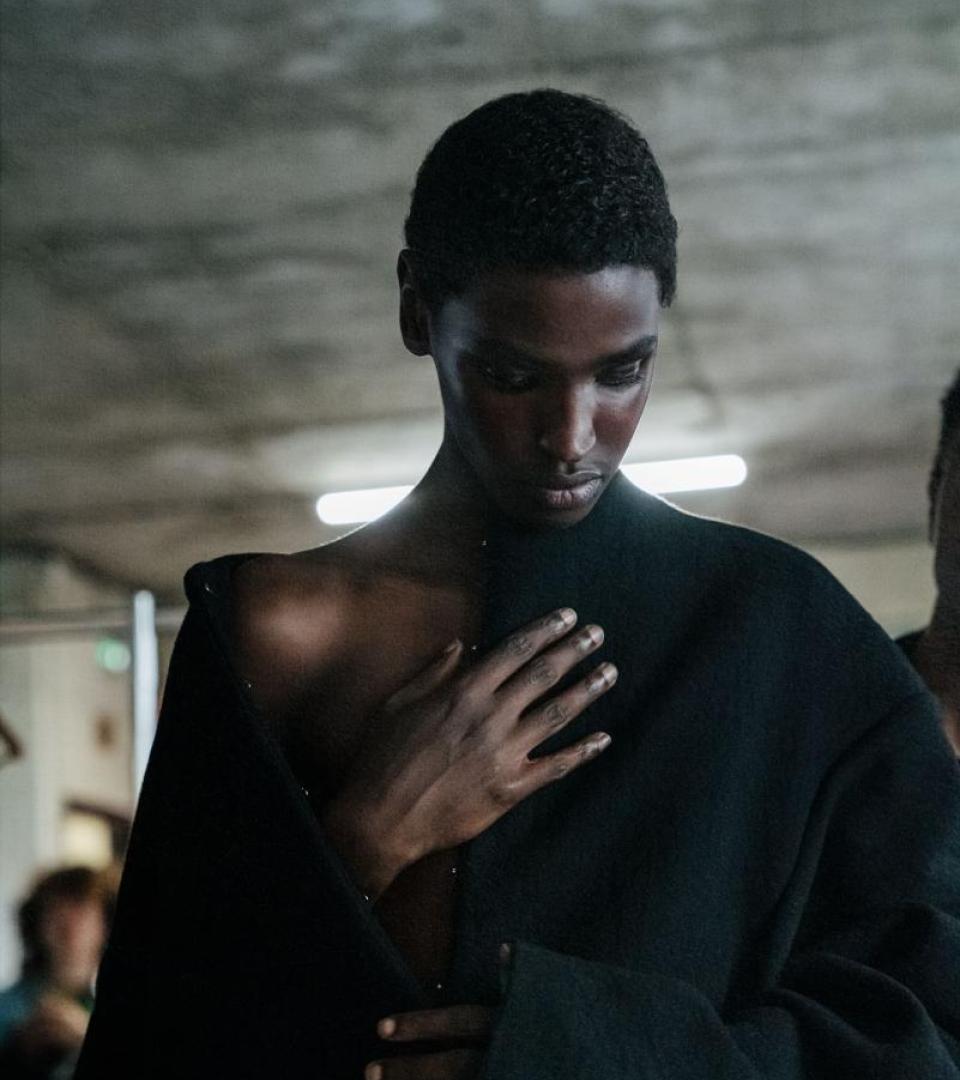
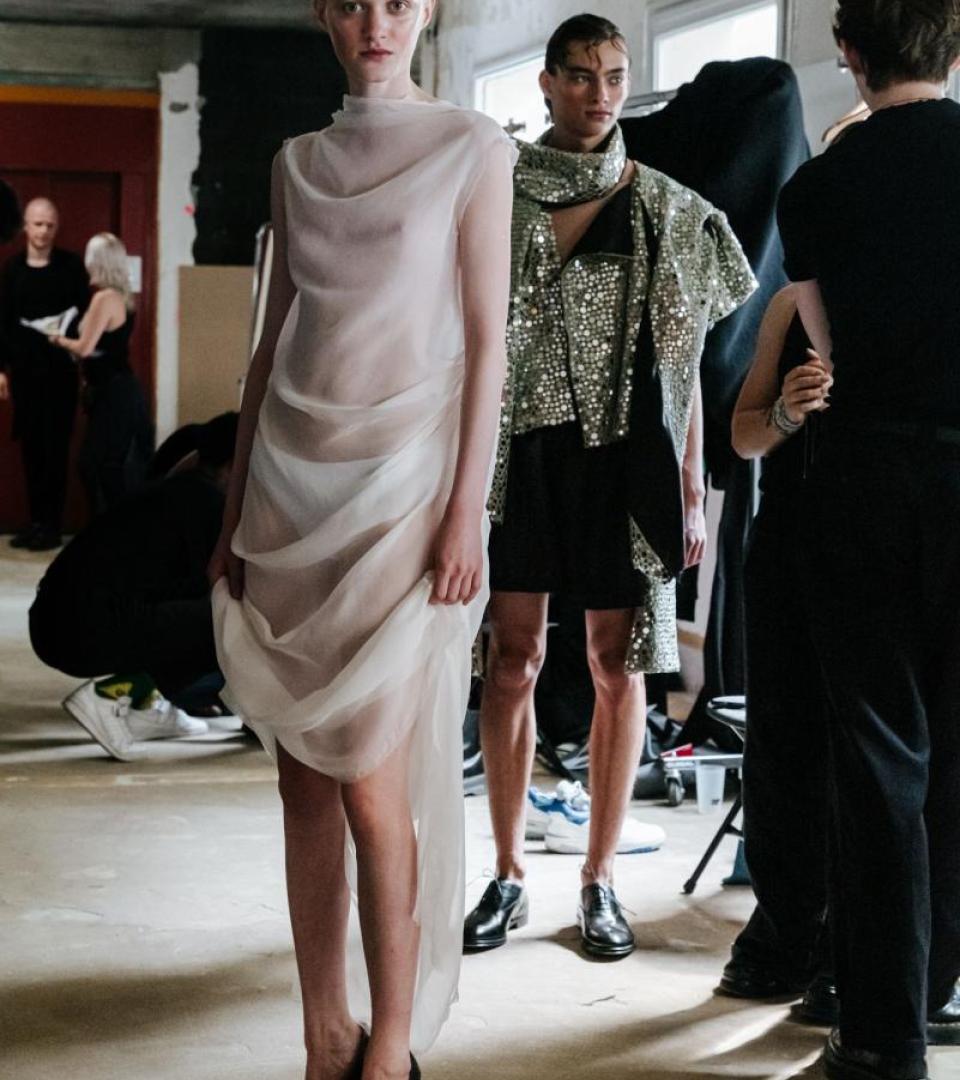
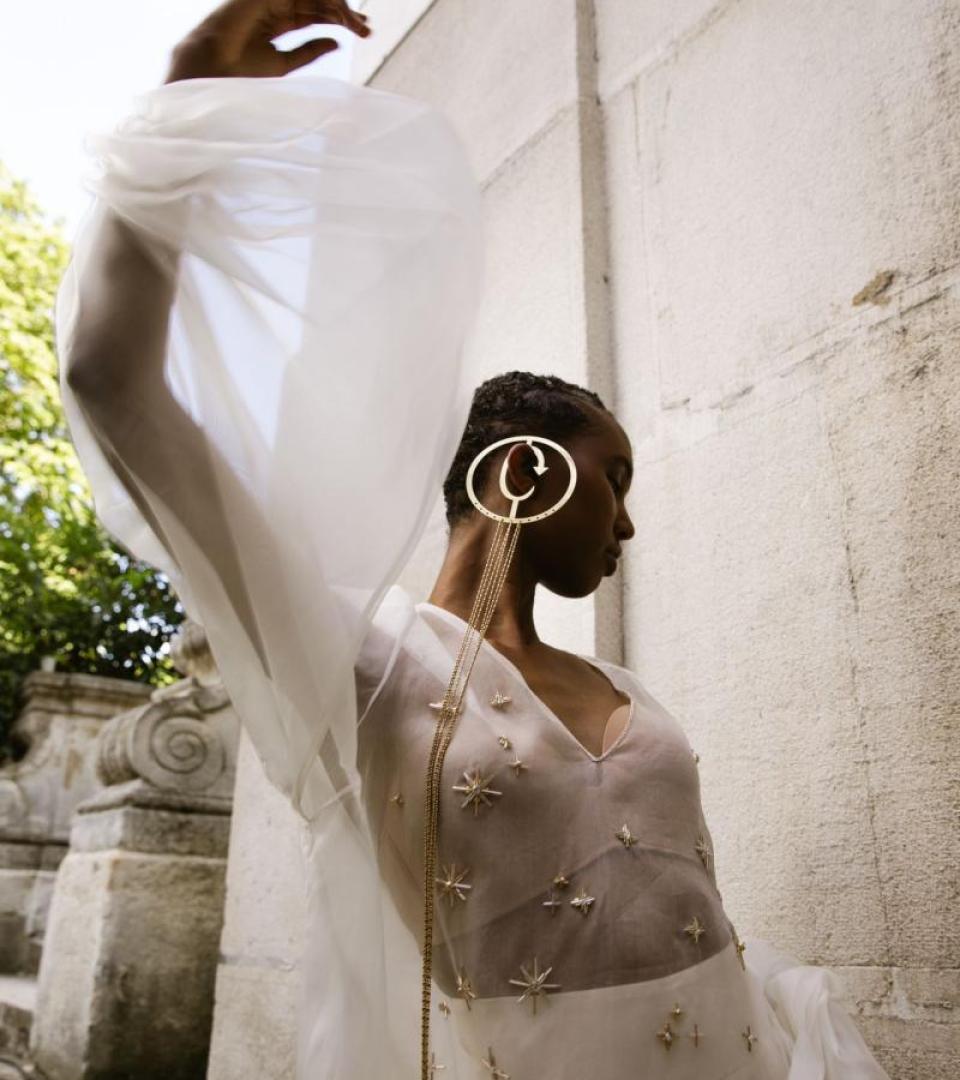
Jonathan Carmel founded Vautrait in 2021. As he celebrates memories through techniques, he never forgets the body by surrounding the constructions with an extraordinary sense of space and light. In September 2024, the brand joined the Official Calendar of Paris Fashion Week®. That same year, it was a semi-finalist in the LVMH Prize. His collection is part of the SPHERE show room, an initiative with the support of Le DEFI, ACCOR, and L’Oréal Paris, at le Palais de Tokyo until October 6.
What was the inspiration for this collection?
The collection started with the sea, but more as an idea than a destination. I’m not particularly interested in the postcard version of it: piña coladas, yachts in Greece, the Instagram idea of escape. I keep returning to summer as a mental space where time stretches, and life becomes a little less urgent. Recently, sound artists like Ulla and Fujita have represented the sea for me much more than anything visual. There’s something in their work: repetition, space, slowness that feels very close to the atmosphere I was trying to create.
I’m also very drawn to the working environment around the sea, and to clothes that seem to absorb that environment over time. I love the idea of a garment collecting traces of salt, sun, and use. One trench coat in the collection, instead of feeling waxed or traditionally treated, almost looks like a striped shirt coated in sea salt.
How would you describe the color palette?
The palette comes from what exists beneath the surface of the sea that murky, almost latent world, rather than the obvious colours we associate with summer. There are many greens and browns that feel more like tones than actual colours, and a yellow that feels as if it’s about to turn orange. I was interested in colours that are slightly difficult to name, as if they’ve already been altered by water, salt, sun, or time. I mixed these with elements I naturally return to in my collections: classic striped cotton, the beige of a traditional trench coat, things that already carry a certain familiarity. We also worked with silk that was washed almost like denim, taking something naturally shiny and precious and making it cloudy and matte. I like when colour feels less applied and more like the result of something that happened to the garment.
What materials did you particularly enjoy working with?
I particularly enjoyed working with cupro and silk. What I find interesting about cupro is its contradiction: it’s a regenerated cellulose fiber made from cotton linter, essentially the very short fibres left around the cotton seed, yet the result can feel incredibly fluid, almost like silk. I like that something relatively humble can be transformed into something that feels so refined. With silk, I wanted to do almost the opposite. We washed and treated it until it lost some of its natural shine and became cloudy and matte. So in a way, the two materials meet somewhere in the middle: one is elevated through transformation, while the other is stripped of some of its preciousness. That tension feels very natural to the collection.
A destination for summer 2027?
Alsace. I’m always happy to go back, no matter how many tourists are there. I especially love Kaysersberg and staying at Chambard. There’s something almost enchanted about the forests there; the landscape has a slightly unreal quality that I never get tired of. I also like the idea of returning to a place I already know and love rather than constantly searching for somewhere new. A few days there, with the food, the forest, and the slower rhythm, somehow give me the energy to keep going.
A childhood memory that determined your career path?
I remember being a skater as a kid and being obsessed with the oversized white T-shirt everyone wore. I was quite rebellious about clothes; I hated the idea of uniforms or belonging to anything that required you to dress a certain way. I wouldn’t even join the Scouts because of the uniform. At the same time, I was fascinated by my grandfather’s wardrobe. I would constantly take things from his closet and mix them with my skate clothes, an oversized suede jacket of his over a huge white T-shirt, for example. Looking back, I think that contrast stayed with me: something inherited and traditional next to something very casual and subcultural. I didn’t know it then, but I was already using clothes to build my own language.
A moment in fashion that has inspired your work?
I remember discovering Pierre Cardin for the first time and almost not believing that clothes could look like that. It seemed completely irrational to me; clothes are supposed to be worn, so how could they become these strange, almost architectural objects? I wouldn’t necessarily describe Cardin as a direct influence on what I do today;but that encounter opened something for me. It helped me see that you can question clothing rather than simply design t, and that fashion can be a critical way of thinking about what a garment is supposed to be.Interestingly, I think I’ve moved in the opposite direction over time. I’m becoming increasingly interested in function and in the reality of wearing clothes. I believe clothes ultimately belong on the street, not in a museum. But maybe I needed to discover that they could be art before deciding I wanted them to live.
What film or book continues to fascinate you?
A film I always return to is Michelangelo Antonioni’s The Passenger.It also feels strangely close to the atmosphere of this collection. I love how soft and almost suspended the narrative is; time seems to loosen its grip, and the film allows you to drift through landscapes, identities, and silence without constantly explaining where you are going. The final shot has always stayed with me, especially its light and colour. There’s something dusty, warm, and almost exhausted about it, as if the image itself has been exposed to too much sun. I’m reading Heidegger’s What Is Called Thinking? I’m drawn to the idea that what is most thought-provoking is that we still “aren’t thinking.” I don’t read it pessimistically at all; actually find something quite liberating in it. It suggests that thinking is not simply a destination we arrive at, but something we are always moving toward. Even what escapes us, what we cannot fully grasp yet, can already provoke thought. There’s something very open and inspiring in that the path toward thinking can be meaningful before we ever arrive at thought itself.
A personal memory connected to this profession?
I remember the first time I visited a factory in Italy. A close friend, Alberto, introduced me to the factory and to Fabio, the owner. On the drive there, I was completely overwhelmed by the landscape, the vineyards, the nature, the air. I kept asking Alberto, “How is it possible that you live here?” and he thought I was slightly strange because, for him, it was simply the road to work. I remember feeling that I had somehow arrived at the source of things. Not only in terms of craft and understanding how clothes are made, but also in a different relationship to everyday life. The natural wine people drink in big cities for eight times the price was just the local wine, and there was no smell of traffic or construction in the air. It made me realize that sometimes what we treat as luxury in a city is simply ordinary life somewhere else.
A place in Paris you always return to?
Dilia. Every time I go back, I feel a little emotional. It’s near the church in Belleville, in the same area where I did my first shoots in Paris with Dudi and Samuel, the stylist, so that part of the city already holds a lot of memories for me. I first discovered the restaurant with Tal, my business partner, and we’ve been going back together ever since. She has an almost suspicious ability to find good restaurants. It’s also a good opportunity to give her some credit for everything she does for the brand; she’s one of those people who somehow makes things happen, even when it means sleepless nights. So the least I can do is take her back to Dilia and buy her dinner.
A dream or project for 2027?
We’re literally in the process of becoming an SRLS; so first, I hope that works out. I’d like Vautrait to become properly rooted in Italy and to grow from there in a very natural way. Beyond clothes, I’d also like to expand the brand’s world into more of the things we genuinely care about. I don’t want to force it into becoming a “lifestyle brand,” which is probably the fastest way to ruin it, but there are many things around clothing, objects, food, places, people that are already part of how we think. And hopefully, somewhere in between, we’ll keep finding good wine.
What is your mantra?
Lately, I’ve noticed that I’m slowly disconnecting from the fashion world not literally, because I’m still very much part of it, but mentally. I look less at what everyone else is doing, who is wearing what, what the next shoe will be, the next Instagram trend, or the collaboration everyone is talking about. I think I’m less interested in making something new just for the sake of newness. What interests me much more now is preserving something old: an old way of making, an old garment, a gesture, a material, or simply a relationship with clothes that already exists and deserves to continue. And I realize this feeling goes far beyond fashion. We live in a culture that is almost addicted to replacing things before we’ve had the chance to live with them. So perhaps my mantra right now is: I’m not looking for the next thing.
This interview has been lightly edied.
LB