What would you like us to know about the collection?
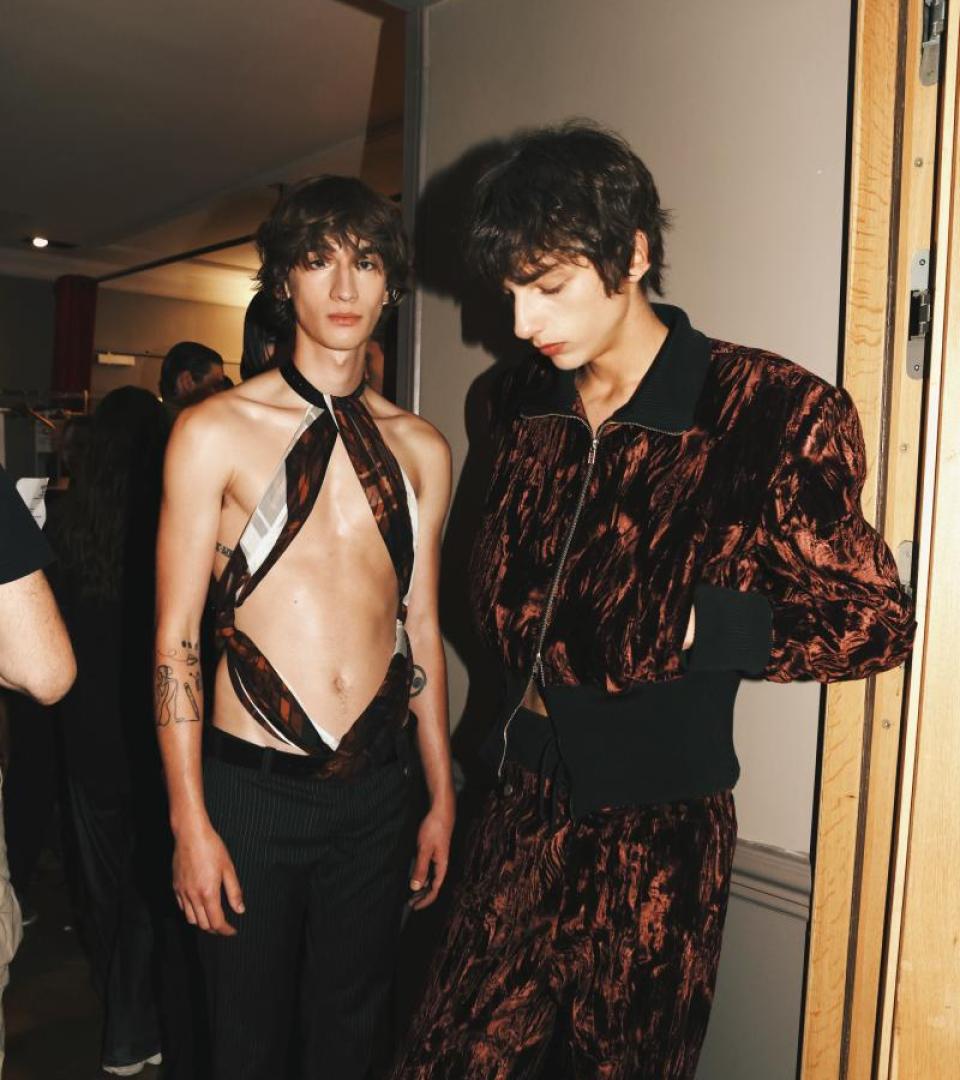
We’re showcasing the narrative of storytelling of how our cultures in South Africa have become a form of influence in global culture. South Africa is known to be a very diverse country with multiple cultures; but it’s quite rare to find a blend of aesthetics among these cultures. That became the essence of what we’re trying to do. We are taking bold elements from different cultures within the country and blending them together – those distinctly recognisable emblems and evolving them.
Was there a particular philosophy that guided you in the making of this collection?
A lot of cultures were frozen in time because of colonialism and many of them didn’t evolve with the times. When I say that, I mean creators of the regalia that are worn within certain cultures didn’t update these codes to suit a ready-to-wear lifestyle. People are still focused on making traditional regalia and, specifically, focused on wearing those pieces only on weddings or other special days. Our brand philosophy is that culture should be modernised and accessible to wear – versatile enough to wear on a daily basis at work and various lifestyle destinations. Over and above, it should form an economic ecosystem that benefits South Africans, and Africa at large, without taking advantage of the fact that we know our culture better than anyone else.
How do you approach modernising cultural codes that are rooted in tradition?
The process is quite difficult to approach because one has to be very cautious when dealing with aesthetics. You must research it or speak with someone who is a voice of authority within that culture so that you don’t misinterpret the work. But we filter and change the aesthetic in a way that it becomes almost difficult to interpret [on a surface level], and it becomes quite complex.
Of course, we specialise in handmade pieces and we work with a network of craftspeople who are able to lend that artisan language to the knitwear and maintain the essence of the symbolism we are referencing and that the specific culture represents.
How do you balance being a South African brand in a global fashion business?
One thing that is a signature is how easily recognisable what we do is with our bold aesthetic. It’s colourful and flamboyant. What we do doesn’t fit within the global standard of doing simple pieces that appeal to a wider audience. We appeal to quite a niche audience, but our aesthetic can be simplified through one-colour pieces and through texture. However, we don’t compromise in showcasing our boldness. We have an established community within South Africa that proudly purchases our work and wears it proudly, and even blends it with global brands in a way that doesn’t feel forced or out of place. It’s an uncompromising approach that we take within the European showcase community.
Since the inception of the brand, the objective has been to preserve our heritage. The worst it could have gotten is for our heritage pieces of African culture to decompose or be abandoned in museums. Maxhosa is going to revive the old, but with a modern lens. Even though we are looking forward to the future, we are looking back – what feeds our unique DNA is what was established hundreds of years ago. It’s still relevant to this day because even though so much time has lapsed, not much has changed. If you look at Louis Vuitton trunks, the aesthetic, which was established in the 1800s, hasn’t changed much. You keep reviving it and maintaining a high standard.
This interview has been lightly edited.