Actualités

To See or Be Seen at Kiko Kostadinov

Interviews

What does it mean to see and be seen? Existential questions of fashion permeated twin sisters Laura and Deanna Fanning’s Kiko Kostadinov show. To frame the narrative, they transformed the show space at the Conservatoire Nationale des Arts et Métiers into an aviary of sorts: the runway was demarcated by an Oscar Tuazon nestbox sculpture; an avian musicality flickered through the speakers. From their vantage, the Fannings circled around The Brothers Grimm’s Fitcher’s Bird and Cindy Sherman’s 1992 photographic essay of the same name as suitable conduits to explore the question. But they also borrowed from personal experience: their morning commute to the office is through a park where birdwatchers are stationed from early morning and joggers gallop in utility gear. They’re not known to be a fashionable bunch but it’s hard to look away.

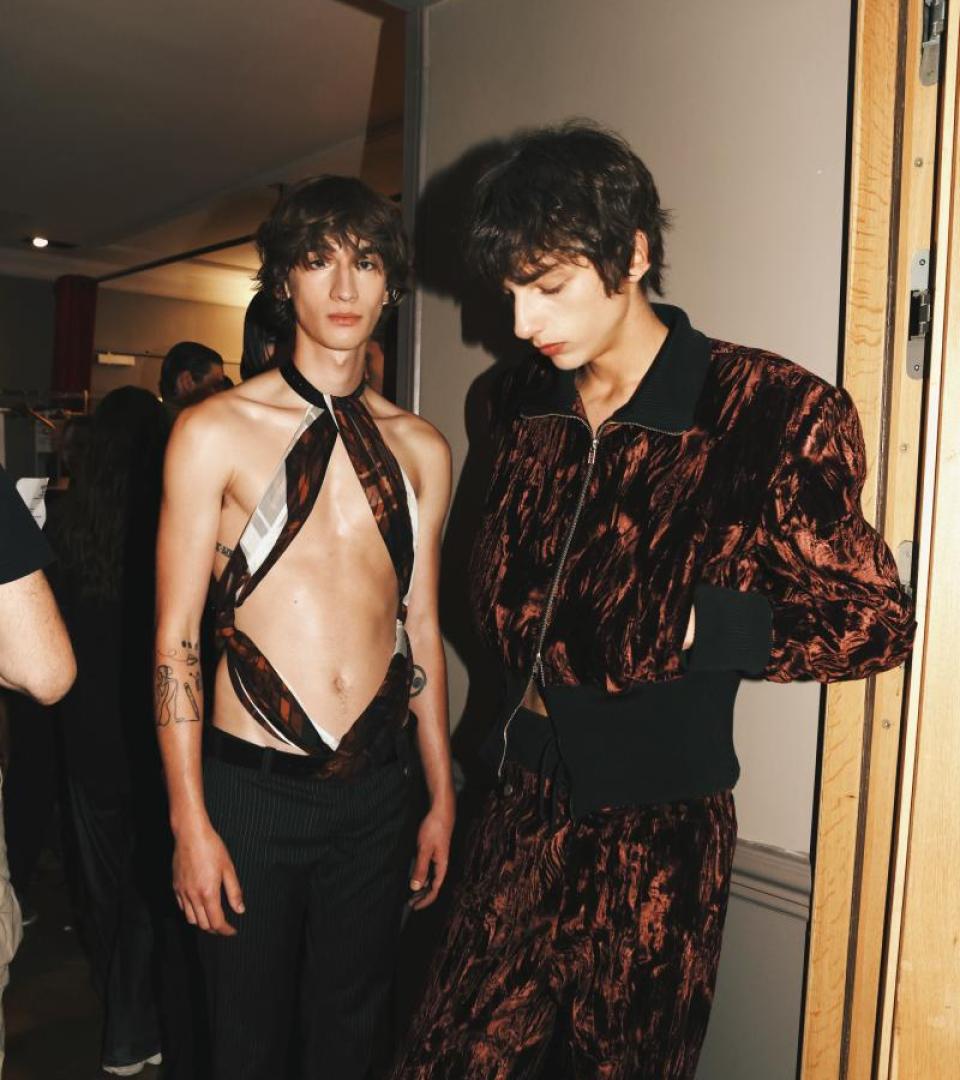
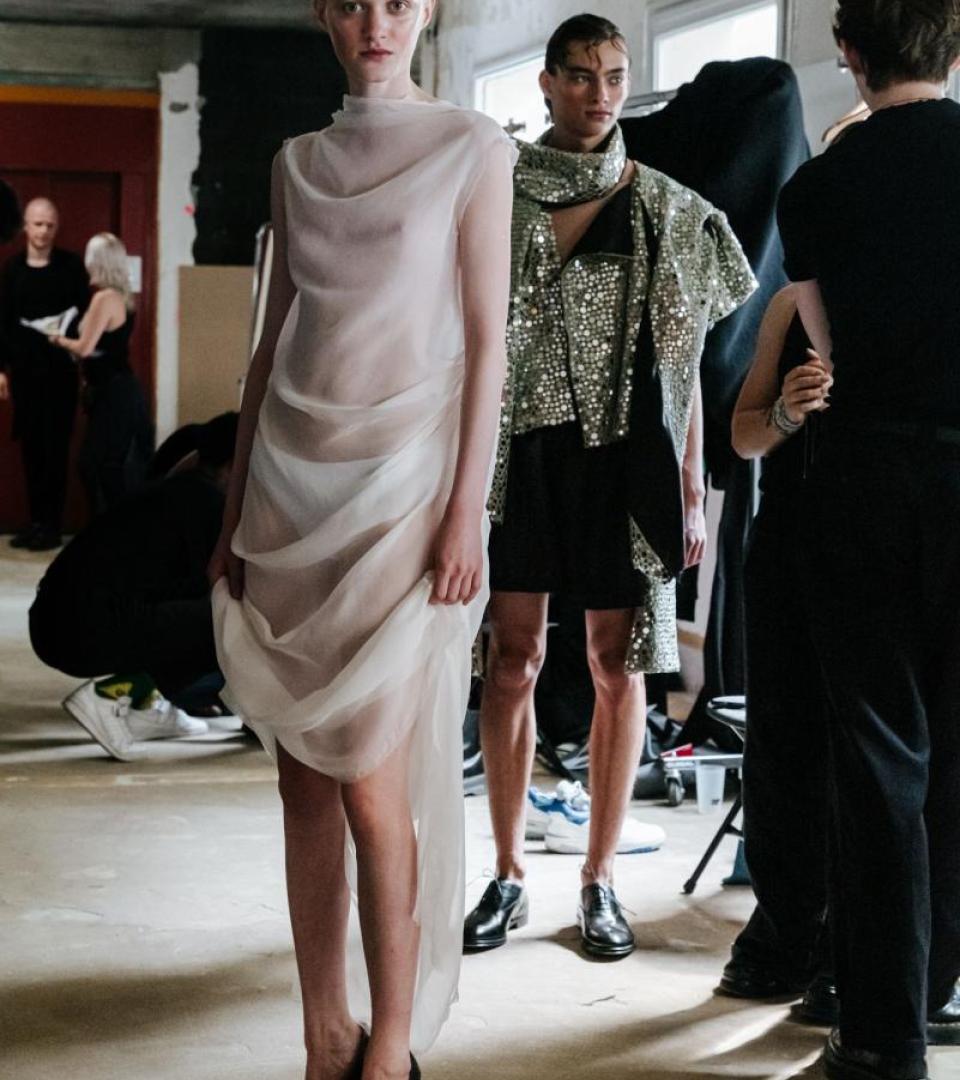
The twins opened an inquiry into how garments support the act of looking. They landed on utility trousers with hidden pocket jackets with spaces for notebooks, pens, and binoculars to foster a sense of introspection; double-layer knits create intrigue, and multicolored knitted intarsia coats resemble plumage. Ditto the acetate-washed cotton and iridescent dresses that evoked rainy days. Crocheted bags imitated bird feeders, contrasting with the maturity of elevated tailoring. Modular styles like leggings-jumpsuits and tops that can be sported numerous ways recalled a runners costume. On the collaboration front, there was plenty as usual: Oakley’s Prizm lenses were printed with bucolic scenes; an ongoing collaboration with ASICS reimagines the tabi in a hybridised brogue-cum-trail shoe; a new fine jewelry capsule with Patcharavipa on egg-shaped pendants in sterling silver, with one style featuring a quote from Sylvia Plath’s poem Pheasant.

“There’s this tension between creating characters that were the watched and the watchers,” said Laura backstage, after the show, accompanied by her twin sister, Deanna.

What would you like us to know about the collection?

LF: It happened quite organically, because it was on our morning commute to our old studio, where we used to see birdwatchers on their way to situate themselves inside the park in North London. We would watch these men in their outfits. We always thought it was interesting that they were watching them. We were watching them watch the birds. It created a tension point between creating characters that were the watched and the watcher, and then some moments in between – and you know, the idea of what it is to see and be seen. 


Did any of the hallmarks of their dress code make it into the collection? 

DF: They wore a lot of utility wear. So you can see that in a lot of the jackets and the fabrications. We have some washed cotton, some nylons, some padded vests. We focused on pocket details, and pockets inside of pockets, and made them a point here. The silhouette returns four times and with strong shoulders, and [we brought] that into the slim leg and a big shoulder. We kind of tried to contrast that thinking about who the woman could be and the idea of the bird in the everyday, but through the feminine. 


Were there other elements that influenced the process?

LF: There was also this modular idea. So underneath [a top] is a piece that you can take your arms out of the sleeves, and there's a silk under layer, but they're knitted together, so they are one.

DF: It came from the idea of commuting and seeing joggers and people on their way to the gym and how they wear their pieces together.


Has the launch of your new stores had an influence on your design process? 

LF: It’s been really enlightening seeing customers come in, or asking the shop floor staff how the day was – to see what people gravitated towards. 

DF: I still think that buying things in-person translates very differently to buying things, because it's really for women. It is very important, and especially the clothes that we make.


This interview has been lightly edited.